



Biden Administration Launches Task Force to Address Supply Chain Bottlenecks
President Biden assigned the task force to develop responses for near-term supply challenges in key industries.

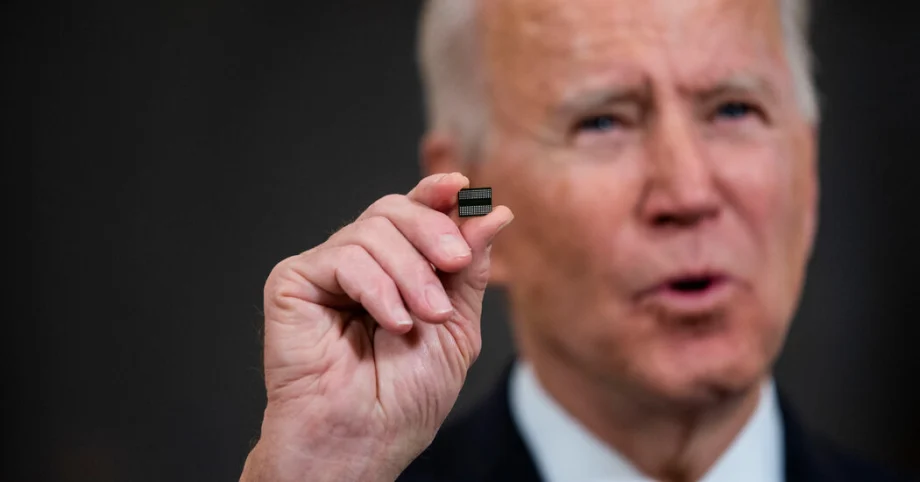
The Department of Commerce will bolster its partnership with industry stakeholders to increase communication and data sharing between semiconductor users and their suppliers.
When the White House released the findings of a 100-day review of critical supply chains, it announced plans to form a new task force aimed at addressing bottlenecks in the semiconductor, construction, transportation, and agriculture sectors.
Led by the secretaries of commerce, transportation and agriculture, the task force will focus on construction, semiconductors, transportation, agriculture and food.
The Administration also promised to take “immediate” steps to secure a domestic supply chain for advanced batteries, develop U.S.-based manufacturing centers for the production and processing of critical minerals, and address the semiconductor shortage with industry stakeholders.
Efforts will help the nation rebuild its manufacturing capabilities for specific products, diversify supply sources for others, and build resiliency and agility into supply chains to avoid future shortages.
“Our approach to supply chain resilience needs to look forward to emerging threats from cybersecurity to climate issues,” said Sameera Fazili, deputy director of the White House National Economic Council in a briefing. “So now we are future proofing.”
The 100-day review, summarized in a 250-page document, stressed that supply chains are critical for national security, economic stability and global leadership, and highlighted how the COVID-19 pandemic exposed U.S. supply chain vulnerabilities. The document also spotlighted how a shortage of raw materials has fueled inflation, that the Administration hopes will be short-lived.
The examination revealed that currently, even if the U.S. were to diversify its sources of critical minerals or increase domestic mining of these minerals, it will still need to rely on China to process them. In addition, heavy reliance on imported parts for large-capacity batteries and semiconductor chips from Asia also creates vulnerabilities.
President Biden directed the review under Executive Order 14017 to assess supply chain vulnerabilities in supply chains. The release of these findings comes as automakers shutter production because of a critical shortage of needed semiconductor chips.
The Administration announced that the Department of Energy (DOE) will release a “National Blueprint for Lithium Batteries” to “codify the findings of the battery supply chain review” and devise a 10-year plan to develop a lithium battery supply chain in the U.S. The DOE will release and discuss this blueprint in an upcoming roundtable.
DOE also will tag some of the $17 billion earmarked for the Advanced Technology Vehicles Manufacturing Program to support the domestic supply chain. The DOE Loan Program’s Office will, for example, provide loans to manufacturers of advanced battery cells and packs to retrofit, expand or establish U.S. manufacturing sites.
In addition, the DOE Energy Management Program will review energy storage to evaluate the “current opportunity for deploying battery storage at federal sites.”
President Biden also tasked the Department of the Interior with developing a multi-agency working group to identify sites that can process critical minerals in the United States. The Department of Defense will supplement that effort with incentives that support production of critical minerals while the U.S. Development Finance Corporation will expand international investment in projects that increase production capacity for critical minerals and other products.
Regarding the semiconductor shortage, the Department of Commerce will bolster its partnership with industry stakeholders to increase communication and data sharing between semiconductor users and their suppliers.
The Administration also has called on Congress to approve $50 billion in investments for domestic manufacturing and R&D development of semiconductors, create incentives for consumers that purchase electric vehicles, establish a supply chain resilience program, finance advance battery production, and expand the use of the Defense Production Act to increase production capacity in critical industries.
Originally posted on Auto Dealer Today
More Showroom

Year-to-Date Auto Sales Holding Their Own
A forecast through August shows that automakers have shifted strategies to keep deliveries and revenues up despite tariffs and other economic challenges.
Read More →
Slow to Robo
Ten years of polling consumers shows autonomous vehicles’ profiles have risen considerably, but even more people now want at least some level of control if they go that route.
Read More →
Dealers a Little Down
A third-quarter Cox Automotive survey finds them in a mixed mood, bummed by fallen customer traffic but encouraged by better profits, costs and EV interest.
Read More →
European EV Sales Skyrocket
The EV market on the continent held strong in July with almost 25% of new-car sales being fully electric units, a stark contrast to the U.S., where EV sales declined about 42%.
Read More →
Mitsubishi Unveils U.S. Plan
The automaker announced a strategy that includes an expanded lineup and dealership presence, along with more ‘rugged’ and electric models.
Read More →
Used Lots Getting the Business
Many consumers are seeking out the units to save money, and the demand – higher in July than normal – is keeping supply limited and prices up.
Read More →
Used Market Stabilizes
The Carfax Used Car Index noted a major drop in used-vehicle price increases in July after several months of hikes.
Read More →
California Hybrids Reach State Record
The Golden State still leads the country in electric-vehicle registrations, but much like the rest of the U.S. its hybrid market share is up while full electrics stabilize after a dramatic first-quarter dip.
Read More →
My Mercedes in the U.S.
The German brand debuted its studio dealership concept for the first time in the states in Los Angeles, tapping Americans’ penchant for creative distinctions.
Read More →
Used Sales Hit Summer Drag
The vacation season, combined with high prices, has dented deliveries and added to inventories, though supply is still slim enough to keep listings elevated.
Read More →