



Black Book: Small Cars Hold Their Own in March
Black Book’s most recent depreciation data charts a spring surge — and predicts a decline — in values for compacts and other smaller-car segments.
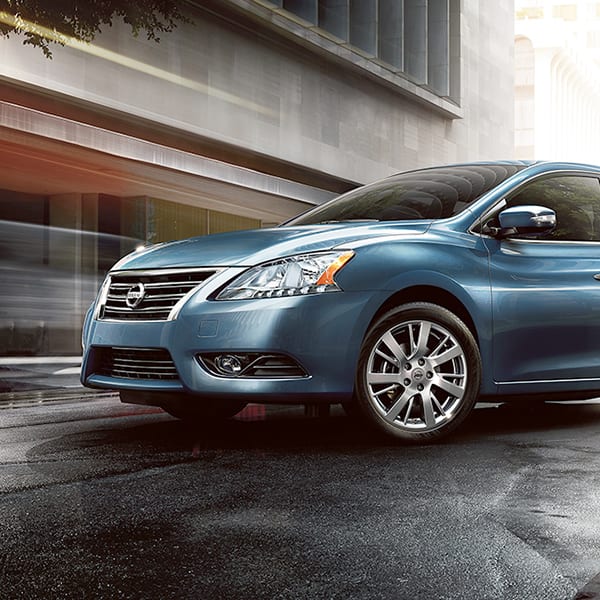

Compact cars such as the Nissan Sentra finished March with an industry-leading value-retention rate of 2.5%, according to the latest numbers from Black Book. Photo courtesy Nissan USA
LAWRENCEVILLE, Ga. — According to Black Book data, the average price of a used vehicle for model years 2012–’16 depreciated in value by 0.4%, an improvement from February’s level of -1.1% due to a continued stronger-than-expected spring selling season. Cars increased in value by 0.6%, while trucks decreased by 1.1%. All vehicles are averaging a 12-month change of -15.0%.
For the second-straight month, subcompact luxury CUVs showed the largest depreciation in March at -2.6% following a -2.8% in February. Vehicles in subcompact luxury CUV segment include the Audi Q3, BMW X1, Mercedes-Benz GLA-Class, and the Mini Cooper Countryman. Vehicles in this segment finished March with an average price of $14,727, a 21.0% drop from year-ago levels.
Including subcompact luxury CUVs, trucks represented the top five largest depreciating segments: compact luxury CUV/SUVs (-2.5%), full-size crossover/SUV (-2.3%), full-size luxury CUV/SUVs (-1.8%), and mid-size luxury CUV/SUVs (-1.6%).
Compact cars finished the month with the strongest retention at 2.5%. Vehicles in the compact segment include the Chevrolet Cruze, Ford Focus, Honda Civic, Toyota Corolla, Volkswagen Jetta, Nissan Sentra and the Hyundai Elantra. Vehicles in this segment finished the month with an average price of $8,012, a -14.3% change from a year ago. Subcompact cars (1.3%) and “sporty” cars (1.0%) also increased by at least 1.0% on the month.
The only truck segment to show an increase during March was compact CUV/SUVs at 0.1%. Vehicles in this segment finished March with an average price of $11,758, a -14.0% change from a year ago.
“Spring continues to show a strong quarter for many smaller car segments, mostly because these vehicles are being offered at a great value at auction,” said Anil Goyal, Black Book’s executive vice president of operations. “This level of activity is expected to last just a few more weeks before depreciation trends return to a more normal pattern, particularly for cars.”
More F&I

How AI-Powered Coaching Is Transforming F&I Performance
See how AI-powered coaching can turn F&I customer conversations into actionable insights that support compliance, performance and profitability
Read More →
Sell Value, Build Trust
In this video, Trent White explains why selling on value, not fear, builds lasting customer trust, reduces cancellations, and drives long-term success.
Read More →
F&I Sales Give Dealers First-Half Lift
Product business shored up total profits to avoid an overall revenue tanking as product penetrations held steady, StoneEagle reported.
Read More →
Targeted Training Drives Results
Today’s technology, instead of threatening F&I managers, can actually make them better, according to an industry veteran who’s watched market setbacks roil the unprepared.
Read More →
Double the Change, Double the Chance
When an F&I manager gets a customer refusal, it’s a wise move to tweak more than one thing in the product offering.
Read More →
Just Do It
F&I managers need training, but instead of resisting application or expecting perfection, they should improve by simply acting on what they learn.
Read More →
Dealer Lender Preferences Revealed
When lenders provide consistent, fast service, their overall satisfaction scores with dealers greatly improve, according to JD Power research.
Read More →
Leading with Purpose
In this video, Trent White explains how understanding your people’s 'why' is a key leadership responsibility of F&I professionals and how that mindset drives dealership engagement, trust and performance.
Read More →
Integrating Nontraditional F&I Products
The niche presents a strategic advantage for auto dealerships as they move to adapt to fast-changing consumer expectations in today’s market.
Read More →
Trust Is Personal
Technology, no matter how efficient, can’t replace what the human F&I manager can do, which is to bridge the divide between cyberspace and the in-store experience.
Read More →