



Buick and Lexus Brands Tie for Highest Rank in Vehicle Dependability
Buick ties with Lexus to rank highest among nameplates in vehicle dependability — marking the first time in 12 years that another brand ties with Lexus for the highest-rank position, according to the J.D. Power and Associates 2007 Vehicle Dependability Study (VDS) released recently.
Westlake Village, Calif. — Buick ties with Lexus to rank highest among nameplates in vehicle dependability — marking the first time in 12 years that another brand ties with Lexus for the highest-rank position, according to the J.D. Power and Associates 2007 Vehicle Dependability Study (VDS) released recently.
The study, which measures problems experienced by original owners of 3-year-old (2004 model year) vehicles, finds that Buick and Lexus tie for the top rank position with a score of 145 problems per 100 vehicles (PP100). Following in the top five rankings are Cadillac, Mercury and Honda, respectively.
Lexus garners five segment awards — the most of any nameplate in 2007— for the GS 300/GS430, GX 470, LS 430, LX 470 and SC 430. Toyota follows with four segment awards for the RAV 4, Sequoia, Tacoma and Tundra. Ford, Honda and Oldsmobile each capture two awards. Ford models receiving awards are the Crown Victoria and Mustang (in a tie), while Honda earns awards for the Civic and S2000. Oldsmobile models receiving awards are the Bravada and Silhouette. Models by Buick, Chevrolet, Infiniti, Mazda and Scion each rank highest in one segment.
HUMMER is the most improved brand in the study, although it continues to rank below the industry average. HUMMER improves by 65 PP100 since 2006.
The study also finds that vehicle models with strong dependability may retain up to 15 percent more of their value after three years, which may increase their purchase prices when sold as used vehicles. In particular, vehicle models that demonstrate strong dependability lose their value less rapidly compared with vehicles that are not as dependable. With higher residual value, dependable vehicles may command higher purchase prices on the used-vehicle market. In addition, vehicles with higher retained value can be important assets to automakers and dealerships, which may be able to sell a dependable vehicle two to three times during its life cycle.
For example, the Scion xA — which receives an award in the sub-compact car segment with a score of 207 PP100 — maintains residual value averaging 71 percent, which is considerably higher than the industry average of 56 percent. After three years, the 2004 Scion xA may retain value up to $10,607 of its initial average transaction price of $14,939, compared with only $8,366 if the model’s residual value rate matches only the industry average.
The study also finds that approximately 65 percent of vehicle owners experience one or more problems that require components to be replaced. Owners who have problems that require component replacements within the first three years of ownership are considerably less satisfied than owners who don’t need to replace components. Satisfaction is decreased further if owners are required to replace a major component, such as a transmission, as well as if minor components, such as brake pads, need to be replaced frequently. Component failure and the accompanying decline in satisfaction can lead to decreased customer loyalty. Owners who experience component failure expect to keep their vehicle approximately one year less than do owners who experience problems but do not need to replace components.
The 2007 Vehicle Dependability Study is based on responses from more than 53,000 original owners of 2004 model year vehicles. The study was fielded from January through April 2007.
More F&I

Why Your F&I PVR Is Misleading You
Here’s a handy checklist of the numbers to track in 2026 instead.
Read More →
Auto Consumer Anxiety Presents Opportunity
A survey of U.S. drivers found the majority are concerned about finances and the economy, but those fears make many ready to buy vehicle-protection products.
Read More →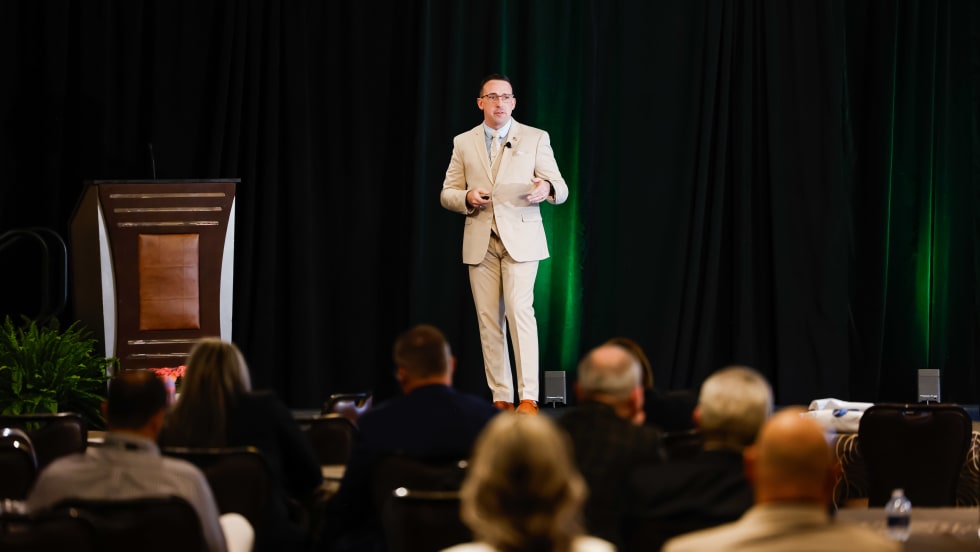
Humble and Hungry: 12 Rules for an F&I Life
Dustin Gingerich, with a decade in the F&I business under his belt, shares his thoughts on leadership, building trust with customers, and the importance of learning and innovation.
Read More →
Focus on the Opening
F&I managers must learn as much as possible about their customers, starting before they walk into their offices. The bulk of today’s consumers expect that, and good results will follow.
Read More →
F&I Reaches for the Sky
The increasingly important profit center continued making gains in the first quarter, according to StoneEagle data, ancillary products proving more popular as consumers hold onto their buys longer.
Read More →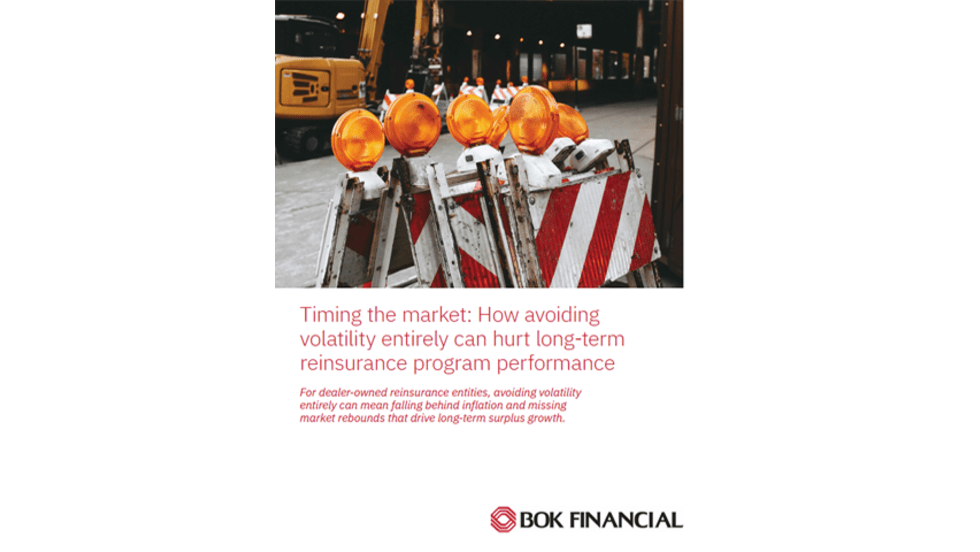
Timing the Market Can Hurt Long-Term Program Performance
For dealer-owned reinsurance entities, avoiding volatility entirely can mean falling behind inflation and missing market rebounds that drive long term surplus growth. Missing just a handful of strong market days can materially impact cumulative returns—an important reminder for long horizon trust and investment strategies.
Read More →
The 90/10 Rule
In this video, Ryan Ruff explains the rule that elite sales professionals use to turn ordinary conversations into unforgettable customer experiences.
Read More →
Your Office Is Talking
What’s the atmosphere saying about you to your customers? You can make minor adjustments and additions that transform your space into one that creates trust with the people on the other side of the desk.
Read More →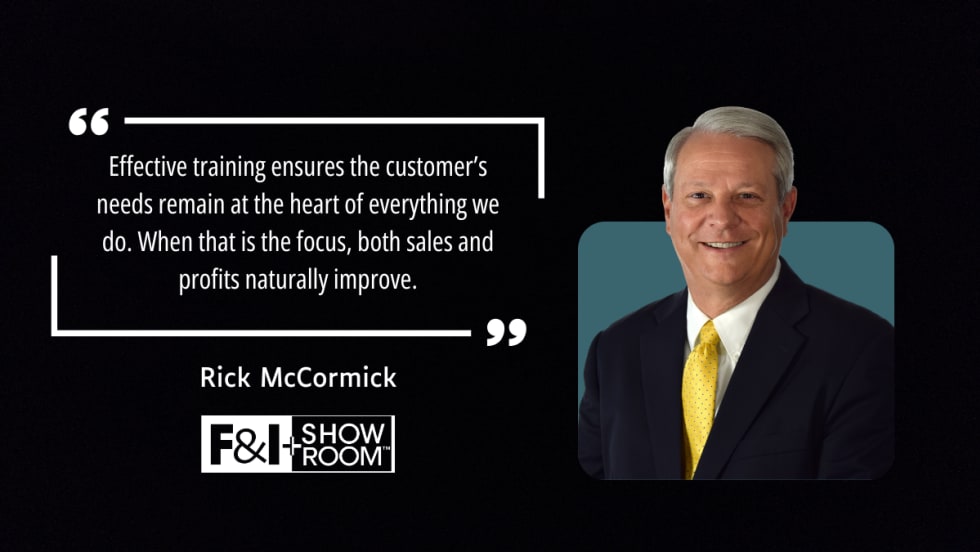
F&I Training Fundamentals
How can auto dealerships help F&I managers fulfill their vital role in the most effective ways? Industry expert Rick McCormick shares his insights on the best ways to train these professionals and help them maintain good habits.
Read More →
Not Just Any Tire Will Do
More consumers and businesses are opting for all-season options for various reasons as safety, sustainability and convenience push practical change.
Read More →