



Car Dealers Coming to Terms with the Web
Just a year ago, traditional car dealers looked like some of the biggest potential victims of the Internet, a $600 billion slice of American retailing about to be transformed as automakers and Silicon Valley start-ups alike sought ways to bypass the middlemen and sell directly to consumers. But, in a vivid example of the resurgence of the old economy, auto dealers have fought back and now increasingly control the selling of cars and light trucks on the Web, according to a Dec. 18 story by Keith Bradsher in The New York Times.
The dealers have survived partly because most customers still like to do test drives, partly because dealers were never as inefficient as they may have appeared and partly because dealers have used their considerable influence with state legislatures and regulators to limit or even shut down efforts to bypass them, according to Bradsher's story.
The question now is not who will bypass the dealers, but who will forge the closest alliance with them, according to The Times. Independent Internet companies and automakers are approaching this task with opposite strategies. The Internet companies have good prices but sometimes few vehicles to sell, while automakers' sites have lots of vehicles but often higher prices.
Because of regulatory problems, most of the Internet companies are not trying now to sell vehicles, according to Bradsher. Rather, they refer customers to dealers and then try to collect a fee from the dealer for the sales lead. Yet many dealers have become reluctant to pay these fees, saying that the leads seldom produce sales.
As dealers' enthusiasm has waned, customers who come up with their ideal car at an online service often cannot find such a vehicle on dealer lots, Internet experts say.
In response, the Internet companies have been striking deals with established dealership chains. CarsDirect.com started a year ago as an ambitious effort to buy cars from dealers and resell them nationwide. But it sold a stake last summer to Roger Penske, who controls two big dealership chains, the United Auto Group and Penske Automotive. Penske's chains now provide many of the vehicles for the online business, which sells them below the sticker price. The automakers have been able to avoid the scourge of independent Internet companies — inadequate inventory — by providing online access to the inventories of thousands of dealers nationwide.
The hard task of automakers has been persuading their dealers to agree on setting any online price for automobiles that is below the sticker price. Lower prices mean lower profit margins for dealers unless the volume of sales can compensate. Many dealers have been reluctant to take that chance, even though only luxury vehicles and a few popular mass-market models are actually sold for their sticker prices.
DaimlerChrysler and a variety of foreign automakers are mostly quoting sticker prices on their Web sites. General Motors and Ford Motor both announced plans last August for sites that would quote lower prices. But both plans, structured as joint ventures with the automakers' dealers so as to meet regulatory restrictions on direct sales by manufacturers, have become bogged down in bickering among dealers.
A precipitous decline in the stock prices of Internet auto retailers, mirroring the broader fall in Internet stocks, has removed some of the sense of urgency about setting up the new venture.
Ford announced in August that its nationwide auto retailing site would be up and running in September, but it is still struggling with regulators and its dealers this month, according to Bradsher's story.
Dealers, auto executives and Internet entrepreneurs say automotive retailing has improved because of the Internet, as dealers have become a little more open about which vehicles they have in stock and the prices they are willing to sell them for. But auto executives worry that the dealership industry is now settling into a contentment that might make it vulnerable to some new, Internet business model, according to Bradsher.
More F&I

Why Your F&I PVR Is Misleading You
Here’s a handy checklist of the numbers to track in 2026 instead.
Read More →
Auto Consumer Anxiety Presents Opportunity
A survey of U.S. drivers found the majority are concerned about finances and the economy, but those fears make many ready to buy vehicle-protection products.
Read More →
Humble and Hungry: 12 Rules for an F&I Life
Dustin Gingerich, with a decade in the F&I business under his belt, shares his thoughts on leadership, building trust with customers, and the importance of learning and innovation.
Read More →
Focus on the Opening
F&I managers must learn as much as possible about their customers, starting before they walk into their offices. The bulk of today’s consumers expect that, and good results will follow.
Read More →
F&I Reaches for the Sky
The increasingly important profit center continued making gains in the first quarter, according to StoneEagle data, ancillary products proving more popular as consumers hold onto their buys longer.
Read More →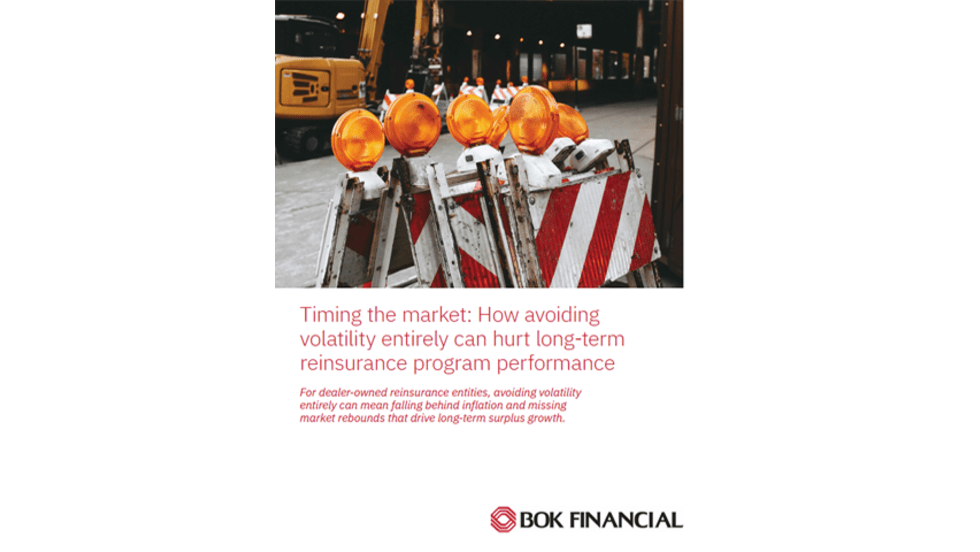
Timing the Market Can Hurt Long-Term Program Performance
For dealer-owned reinsurance entities, avoiding volatility entirely can mean falling behind inflation and missing market rebounds that drive long term surplus growth. Missing just a handful of strong market days can materially impact cumulative returns—an important reminder for long horizon trust and investment strategies.
Read More →
The 90/10 Rule
In this video, Ryan Ruff explains the rule that elite sales professionals use to turn ordinary conversations into unforgettable customer experiences.
Read More →
Your Office Is Talking
What’s the atmosphere saying about you to your customers? You can make minor adjustments and additions that transform your space into one that creates trust with the people on the other side of the desk.
Read More →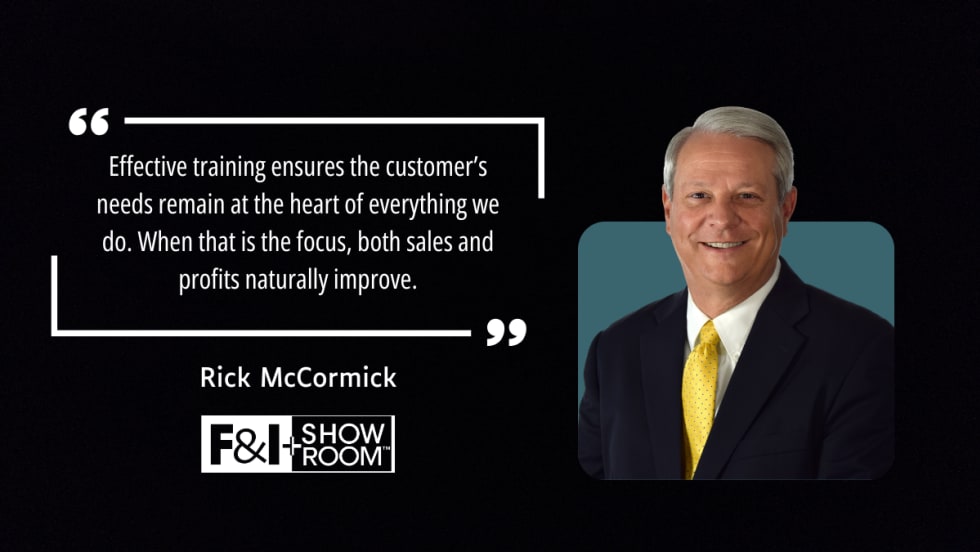
F&I Training Fundamentals
How can auto dealerships help F&I managers fulfill their vital role in the most effective ways? Industry expert Rick McCormick shares his insights on the best ways to train these professionals and help them maintain good habits.
Read More →
Not Just Any Tire Will Do
More consumers and businesses are opting for all-season options for various reasons as safety, sustainability and convenience push practical change.
Read More →