



Car Finance Markups Hurt African Americans, Study Author Claims
The author of a study finding that African-American car buyers paid more in car loans than similarly situated white buyers claims the only factor that explains the difference is race.
Dr. Debby A. Lindsey, a business professor at Howard University, analyzed close to 15,000 loans from General Motors Acceptance Corporation (GMAC) and Nissan Motor Acceptance Corporation (NMAC).
"Credit worthiness is not even an issue because it is already factored into the buy rate. The only issue is whether the finance companies' policy of allowing markups beyond the buy rate has an adverse effect on African Americans and I concluded that it does," Dr. Lindsey said.
Two federal lawsuits charge the discrimination affected hundreds of thousands of people who financed automobiles over the past 11 years. Lawyers in the class action cases are seeking money back and a change in the auto loan companies' practices.
The suits claim that car dealers were encouraged by GMAC and NMAC, unknown to most consumers, to inflate the costs of car loans for customers they thought would pay higher rates. The car finance companies and the dealerships then split the additional revenue. The plaintiffs' lawyers say it was that policy which resulted in discrimination with blacks typically paying about 50 percent more in dealer markup than whites. The complaints further allege that the finance companies should have foreseen the results and immediately ended the practice as soon as discrimination became apparent.
Federal civil rights law allows for penalties against companies whose policies lead to discriminatory lending or pricing, even if that discrimination is inadvertent and if race is not directly referred to in the policy.
"The record shows that discrimination is bad or even worse for African American car buyers with perfect credit," said Gary Klein, senior attorney with The National Consumer Law Center in Boston, one of several lawyers and law firms involved in the case. "NMAC and GMAC may not know the race of their borrowers, but they engage dealers to arrange the loan terms, and those dealers definitely do know the borrowers' race. We contend that the law makes NMAC and GMAC responsible for all the terms of the loan including those arranged by the dealers."
"Markup charges shouldn't be secret," Klein said. "The secrecy encourages dealers to set up loans for consumers not with the lender that offers the best rates, but rather with the lender that kicks back the most markup."
The suits against GMAC, concerning Tennessee car buyers, and the NMAC suit, concerning buyers across the country, are both pending in the U.S. District Court for the Middle District in Tennessee, which sits in Nashville. Both cases were certified in August of this year as class actions. The federal Department of Justice appeared in court in support of the plaintiffs' position. The cases were filed two years ago under seal, but were recently unsealed under pressure from national media.
ABC News' 20/20 featured a report on the investigation on Oct. 27.
Presently, the NMAC case is scheduled for trial in September 2001, and the GMAC case in February 2002.
More F&I

Why Your F&I PVR Is Misleading You
Here’s a handy checklist of the numbers to track in 2026 instead.
Read More →
Auto Consumer Anxiety Presents Opportunity
A survey of U.S. drivers found the majority are concerned about finances and the economy, but those fears make many ready to buy vehicle-protection products.
Read More →
Humble and Hungry: 12 Rules for an F&I Life
Dustin Gingerich, with a decade in the F&I business under his belt, shares his thoughts on leadership, building trust with customers, and the importance of learning and innovation.
Read More →
Focus on the Opening
F&I managers must learn as much as possible about their customers, starting before they walk into their offices. The bulk of today’s consumers expect that, and good results will follow.
Read More →
F&I Reaches for the Sky
The increasingly important profit center continued making gains in the first quarter, according to StoneEagle data, ancillary products proving more popular as consumers hold onto their buys longer.
Read More →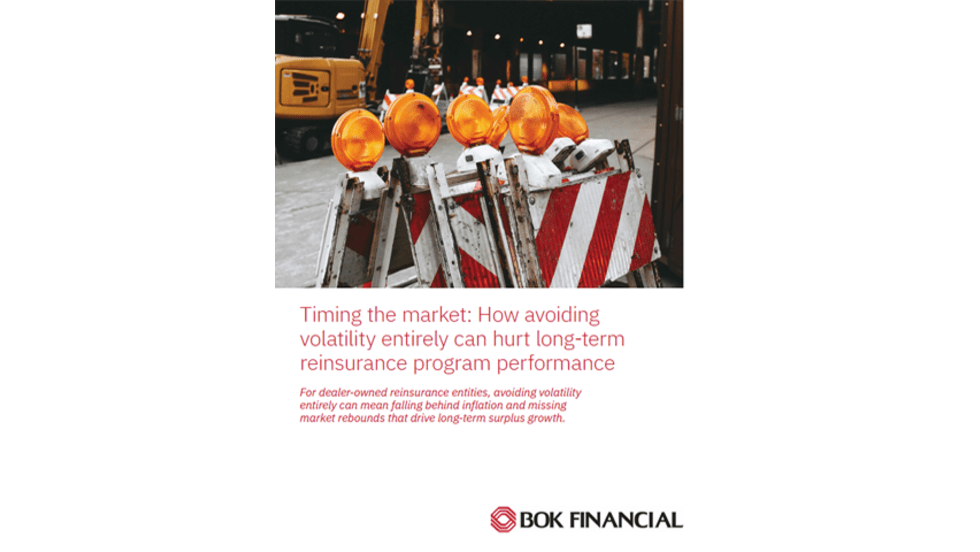
Timing the Market Can Hurt Long-Term Program Performance
For dealer-owned reinsurance entities, avoiding volatility entirely can mean falling behind inflation and missing market rebounds that drive long term surplus growth. Missing just a handful of strong market days can materially impact cumulative returns—an important reminder for long horizon trust and investment strategies.
Read More →
The 90/10 Rule
In this video, Ryan Ruff explains the rule that elite sales professionals use to turn ordinary conversations into unforgettable customer experiences.
Read More →
Your Office Is Talking
What’s the atmosphere saying about you to your customers? You can make minor adjustments and additions that transform your space into one that creates trust with the people on the other side of the desk.
Read More →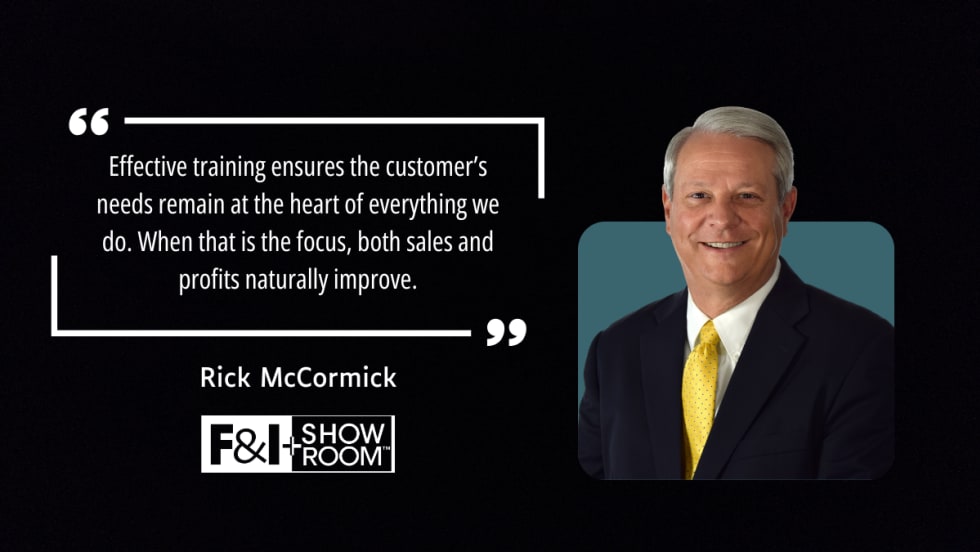
F&I Training Fundamentals
How can auto dealerships help F&I managers fulfill their vital role in the most effective ways? Industry expert Rick McCormick shares his insights on the best ways to train these professionals and help them maintain good habits.
Read More →
Not Just Any Tire Will Do
More consumers and businesses are opting for all-season options for various reasons as safety, sustainability and convenience push practical change.
Read More →