



CUDL Releases 2008 Auto Lending Report
Credit unions' performance in the auto lending marketplace closely mirrored the performance of banks and other financial institutions in 2007, according to CUDL's newly released 2008 Auto Lending Business Intelligence Report.
Rancho Cucamonga, Calif. Credit unions’ performance in the auto lending marketplace closely mirrored the performance of banks and other financial institutions in 2007, according to CUDL’s newly released 2008 Auto Lending Business Intelligence Report. The annual report, which highlights key credit union auto lending trends and statistics over the previous year, revealed that credit unions maintained a significant market presence in 2007.
According to the report, 16.9% of all auto loans originated in 2007 were through credit unions, down slightly from 18.0% in 2006. Likewise, banks’ market share dropped from 34.2% to
32.6% in 2007. The report reveals that a key to credit union market success in 2007 was their ability to offer competitive financing to their members when compared to other lending institutions. Credit unions continued to offer low rates and flexible loan terms to grow loan volume, whereas other
financial institutions turned to non-prime and sub-prime lending to boost their loan volumes. For instance, sub-prime loans made up nearly half of all the loans that finance companies originated
in 2007.
“Auto lending continues to be the one area where credit unions held a significant market share,” said CUDL’s market research analyst, Joe James. “In fact, there are five states where an
individual credit union is the top lender in the entire state.”
The report also showed that credit unions continue to effectively manage risk of their auto lending portfolios. Although credit union indirect delinquencies and charge-offs increased from 2006, these rates were still in line with the delinquency and charge-off rates on other consumer loans that credit unions offer. The credit union delinquency rate on indirect loans was 1.2% in 2007 while the credit union delinquency rate on other consumer loans was 1.3%. Average loan maturities on new and used vehicle loans funded by credit unions on the CUDL platform varied from the vehicle loans funded in 2006. The average new vehicle loan maturity in 2007 was 72 months, compared to 65 months in 2006. The report also shows that 69.3% of the loans had maturities greater than five years. For used vehicle loans, maturities experienced a shift in the other direction in 2007. Used vehicle loan maturities funded on the CUDL platform decreased from 70 months in 2006 to 65 months in 2007. This is a reflection of market trends as J.D. Power and Associates reported that 82.0% of all auto loans originated in 2007 had maturities between 60 and 77.9 months.
The report shows that 2007 was a year when credit unions sought to grow loan portfolios through new channels, including the recreational vehicle, watercraft, and motorcycle markets. Credit
unions funded over 10,000 of these loans in 2007. The average loan amounts for these vehicles ranged from $6,830 for an all-terrain vehicle (ATV) to $25,039 for a boat.
“Although we saw a decline in credit union market share from 2006 to 2007, a reflection of the current downturn in the auto industry, credit unions have maintained a strong presence in the
auto lending arena,” said Tony Boutelle, President and CEO of CUDL. “Credit unions have used new channels such as the internet to grow auto loans but they have also used traditional channels
to stay competitive.”
Credit unions interested in obtaining a copy of the 2008 Auto Lending Intelligence Report can do so by visiting href=http://www.cudl.com>cudl.com.
More F&I

Why Your F&I PVR Is Misleading You
Here’s a handy checklist of the numbers to track in 2026 instead.
Read More →
Auto Consumer Anxiety Presents Opportunity
A survey of U.S. drivers found the majority are concerned about finances and the economy, but those fears make many ready to buy vehicle-protection products.
Read More →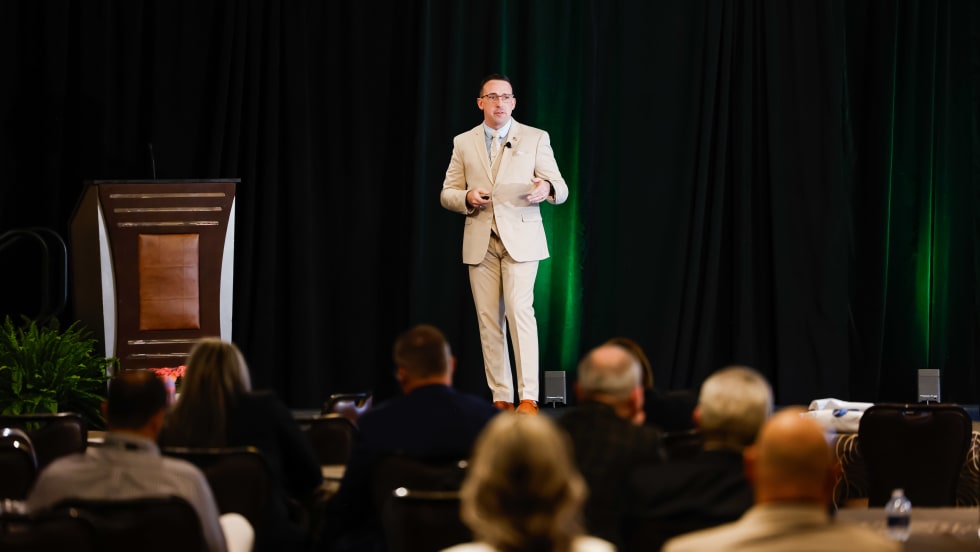
Humble and Hungry: 12 Rules for an F&I Life
Dustin Gingerich, with a decade in the F&I business under his belt, shares his thoughts on leadership, building trust with customers, and the importance of learning and innovation.
Read More →
Focus on the Opening
F&I managers must learn as much as possible about their customers, starting before they walk into their offices. The bulk of today’s consumers expect that, and good results will follow.
Read More →
F&I Reaches for the Sky
The increasingly important profit center continued making gains in the first quarter, according to StoneEagle data, ancillary products proving more popular as consumers hold onto their buys longer.
Read More →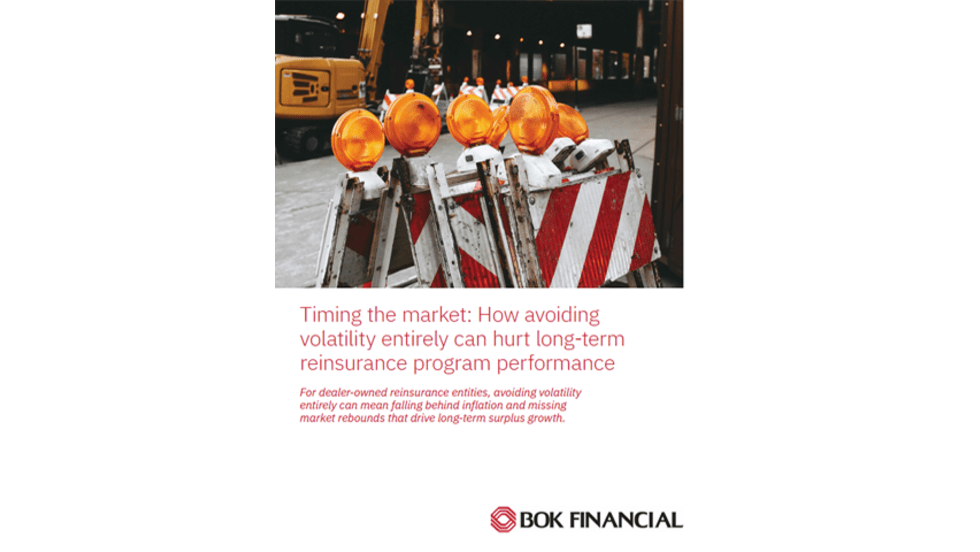
Timing the Market Can Hurt Long-Term Program Performance
For dealer-owned reinsurance entities, avoiding volatility entirely can mean falling behind inflation and missing market rebounds that drive long term surplus growth. Missing just a handful of strong market days can materially impact cumulative returns—an important reminder for long horizon trust and investment strategies.
Read More →
The 90/10 Rule
In this video, Ryan Ruff explains the rule that elite sales professionals use to turn ordinary conversations into unforgettable customer experiences.
Read More →
Your Office Is Talking
What’s the atmosphere saying about you to your customers? You can make minor adjustments and additions that transform your space into one that creates trust with the people on the other side of the desk.
Read More →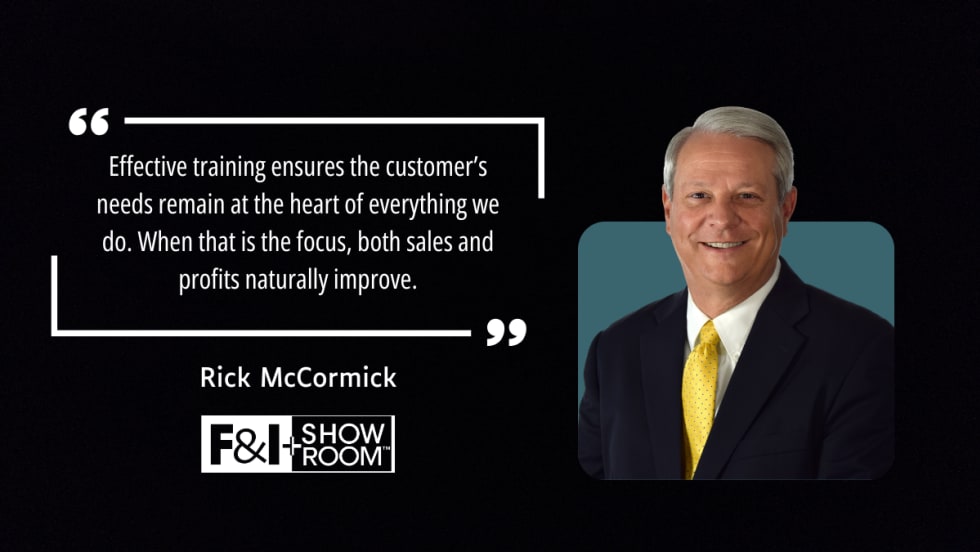
F&I Training Fundamentals
How can auto dealerships help F&I managers fulfill their vital role in the most effective ways? Industry expert Rick McCormick shares his insights on the best ways to train these professionals and help them maintain good habits.
Read More →
Not Just Any Tire Will Do
More consumers and businesses are opting for all-season options for various reasons as safety, sustainability and convenience push practical change.
Read More →