



Evergreen Bank Moves to Flat Fees Due to Regulatory Pressures
Earlier this month, Evergreen Bank Group issued a statement about its decision to move to a flat fee pricing model. The move was in response to a low FDIC rating and alleged violations of the ECOA.

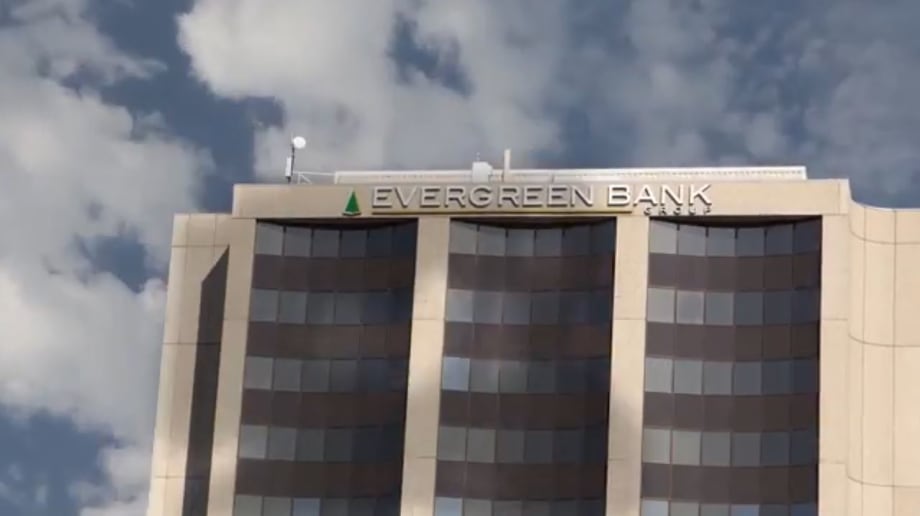
CHICAGO — Evergreen Bank Group became one of the first finance sources to adopt a flat-fee compensation model due to regulatory pressures. In a statement issued on March 4, the finance source said it eliminated discretionary pricing options for dealerships.
The statement was issued after the Federal Deposit Insurance Corp. issued the bank a low rating for its compliance with the Community Reinvestment Act (CRA). According to a public disclosure, Evergreen Bank Group’s CRA rating was “Substantial Noncompliance” due to “a substantially deficient record of helping to meet the credit needs of its assessment area, including low- and moderate-income neighborhoods, in a manner consistent with its resources and capabilities.”
The group was also charged with violations of Regulation B of the Equal Credit Opportunity Act. In a statement, the bank said the FDIC “based its findings of an alleged ECOA violation upon the much publicized and criticized theory called ‘disparate impact.’” The theory is being used by the Consumer Financial Protection Bureau (CFPB) in its investigation of the auto finance industry.
“Although the bank’s board of directors and management strongly disagree with the FDIC’s allegations that the Bank violated the ECOA and Regulation B, the bank recently opted to change its variable pricing model to a flat-fee pricing model within its indirect dealership lending program, even though variable pricing is the standard in the industry, making the bank one of the first lenders across the country to eliminate discretionary pricing options previously made available to dealerships,” the statement read, in part.
Industry associations and members of Congress have criticized the CFPB’s push for a flat fee compensation model in recent months, saying it would reduce competition and ultimately hurt consumers’ ability to secure affordable rates. At a public forum on auto lending held at the bureau’s headquarters in November, the CFPB’s Assistant Director of Fair Lending and Equal Opportunity Patrice Ficklin said the bureau does not see flat fees as an end-all solution.
The evaluation of Evergreen Bank Group covered the period between Jan. 1, 2010 and Dec. 31, 2011. It was based on a review of motorsport lending, home mortgage lending, home equity lines of credit and small business lending activities. Motorsport lending represented the largest portion of the bank’s lending activity, and such loans are originated through FreedomRoad Financial, for which Evergreen is the parent group.
“The bank’s record of motorsport lending reflects very poor penetration among individuals of different income levels,” the disclosure read. “This conclusion is based upon the very low number of motorsport loans made by the bank within its assessment area during 2010 and 2011.
“[Evergreen Bank Group] originated only one motorsport loan ($3,900) to an upper-income borrower in 2010 and one ($11,836) loan to an upper-income borrower in 2011. As this is the bank’s largest portion of the loan portfolio, it is expected that more than two loans would be originated inside the assessment area.”
Currently, the bank is in the final stages of procuring an approval for a CRA Strategic Plan to address the concerns raised about its dealership lending program.
More F&I

Modern Technology Objection Handling
In this video, Trent White shares how to confidently handle technology-based objections by helping customers understand the value of protection, even with modern vehicle technology.
Read More →
Consistency at Scale: Driving F&I Performance
With 75 rooftops across the Sunshine State, Morgan Auto Group has proven to Floridians that it knows a thing or two about driving performance in a competitive market. But it didn’t start at the top.
Read More →
Gitty Up on GAP
The foundational finance-and-insurance product hasn’t kept up with the latest conditions for auto dealers. Is the time ripe?
Read More →
How AI-Powered Coaching Is Transforming F&I Performance
See how AI-powered coaching can turn F&I customer conversations into actionable insights that support compliance, performance and profitability
Read More →
Sell Value, Build Trust
In this video, Trent White explains why selling on value, not fear, builds lasting customer trust, reduces cancellations, and drives long-term success.
Read More →
F&I Sales Give Dealers First-Half Lift
Product business shored up total profits to avoid an overall revenue tanking as product penetrations held steady, StoneEagle reported.
Read More →
Targeted Training Drives Results
Today’s technology, instead of threatening F&I managers, can actually make them better, according to an industry veteran who’s watched market setbacks roil the unprepared.
Read More →
Double the Change, Double the Chance
When an F&I manager gets a customer refusal, it’s a wise move to tweak more than one thing in the product offering.
Read More →
Just Do It
F&I managers need training, but instead of resisting application or expecting perfection, they should improve by simply acting on what they learn.
Read More →
Dealer Lender Preferences Revealed
When lenders provide consistent, fast service, their overall satisfaction scores with dealers greatly improve, according to JD Power research.
Read More →