



Fifth Third Bank to Cap Dealer Markups
The CFPB and DOJ announced two actions against Fifth Third Bank on Monday, one of which requires the finance source to pay $18 million in restitution to minority auto loan borrowers, as well as limit its dealer partners’ ability to markup interest rates on auto loans.

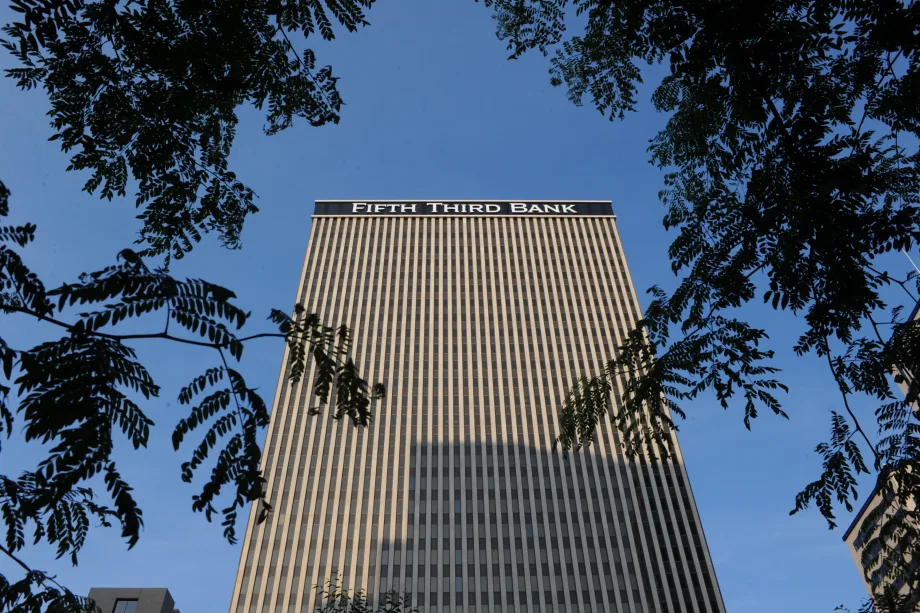
WASHINGTON, D.C. — Nearly two months after media outlets reported that Fifth Third Bank was being pressured by the Consumer Financial Protection Bureau (CFPB) to change its dealer markup policies, the finance source has entered into a consent order with the bureau and the Department of Justice (DOJ) related to its auto lending business.
Under the terms of the consent order, Fifth Third Bank will pay $18 million to African-American and Hispanic borrowers who were allegedly harmed by its auto lending policies. According to the bureau, those customers paid, on average, $200 more for auto loans than similarly situated white buyers due to policies that allow dealers to markup up the interest rate on retail installment sales contracts as compensation for arranging financing.
Bureau officials noted in a press release Monday that Fifth Third is being credited between $5 million and $6 million toward the $18 million in restitution payments based on remediation it already provided to minority borrowers.
“It is important to understand that Fifth Third is not involved in the transaction between dealers and their customers,” the finance source said in an emailed statement to F&I and Showroom. “… Fifth Third also limits the amount that dealers can earn through dealer markup, and we are further reducing that as a result of this settlement.”
Like Honda Finance Corporation, which agreed to limit dealer markups in July, Fifth Third will cap dealer markups at 1.25% above the buy rate for auto loans with terms of five years or less, and 1% for auto loans with longer terms. The finance source had been monitoring the effect of dealer markups on its auto loan portfolio since 2013, but according to the consent order, it “failed to take timely and adequate action to address markup disparities” it had identified.
“Fifth Third strongly opposes any type of discrimination and has, for many years, monitored for and taken steps to avoid any potential discrimination in its auto finance business, as well as all other areas in which we interact with consumers,” the finance source noted in its statement. During the CFPB and DOJ’s examination period, Fifth Third had limited dealer markup to 175 to 250 basis points with variation based on term, geography and time period.
Information about ethnicity or race is not included on retail installment sales contracts, but the regulators used proxy methodology to determine that Fifth Third purchased “thousands” of contracts involving African-American and Hispanic borrowers. However, based on internal documents it obtained, American Banker reported this month that CFPB officials have acknowledged that the bureau’s methodology often overestimates potential bias, resulting in higher penalties for finance sources cited by the regulator.
“Nothing in the American Banker story disputes the existence of discrimination in auto lending, or that minority borrowers have been charged higher interest rates on their loans as a result,” CFPB Spokesperson Samuel Gilford told F&I and Showroom in an email.
Also on Monday, the CFPB and DOJ announced a second action against Fifth Third Bank related to the marketing of its credit card add-on products. The finance source will pay $3 million in restitution to 24,500 customers who were charged a fee for a “debt protection” product without being properly informed of the cost, and a $500,000 penalty.
More F&I

AI: Facilitator, Not Fixer, in F&I
The dealerships that thrive in the years ahead will be those that embrace technology while continuing to invest in the people who make customer interactions count.
Read More →
Modern Technology Objection Handling
In this video, Trent White shares how to confidently handle technology-based objections by helping customers understand the value of protection, even with modern vehicle technology.
Read More →
Consistency at Scale: Driving F&I Performance
With 75 rooftops across the Sunshine State, Morgan Auto Group has proven to Floridians that it knows a thing or two about driving performance in a competitive market. But it didn’t start at the top.
Read More →
Gitty Up on GAP
The foundational finance-and-insurance product hasn’t kept up with the latest conditions for auto dealers. Is the time ripe?
Read More →
How AI-Powered Coaching Is Transforming F&I Performance
See how AI-powered coaching can turn F&I customer conversations into actionable insights that support compliance, performance and profitability
Read More →
Sell Value, Build Trust
In this video, Trent White explains why selling on value, not fear, builds lasting customer trust, reduces cancellations, and drives long-term success.
Read More →
F&I Sales Give Dealers First-Half Lift
Product business shored up total profits to avoid an overall revenue tanking as product penetrations held steady, StoneEagle reported.
Read More →
Targeted Training Drives Results
Today’s technology, instead of threatening F&I managers, can actually make them better, according to an industry veteran who’s watched market setbacks roil the unprepared.
Read More →
Double the Change, Double the Chance
When an F&I manager gets a customer refusal, it’s a wise move to tweak more than one thing in the product offering.
Read More →
Just Do It
F&I managers need training, but instead of resisting application or expecting perfection, they should improve by simply acting on what they learn.
Read More →