



Ford Enters Agreement to Boost Chip Supplies
Ford Motor Co. partners with chip maker GlobalFoundries to address the auto industry’s semiconductor supply shortfalls.

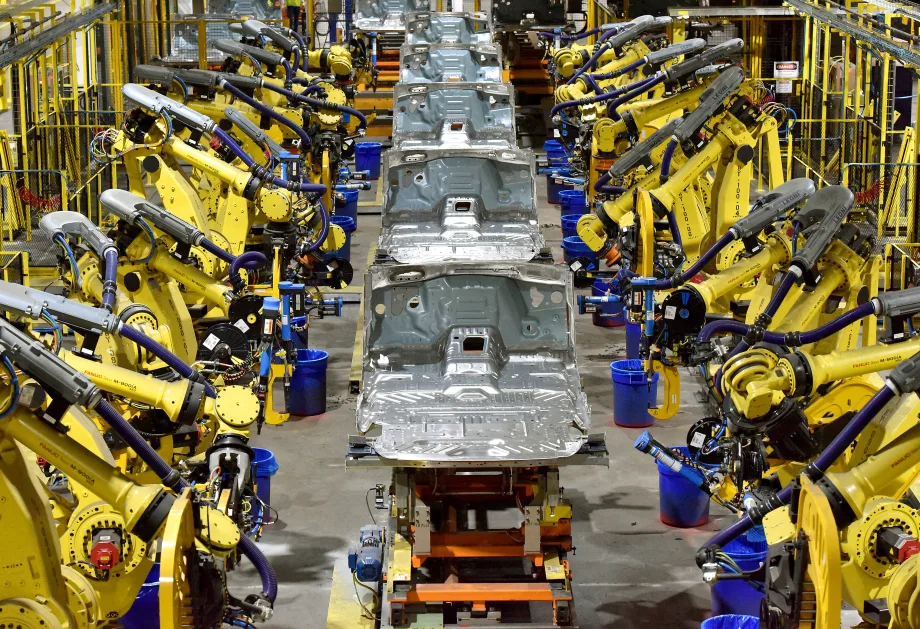
Ford entered an agreement with GlobalFoundries to access more semiconductor chips the entire U.S. auto industry.
Creative Commons
Ford Motor Co. has partnered with chip maker GlobalFoundries to address the auto industry's semiconductor supply shortfalls.
The Detroit-based automaker entered an agreement with the U.S. manufacturer of semiconductor chips to access more semiconductor chips for Ford's vehicle lineup and the entire U.S. auto industry.
“It's critical that we create new ways of working with suppliers to give Ford—and America—greater independence in delivering the technologies and features our customers will most value in the future,” said Jim Farley, Ford president and CEO, in a statement about the contract.
He added, “This agreement is just the beginning, and a key part of our plan to vertically integrate key technologies and capabilities that will differentiate Ford far into the future.”
Ford hasn’t specified the details of the agreement, but indicates it may include semiconductors for ADAS, battery management systems, and in-vehicle networking for electric vehicles.
The agreement spans beyond Ford. The agreement will boost chip supplies for both Ford and the U.S. automotive industry and will advance semiconductor manufacturing and technology development within the United States.
Ford production slowed over the semiconductor shortage, with the automaker reporting latest sales dropped 27% in the third quarter compared to 2020 because of missing components.
The chip crisis arose during the pandemic. When demand fell during shutdowns, automakers responded by lowering their orders for semiconductor chips. When manufacturing resumed, automakers scrambled to access chips that companies had diverted to the electronics industry.
Chip makers place a higher value on the more expensive chips for computers and smartphones that use new manufacturing processeses. The auto industry, in contrast, relies on cheaper chips manufactured with older production techniques.
GlobalFoundries CEO Tom Caulfield told CNBC in October that it focuses on “legacy nodes” used for lower-powered things suitable to the auto industry, versus smartphones.
“That's where the bigger part of the shortage is, because there's been underinvestment in that," he said.
European lawmakers also seek opportunities that will help them regain control of semiconductor supply chains that are dominated by Asia, in particular Taiwan. The EC unveiled its Digital Compass plan in March, which aims to raise its share of the world’s semiconductor supply from 9% today to 20%—or slightly less than half its share in the 1990s.
It is estimated that the semiconductor shortage has cost the auto industry as estimated $210 billion in lost revenue in 2021.
Originally posted on Auto Dealer Today
More Showroom

California Sees Quarterly Gains
California’s new-vehicle market saw a boost in hybrids in the third quarter and its first overall quarterly market gain of the year.
Read More →
New-Vehicle Prices Stay Put
Affordability pressures and model availability shaped new-vehicle sales in September, according to an analysis by Kelley Blue Book.
Read More →
EV Buyer Consideration Shifts
What drives American consumers to purchase an electric vehicle is shifting as the question moves away from Should I?' to 'Which features and experience do I want to have?'
Read More →
Year-to-Date Auto Sales Holding Their Own
A forecast through August shows that automakers have shifted strategies to keep deliveries and revenues up despite tariffs and other economic challenges.
Read More →
Slow to Robo
Ten years of polling consumers shows autonomous vehicles’ profiles have risen considerably, but even more people now want at least some level of control if they go that route.
Read More →
Dealers a Little Down
A third-quarter Cox Automotive survey finds them in a mixed mood, bummed by fallen customer traffic but encouraged by better profits, costs and EV interest.
Read More →
European EV Sales Skyrocket
The EV market on the continent held strong in July with almost 25% of new-car sales being fully electric units, a stark contrast to the U.S., where EV sales declined about 42%.
Read More →
Mitsubishi Unveils U.S. Plan
The automaker announced a strategy that includes an expanded lineup and dealership presence, along with more ‘rugged’ and electric models.
Read More →
Used Lots Getting the Business
Many consumers are seeking out the units to save money, and the demand – higher in July than normal – is keeping supply limited and prices up.
Read More →
Used Market Stabilizes
The Carfax Used Car Index noted a major drop in used-vehicle price increases in July after several months of hikes.
Read More →