



Hyundai Freezes Fleet Sales to Push More Vehicles to Dealers
By sharply reducing fleet sales, Hyundai can deliver more inventory to dealers.

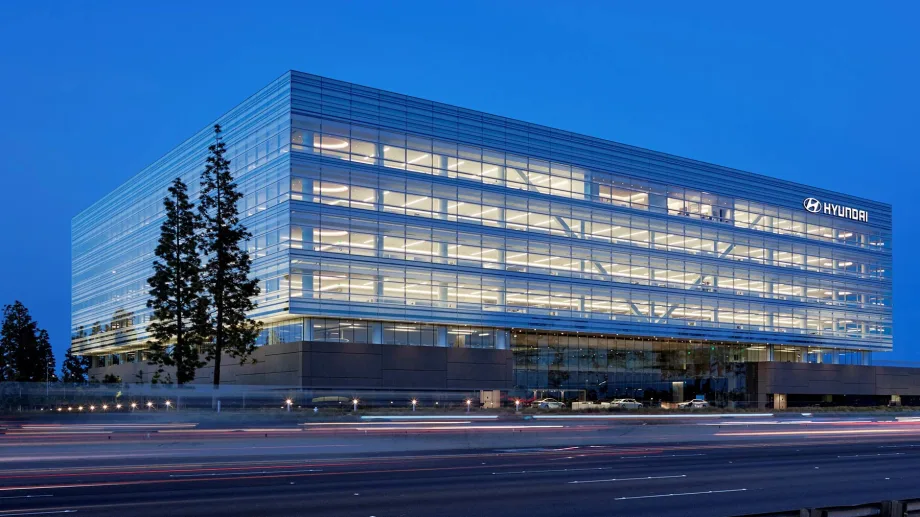
Hyundai headquarters in North America.
Glumac
Hyundai announced plans to freeze fleet sales to increase vehicle production for dealerships, during its make meeting at the end of the NADA Show.
"The plan is for growth," said Kevin Reilly, chairman of the Hyundai National Dealer Council and owner of Alexandria Hyundai in Virginia. "The plan is to add approximately 20% to production this year over last year and the dealers are very excited because they'll have more product."
This announcement comes on the heels of significant supply chain constraints on critical parts, including semiconductor chips.
However, Hyundai North America posted record dales of
Despite supply chain constraints on critical parts such as semiconductor chips, Hyundai Motor America recorded record sales of 694,349 in 2021, a 20% increase over 2020. Last year, Hyundai Fleet Sales fell 24% and represented just 6%of total volume, the automaker said.
By sharply reducing fleet sales, Hyundai can deliver more inventory to dealers, who applauded Hyundai Sales Chief Randy Parker at the Las Vegas event when he announced the moratorium on fleet sales.
"Dealers need inventory," Reilly said. "The message from Hyundai was that they are in agreement, with zero fleet for February, zero fleet for March and zero fleet for April."
Hyundai also announced plans to freeze the dealer network at just over 800 retailers to push greater throughput. The move supports dealers financially as Hyundai asks them to join a facilities program known as Accelerate.
Sales growth will focus on increasing throughput at existing dealerships, the automaker reported. Dealerships will get larger but there will be no more additional dealers.
Hyundai didn’t share more details about the Accelerate program at the make meeting. About 60% of dealers have already signed up for the program. That number could rise to about two-thirds of the overall dealer network by spring, Reilly said.
Originally posted on Auto Dealer Today
More Showroom

New Cars Less Affordable
Buying conditions eroded for American shoppers last month due to inflation and interest rates, though they fared better than a year ago.

October Sales Divided
Inventory trends split between the new- and used-vehicle markets, though prices continued to rise for both in October.

Auto Transaction Prices Hit New Height
October sales of big, pricey models push up the average, even as budget-conscious consumers snag more economical options.

Making the Safe Choice
Kelley Blue Book has turned households with teen drivers onto safe and affordable options for their vehicles of choice

Inventory Holds Steady
September new-vehicle inventory rose slightly month-over-month, but dealer lots are laden with MY2026 vehicles as the typical model year changeover trudges along.

October Auto Sales Fall With the Leaves
A forecast anticipates retail deliveries are down this month as consumers continue to face cost challenges, though more are tapping long loans in order to buy.

California Sees Quarterly Gains
California’s new-vehicle market saw a boost in hybrids in the third quarter and its first overall quarterly market gain of the year.

New-Vehicle Prices Stay Put
Affordability pressures and model availability shaped new-vehicle sales in September, according to an analysis by Kelley Blue Book.

EV Buyer Consideration Shifts
What drives American consumers to purchase an electric vehicle is shifting as the question moves away from Should I?' to 'Which features and experience do I want to have?'

Year-to-Date Auto Sales Holding Their Own
A forecast through August shows that automakers have shifted strategies to keep deliveries and revenues up despite tariffs and other economic challenges.