



IHS: EV Sales, Loyalty Reach Record Highs
U.S. sales of all-electric vehicles more than doubled in 2018, a year in which EV buyer and lessee loyalty increased to 55%.

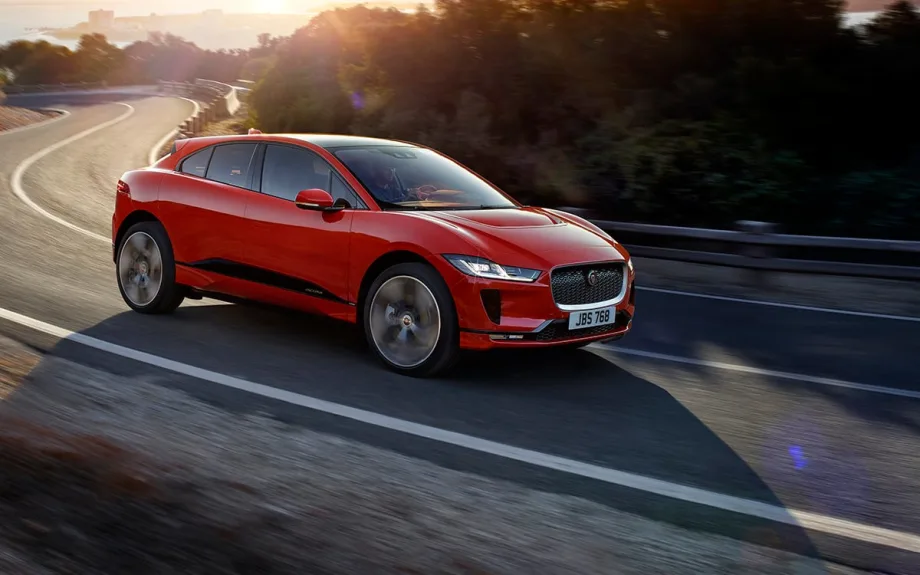
The Jaguar I-Pace CUV is one of several new all-electric models to reach the North American market in the past three years.
Photo courtesy Jaguar Land Rover
SOUTHFIELD, Mich. — The U.S. market for fully electric vehicles has reached record volumes with 208,000 new registrations in 2018, all while loyalty rates of EV buyers continues to grow, according to recent analysis by business intelligence firm IHS Markit.
Last year, EV registrations more than doubled from just over 100,000 in 2017, capping three years of exponential market-share growth. Perhaps not surprisingly, 59% of these vehicles were registered in California and the Section 177 states, which have all adopted the same vehicle emission standards and have therefore been key markets for EVs as new models proliferate, analysts noted. California on its own accounted for nearly 46% (95,000) of new EV registrations in 2018.
Loyalty rates for EVs are also on a growth trajectory with nearly 55% of all new EV owners who returned to market during the fourth quarter of 2018 purchasing or leasing another EV, up from 42% in the prior quarter. The trend continued in January, with nearly 70% of EV owners returning to market for a new EV during that month, analysts said.
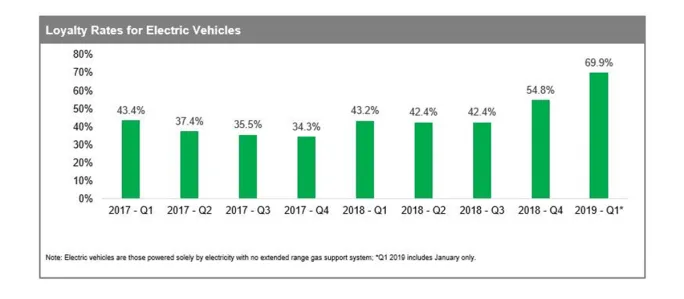
Source: IHS Markit
“EV loyalty rates have been steadily increasing since their introduction by OEMs. This increase over such a short timeframe demonstrates that a portion of the US market is highly accepting of this new technology and has a growing comfort level with it,” said Tom Libby, loyalty principal at IHS Markit. “As more new models enter the market, we anticipate an even further increase in loyalty to these vehicles.”
In addition, IHS Markit forecasts a considerable increase in new fully-electric models offered in the US market over the next decade, with over 350,000 new EVs to be sold in the US in 2020, reflecting a 2% share of the total US fleet. In 2025, that figure is expected to rise to over 1.1 million vehicles sold or a 7% share, according to recent IHS Markit powertrain forecasts.
“A rapid increase in EV nameplates is the catalyst behind the projected growth throughout the next decade,” said Devin Lindsay, IHS Markit powertrain analyst. “While relatively successful models such as the Tesla Model 3 mature in the market, other traditional automakers will be rolling out not just one EV as we have seen in the past, but multiple models off dedicated EV platforms.”
Originally posted on Auto Dealer Today
More Showroom
California Sees Quarterly Gains
California’s new-vehicle market saw a boost in hybrids in the third quarter and its first overall quarterly market gain of the year.
Read More →
New-Vehicle Prices Stay Put
Affordability pressures and model availability shaped new-vehicle sales in September, according to an analysis by Kelley Blue Book.
Read More →
EV Buyer Consideration Shifts
What drives American consumers to purchase an electric vehicle is shifting as the question moves away from Should I?' to 'Which features and experience do I want to have?'
Read More →
Year-to-Date Auto Sales Holding Their Own
A forecast through August shows that automakers have shifted strategies to keep deliveries and revenues up despite tariffs and other economic challenges.
Read More →
Slow to Robo
Ten years of polling consumers shows autonomous vehicles’ profiles have risen considerably, but even more people now want at least some level of control if they go that route.
Read More →
Dealers a Little Down
A third-quarter Cox Automotive survey finds them in a mixed mood, bummed by fallen customer traffic but encouraged by better profits, costs and EV interest.
Read More →
European EV Sales Skyrocket
The EV market on the continent held strong in July with almost 25% of new-car sales being fully electric units, a stark contrast to the U.S., where EV sales declined about 42%.
Read More →
Mitsubishi Unveils U.S. Plan
The automaker announced a strategy that includes an expanded lineup and dealership presence, along with more ‘rugged’ and electric models.
Read More →
Used Lots Getting the Business
Many consumers are seeking out the units to save money, and the demand – higher in July than normal – is keeping supply limited and prices up.
Read More →
Used Market Stabilizes
The Carfax Used Car Index noted a major drop in used-vehicle price increases in July after several months of hikes.
Read More →