



New Gas Tax Hike Not Enough to Fix California’s Crumbling Roads, Group Says
California roads are crumbling, and a nonprofit, nonpartisan think tank says in a newly published white paper that a recently passed transportation funding bill won’t raise enough funds to complete the backlog of needed repairs.
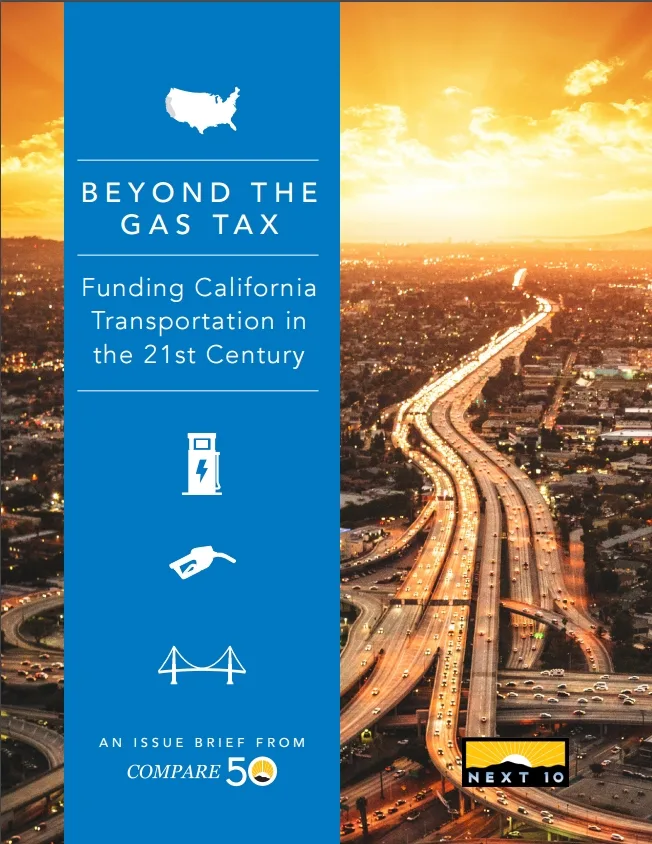
SAN FRANCISCO — California should consider adjusting a system that pins transportation infrastructure to the sale of gasoline and diesel. That’s the conclusion of a new white paper published by a nonprofit, nonpartisan think tank.
The white paper, “Beyond the Gas Tax: Funding Transportation in the 21st Century,” was delivered just after the passage of Senate Bill 1, a transportation funding bill that raises the state’s gasoline tax by 12 cents a gallon. The white paper, commissioned by Next 10 and prepared by Beacon Economics, says the amount of tax revenue collected under the legislation isn’t enough to complete the backlog of repairs to fix California’s roads.
“We found that more than two-thirds of California’s roads are in poor or mediocre shape, compared to a quarter of roads nationally,” said businessman and Next 10 founder F. Noel Perry. “But revenue from fuel taxes is shrinking, and the gap between what we need and what we have to spend will keep growing, despite the passage of SB 1. This bill is a great start, but the state needs to adapt its approach in order to fund our roads down the line.”
The white paper points out that that while California roads are among the worst in the nation, funding for repairs and improvements — which comes largely from motor vehicle fuel taxes — is declining as cars become more fuel efficient and the state’s electric vehicle fleet grows. It calls on the state to develop a new model for transportation funding in order to address infrastructure needs.
Senate Bill 1 is expected to bring in $52.4 billion in revenue over a 10-year period. That figure falls short of the current $137 billion deferred maintenance deficit that has not been addressed. And the deficit may continue to grow, the white paper states, as inflation-adjusted fuel tax revenue declined 20% from 2010 to 2015 despite Californians logging a record 335 billion miles traveled in 2015.
According to the white paper, low fuel prices and vehicles with improved fuel economy are responsible for declines in fuel taxes. New vehicles, for instance, have improved fuel efficiency by more than 27% in a decade, with vehicles traveling an average of five and half miles farther on every gallon of gas. Additionally, approximately 258,000 electric vehicles have been sold in the state so far.
And if California succeeds in putting 1.5 million zero-emission vehicles on the road by 2015, the white paper states, the displacement of gasoline would mean a revenue loss of $572 million in state gasoline taxes and $276 million federal excise taxes.
“Our current transportation funding system cannot support our needs over the long term,” said Adam Fowler, manager of public policy research at Beacon Economics. “We delved into statewide data from California and across the country to get a better handle on this problem and identify possible solutions. We found that California has some of the highest fuel tax rates (7th for gasoline and 8th for diesel), but its fuel tax revenue continues to decline and the roads continue to worsen.”
Most California roads are at least 40 years old, and have reached or exceeded their designed useful life. Bad roads come with a cost: the American Society of Civil Engineers’ 2017 Infrastructure Report Card estimates that driving on poorly maintained roads costs each California motorist $844 in vehicle repairs per year. That’s the nation’s second-highest cost per driver, trailing only Connecticut.
While SB 1 provides some important steps forward, such as tying new excise tax rates to inflation, the legislation does not account for user-specific costs, which will be key in ensuring sustainable funding in an evolving vehicle marketplace. Tying taxes and fees to usage will help provide more reliable revenue as cars and trucks improve efficiency and the electric vehicle market grows.
“SB 1 may prove to be a temporary solution to a growing and permanent problem,” Fowler said. “Given the fact that the transportation sector is California’s greatest contributor of greenhouse gas emissions, the state needs to work on expanding flexible funding solutions in order to meet its climate goals while keeping its roads safe and in good repair in the long term.”
California is exploring a mileage-based user tax, which charges the most to drivers who use the roads the most. The white paper discusses privacy, tracking concerns, and public trust issues, as well as questions about equity and efficiency.
Another solution is to fund toll roads through public/private partnerships. This could save taxpayers money, and ensure that the people who pay for a given road are the people who actually use that road. The risk is that private companies may pursue more low-risk, profit-driven projects that might not align with the infrastructure needs of the state or the transportation needs of its residents.
“People have gotten used to the idea that, for example, their smart-phone apps share location information with unseen companies large and small. But letting the government know how far you’ve traveled is a different matter for many,” said Next 10’s Perry. “Pilot programs testing alternative funding systems could help arm California with the information it needs to design improved programs that will more sustainably, effectively, and equitably deliver needed funds to the state’s roads and infrastructure.”
To read the complete white paper, click here.
More F&I

AI: Facilitator, Not Fixer, in F&I
The dealerships that thrive in the years ahead will be those that embrace technology while continuing to invest in the people who make customer interactions count.
Read More →
Modern Technology Objection Handling
In this video, Trent White shares how to confidently handle technology-based objections by helping customers understand the value of protection, even with modern vehicle technology.
Read More →
Consistency at Scale: Driving F&I Performance
With 75 rooftops across the Sunshine State, Morgan Auto Group has proven to Floridians that it knows a thing or two about driving performance in a competitive market. But it didn’t start at the top.
Read More →
Gitty Up on GAP
The foundational finance-and-insurance product hasn’t kept up with the latest conditions for auto dealers. Is the time ripe?
Read More →
How AI-Powered Coaching Is Transforming F&I Performance
See how AI-powered coaching can turn F&I customer conversations into actionable insights that support compliance, performance and profitability
Read More →
Sell Value, Build Trust
In this video, Trent White explains why selling on value, not fear, builds lasting customer trust, reduces cancellations, and drives long-term success.
Read More →
F&I Sales Give Dealers First-Half Lift
Product business shored up total profits to avoid an overall revenue tanking as product penetrations held steady, StoneEagle reported.
Read More →
Targeted Training Drives Results
Today’s technology, instead of threatening F&I managers, can actually make them better, according to an industry veteran who’s watched market setbacks roil the unprepared.
Read More →
Double the Change, Double the Chance
When an F&I manager gets a customer refusal, it’s a wise move to tweak more than one thing in the product offering.
Read More →
Just Do It
F&I managers need training, but instead of resisting application or expecting perfection, they should improve by simply acting on what they learn.
Read More →