



Survey Reveals Few Auto Dealers Leverage Data for Inventory Management, Pricing
Lotlinx research shows many executives still rely on instinct, highlighting need for predictive modeling solutions.

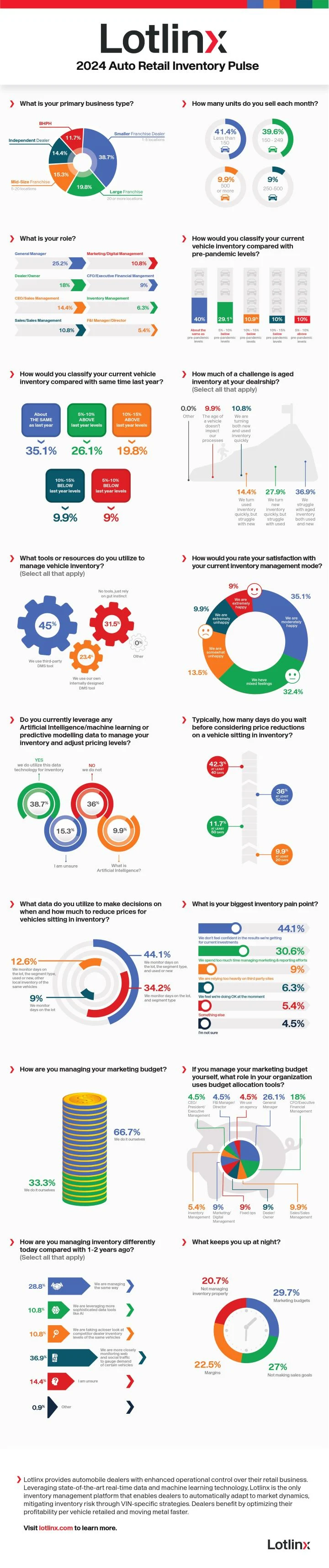
More than 2,500 automotive dealer professionals, and just 12.6% said they're leveraging sophisticated analytical data to monitor days on the lot.
IMAGE: Lotlinx
Lotlinx, a VIN-specific data company for dealership inventory management, shared results of its Automotive Retail Industry Pulse Survey to better understand where automotive dealership professionals are facing challenges in managing vehicle inventory and to take the pulse on use of artificial intelligence and machine learning to help mitigate inventory risk.
Lotlinx presented an online survey to more than 2,500 automotive dealer professionals in March. According to the results, only 12.6% of dealers said they are leveraging sophisticated analytical data to monitor days on the lot, combined with segment type, used or new, and other local inventory levels of similar vehicles. Approximately 31% of respondents said they still rely only on gut instinct to manage their dealership’s vehicle inventory, and 36.9% said they continue to struggle with managing inventory for both new and used vehicles.
While 38.7% of respondents are currently leveraging the capabilities of AI/ML or predictive modeling data to manage inventory and adjust pricing levels, another 36% are not, which reveals the increasing need for industry solutions to predict market factors that drive VIN outcomes in real-time. Lotlinx’s recently launched Sentinel VIN Risk Mitigation Platform (VMP), helps dealers not only forecast inventory risks and implement corrective actions at the VIN level to reduce the time vehicles spend on lots, but also helps them earn higher profit margins and enhance competitive market performance.
Additionally, the largest number of respondents, 44%, said they don’t feel confident in the results they are receiving from current investments when understanding their largest inventory marketing pain point, and this is another area where solutions, such as Sentinel, come in to automatically allocate marketing resources to offset aging and markdowns, ultimately improving dealer performance and profits. As Sentinel is powered by the company’s AI-assisted chatbot, Lexaca, to offer comprehensive, market and competitive data for every vehicle on a dealer’s lot, it’s important to recognize how this level of information can enhance the customer experience and increases the likelihood of closing a sale, while also allowing dealerships to establish a pricing strategy that aligns with customer expectations and loyalty.
“These results tell us that auto dealers can no longer rely on manual methods, industry experience, and overall ‘gut instinct’ to manage inventory and determine pricing,” said Lotlinx CEO Jason Knight. “By leveraging the power of AI through predictive analytics, auto dealers can anticipate demand fluctuations, enabling them to adjust inventory levels proactively, and we are committed to ensuring that dealerships are well-positioned to capitalize on industry shifts and emerging trends.”
Originally posted on Auto Dealer Today
More Showroom

New Cars Less Affordable
Buying conditions eroded for American shoppers last month due to inflation and interest rates, though they fared better than a year ago.

October Sales Divided
Inventory trends split between the new- and used-vehicle markets, though prices continued to rise for both in October.

Auto Transaction Prices Hit New Height
October sales of big, pricey models push up the average, even as budget-conscious consumers snag more economical options.

Making the Safe Choice
Kelley Blue Book has turned households with teen drivers onto safe and affordable options for their vehicles of choice

Inventory Holds Steady
September new-vehicle inventory rose slightly month-over-month, but dealer lots are laden with MY2026 vehicles as the typical model year changeover trudges along.

October Auto Sales Fall With the Leaves
A forecast anticipates retail deliveries are down this month as consumers continue to face cost challenges, though more are tapping long loans in order to buy.

California Sees Quarterly Gains
California’s new-vehicle market saw a boost in hybrids in the third quarter and its first overall quarterly market gain of the year.

New-Vehicle Prices Stay Put
Affordability pressures and model availability shaped new-vehicle sales in September, according to an analysis by Kelley Blue Book.

EV Buyer Consideration Shifts
What drives American consumers to purchase an electric vehicle is shifting as the question moves away from Should I?' to 'Which features and experience do I want to have?'

Year-to-Date Auto Sales Holding Their Own
A forecast through August shows that automakers have shifted strategies to keep deliveries and revenues up despite tariffs and other economic challenges.