



Trump Administration Streamlines Self-Driving Guidelines
U.S. Transportation Secretary Elaine Chao released a new set of voluntary federal guidelines for autonomous vehicles on Sept. 12 — a move the Trump administration said will make federal regulatory processes "more nimble to help match the pace of private sector innovation."
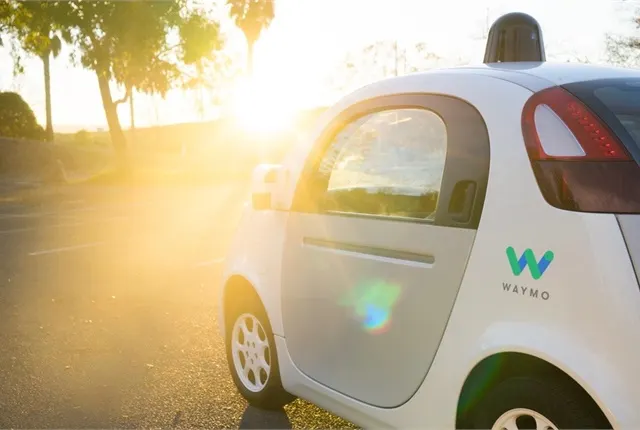
Photo courtesy Waymo
U.S. Transportation Secretary Elaine Chao released a new set of voluntary federal guidelines for autonomous vehicles on Sept. 12 — a move the Trump administration said will make federal regulatory processes "more nimble to help match the pace of private sector innovation."
The guidance, which replaces Obama administration policy released a year ago, provides a voluntary framework for manufacturers and other stakeholders as autonomous vehicle technologies continue to evolve for testing and deployment. The guidelines will not be enforced, but autonomous vehicles found to have a defect will be subject to safety recall like other vehicles.
The released document also “revises unnecessary design elements from the safety self-assessment” found in the previous guidelines, the National Highway Traffic Safety Administration said in a released statement. The Obama administration’s policy included vehicle performance guidance that used a 15-point safety assessment system.
The new guidelines do, however, recommend that all design decisions be tested, validated and verified as individual subsystems and as part of the entire vehicle architecture. Manufacturers are "encouraged to document the entire process: all actions, changes, design choices, analyses, associated testing, and data should be traceable and transparent,” the document said.
The guidance addresses a range of subjects, including crash avoidance, human-machine interface, validation methods, vehicle cybersecurity, post-crash automated driving system behavior, data recording, consumer education, and the role of state governments.
“The new Guidance supports further development of this important new technology, which has the potential to change the way we travel and how we deliver goods and services,” Chao said. “The safe deployment of automated vehicle technologies means we can look forward to a future with fewer traffic fatalities and increased mobility for all Americans.”
Chao unveiled the policy guidelines during a press conference at an autonomous vehicle testing facility in Ann Arbor, Mich. They will be updated again next year to keep pace with innovation. NHTSA is part of the Department of Transportation.
The new NHTSA guidance drew both praise and criticism.
“We fully support the new guidance which is extremely well thought out, clarifying, and in alignment with the collaborative approach at the American Center for Mobility,” said John Maddox, CEO of the American Center for Mobility. “I believe that issuing guidance rather than specific regulation is most certainly the best approach, especially as the development of these technologies is rapidly evolving.”
But Consumers Union, the policy and mobilization division of Consumer Reports, viewed NHTSA’s revised policy as a means for the federal agency to weaken oversight of automated vehicles.
“This is a clear step backward for consumer safety that sends a troubling message about the Transportation Department’s priorities under the new administration,” said David Friedman, director of cars and product policy and analysis for Consumers Union. “On the same day that the NTSB announced Tesla’s Autopilot system played a ‘major role’ in a May 2016 fatal crash, Secretary Chao indicated that the Department will go easy on automakers, and that it will expect them to do less to verify the safety of emerging automated vehicle systems.”
Friedman served as NHTSA deputy administrator and as acting administrator during part of the Obama administration.
More Showroom
California Sees Quarterly Gains
California’s new-vehicle market saw a boost in hybrids in the third quarter and its first overall quarterly market gain of the year.
Read More →
New-Vehicle Prices Stay Put
Affordability pressures and model availability shaped new-vehicle sales in September, according to an analysis by Kelley Blue Book.
Read More →
EV Buyer Consideration Shifts
What drives American consumers to purchase an electric vehicle is shifting as the question moves away from Should I?' to 'Which features and experience do I want to have?'
Read More →
Year-to-Date Auto Sales Holding Their Own
A forecast through August shows that automakers have shifted strategies to keep deliveries and revenues up despite tariffs and other economic challenges.
Read More →
Slow to Robo
Ten years of polling consumers shows autonomous vehicles’ profiles have risen considerably, but even more people now want at least some level of control if they go that route.
Read More →
Dealers a Little Down
A third-quarter Cox Automotive survey finds them in a mixed mood, bummed by fallen customer traffic but encouraged by better profits, costs and EV interest.
Read More →
European EV Sales Skyrocket
The EV market on the continent held strong in July with almost 25% of new-car sales being fully electric units, a stark contrast to the U.S., where EV sales declined about 42%.
Read More →
Mitsubishi Unveils U.S. Plan
The automaker announced a strategy that includes an expanded lineup and dealership presence, along with more ‘rugged’ and electric models.
Read More →
Used Lots Getting the Business
Many consumers are seeking out the units to save money, and the demand – higher in July than normal – is keeping supply limited and prices up.
Read More →
Used Market Stabilizes
The Carfax Used Car Index noted a major drop in used-vehicle price increases in July after several months of hikes.
Read More →