



U.S. Auto Sales Incentives Climb Again in May
Rebates and other sales incentives for new cars and trucks rose again in May, but apparently gave little help to U.S. automakers trying to hold their ground against foreign models, according to Reuters.
According to analyst reports released June 8, the average incentive for new cars from Detroit's Big Three rose to $2,288 in May, up 14.8 percent from the same month a year ago and up about $100 over April. Asian automakers raised incentives by 3.6 percent, to an average of $1,308, while European automakers pushed incentives up 17.7 percent to $1,386.
Automakers have been raising incentives for months to bolster auto sales, which have been running strong despite a sluggish U.S. economy, higher unemployment and consumer uncertainty. They've also been branching out from cash rebates into cheap loans -- some with no interest -- and creative deals such as General Motors Corp.'s offer to cut leases short if lessees would buy a new vehicle.
According to analysts, Toyota Motor Corp. and Honda Motor Co. Ltd. were the only automakers whose sales outpaced growth in incentives in May. The worst performer was Ford Motor Co., whose incentives rose 27 percent while sales fell 11.6 percent.
The Chrysler side of DaimlerChrysler AG is in a similar position to Ford, with the highest incentives in the industry at nearly $2,500 per vehicle, up 18 percent over a year ago, and sales down 8 percent in May.
GM has not raised its incentives as quickly as the other two, but is still offering an average of $2,302 per vehicle. Its sales were flat in May, as new incentives on pickups boosted demand.
In past years, automakers hiked rebates in summer but pulled back once the new model year began in autumn. That pattern appears to have been broken, and there is no sign that the rebate battles will ease anytime soon, according to analysts.
More F&I

Why Your F&I PVR Is Misleading You
Here’s a handy checklist of the numbers to track in 2026 instead.
Read More →
Auto Consumer Anxiety Presents Opportunity
A survey of U.S. drivers found the majority are concerned about finances and the economy, but those fears make many ready to buy vehicle-protection products.
Read More →
Humble and Hungry: 12 Rules for an F&I Life
Dustin Gingerich, with a decade in the F&I business under his belt, shares his thoughts on leadership, building trust with customers, and the importance of learning and innovation.
Read More →
Focus on the Opening
F&I managers must learn as much as possible about their customers, starting before they walk into their offices. The bulk of today’s consumers expect that, and good results will follow.
Read More →
F&I Reaches for the Sky
The increasingly important profit center continued making gains in the first quarter, according to StoneEagle data, ancillary products proving more popular as consumers hold onto their buys longer.
Read More →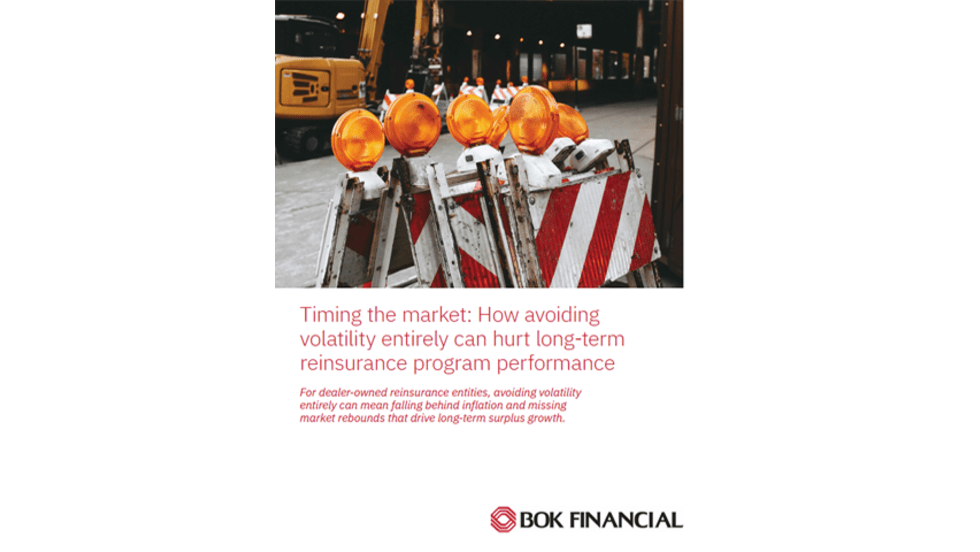
Timing the Market Can Hurt Long-Term Program Performance
For dealer-owned reinsurance entities, avoiding volatility entirely can mean falling behind inflation and missing market rebounds that drive long term surplus growth. Missing just a handful of strong market days can materially impact cumulative returns—an important reminder for long horizon trust and investment strategies.
Read More →
The 90/10 Rule
In this video, Ryan Ruff explains the rule that elite sales professionals use to turn ordinary conversations into unforgettable customer experiences.
Read More →
Your Office Is Talking
What’s the atmosphere saying about you to your customers? You can make minor adjustments and additions that transform your space into one that creates trust with the people on the other side of the desk.
Read More →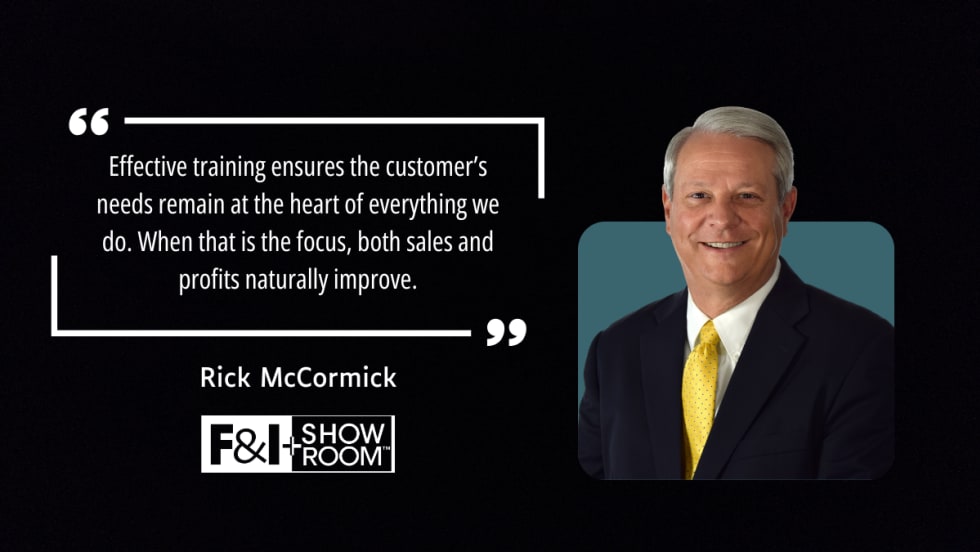
F&I Training Fundamentals
How can auto dealerships help F&I managers fulfill their vital role in the most effective ways? Industry expert Rick McCormick shares his insights on the best ways to train these professionals and help them maintain good habits.
Read More →
Not Just Any Tire Will Do
More consumers and businesses are opting for all-season options for various reasons as safety, sustainability and convenience push practical change.
Read More →