



VW to Cease Hail Cannon Fire
Volkswagen has agreed to curtail the use of hail cannons outside its Mexico plant following accusations by area farmers that the devices were altering the weather and ruining crops.
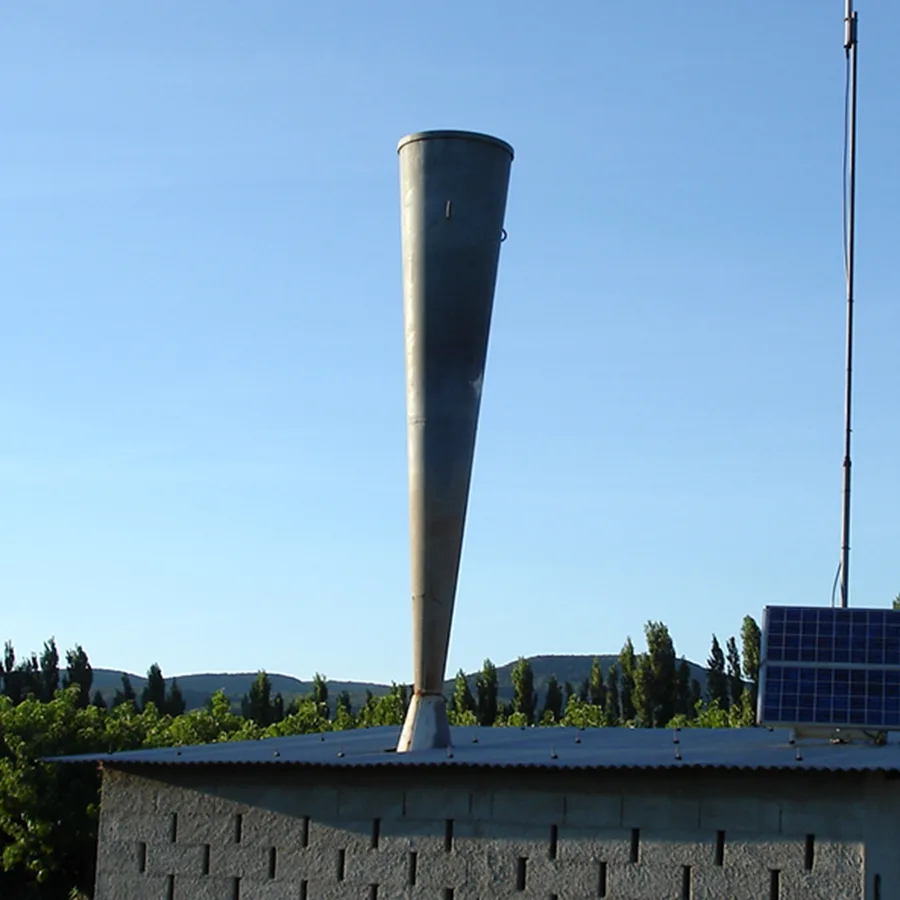
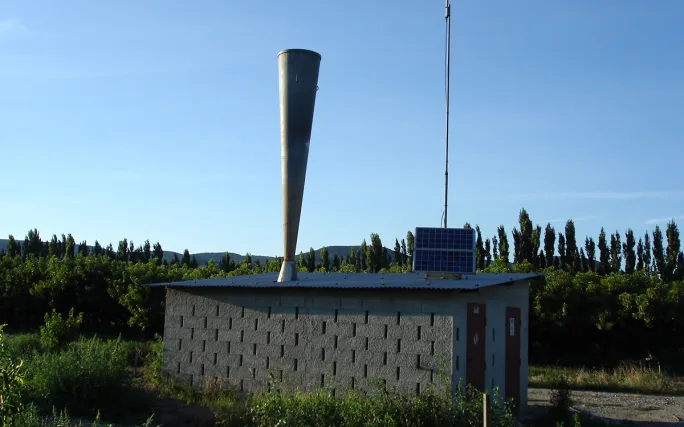
Hail cannons are designed to break up hailstones by firing rounds of compressed gas to generate shockwaves. Photo by Augustin Mallet via Wikimedia Commons
CUAUTLANCINGO, Puebla, Mexico — Volkswagen has agreed to end the use of automatic hail cannon fire at its plant in Puebla, Mexico. The German carmaker will instead deploy anti-hail netting to protect newly assembled Beetles, Golfs, Jettas, and Tiguans parked in outdoor lots. The announcement followed a $3.7 million lawsuit brought by area farmers, who said the cannons were contributing to a lack of rain that put 5,000 acres of crops at risk.
A statement issued by Volkswagen de México included a list of agreements struck in ongoing discussions with officials representing the state of Puebla. The factory committed to using the cannons only in “manual mode” and creating a “permanent dialogue” with community members.
“With these actions, Volkswagen de México expresses its commitment to maintain sustainable relationships with its stakeholders: environment, neighboring communities, and authorities,” the statement read, in part.
Hail cannons are designed to fire rounds of compressed gas at gathering clouds, producing shockwaves to disrupt the formation of hailstones. An Italian professor of mineralogy introduced the concept of weather-controlling cannons in the mid-19th century. The practice would later be adopted by French winemakers and catch on with farmers around the world. Modern machines can cost up to $50,000 and claim an effective radius of one-third of a mile.
There is scant scientific evidence to support the use of anti-hail technology. Physicists and meteorologists have pointed out that thunder produces exponentially larger shockwaves and does not appear to prevent hail, and that the unpredictability of weather makes conclusive testing difficult.
More F&I

AI: Facilitator, Not Fixer, in F&I
The dealerships that thrive in the years ahead will be those that embrace technology while continuing to invest in the people who make customer interactions count.
Read More →
Modern Technology Objection Handling
In this video, Trent White shares how to confidently handle technology-based objections by helping customers understand the value of protection, even with modern vehicle technology.
Read More →
Consistency at Scale: Driving F&I Performance
With 75 rooftops across the Sunshine State, Morgan Auto Group has proven to Floridians that it knows a thing or two about driving performance in a competitive market. But it didn’t start at the top.
Read More →
Gitty Up on GAP
The foundational finance-and-insurance product hasn’t kept up with the latest conditions for auto dealers. Is the time ripe?
Read More →
How AI-Powered Coaching Is Transforming F&I Performance
See how AI-powered coaching can turn F&I customer conversations into actionable insights that support compliance, performance and profitability
Read More →
Sell Value, Build Trust
In this video, Trent White explains why selling on value, not fear, builds lasting customer trust, reduces cancellations, and drives long-term success.
Read More →
F&I Sales Give Dealers First-Half Lift
Product business shored up total profits to avoid an overall revenue tanking as product penetrations held steady, StoneEagle reported.
Read More →
Targeted Training Drives Results
Today’s technology, instead of threatening F&I managers, can actually make them better, according to an industry veteran who’s watched market setbacks roil the unprepared.
Read More →
Double the Change, Double the Chance
When an F&I manager gets a customer refusal, it’s a wise move to tweak more than one thing in the product offering.
Read More →
Just Do It
F&I managers need training, but instead of resisting application or expecting perfection, they should improve by simply acting on what they learn.
Read More →