



Washington Post's Singletary 'Stunned by Contempt' for Uninformed Auto Finance Consumers
After response to her recent Washington Post column in which she took to task car dealers who arbitrarily inflate the interest rate they arrange for customers, columnist Michelle Singletary says she was "stunned" at the "utter contempt" that people, especially business people, have for the uninformed consumer.
"I think that anyone who goes into an automobile
dealership without knowing that he should be negotiating for the price of everything from the car itself to ... the finance charges, shouldn't be wandering the streets without a keeper," said one reader from Tampa, Fla.
In response to recent allegations that black buyers are likely to be charged more interest than similarly situated whites - no matter what
their credit standing - one reader said, "I think a lot of discrimination would be avoided with the proper financial education." A
"proper financial education," however, is unlikely to help you understand information that has been concealed from you, responded
Singletary.
Singletary's column also addressed two class-action lawsuits against General Motors Acceptance Corporation (GMAC) and Nissan Motors Acceptance Corporation (NMAC). The suits allege that black buyers are likely to be charged more interest than similarly situated whites, no matter what their credit standing. GMAC and NMAC deny any wrongdoing or discrimination against any borrowers.
The lawsuits highlight what Singletary claims has become a common practice in the auto industry: dealers often submit loan applications on behalf of consumers. Lenders then quote them an interest rate, taking into account, among other factors, the creditworthiness of the borrower. In order to squeeze more money out of car buyers, lenders allow dealers to raise the quoted rate, within limits, to whatever they can get away with.
"It's a shameful practice, because the markup is often not divulged," Singletary maintains. Car finance professionals counter, however, that the practice is equivalent to any merchant's markup from wholesale to retail.
"As for markups, businesses are in the business to make money," one reader responded. "They have and will always prey on the weak, regardless of color. Those that make it easy to take their money will lose."
"But it becomes devious and exploitative when companies tack on hidden charges and call it 'just business,' Singletary wrote in her follow-up Washington Post column of Dec. 17. "I have no problem with businesses trying to make as much as they can. I do that, too. But I do object to the notion that all's fair in the world of business," she wrote, maintaining that "...being uninformed doesn't give any business the right to treat us like suckers in their pursuit of profit."
More F&I

Smaller Loans, Longer Terms
The youngest generation of car buyers is more likely to finance less expensive vehicles, more than half of generation Z consumers borrowing less than $25,000.
Read More →
New Lifetime Battery F&I Product Meant to Drive Dealer Traffic
EFG Cos. offering is intended to create lifetime auto dealer engagement with customers.
Read More →
The Psychology Behind Menus That Increase Add-On Sales
There is a science to crafting a menu that gives customers confidence in the choices presented, and moving the process outside the F&I office can further boost results.
Read More →
Why Your F&I PVR Is Misleading You
Here’s a handy checklist of the numbers to track in 2026 instead.
Read More →
Auto Consumer Anxiety Presents Opportunity
A survey of U.S. drivers found the majority are concerned about finances and the economy, but those fears make many ready to buy vehicle-protection products.
Read More →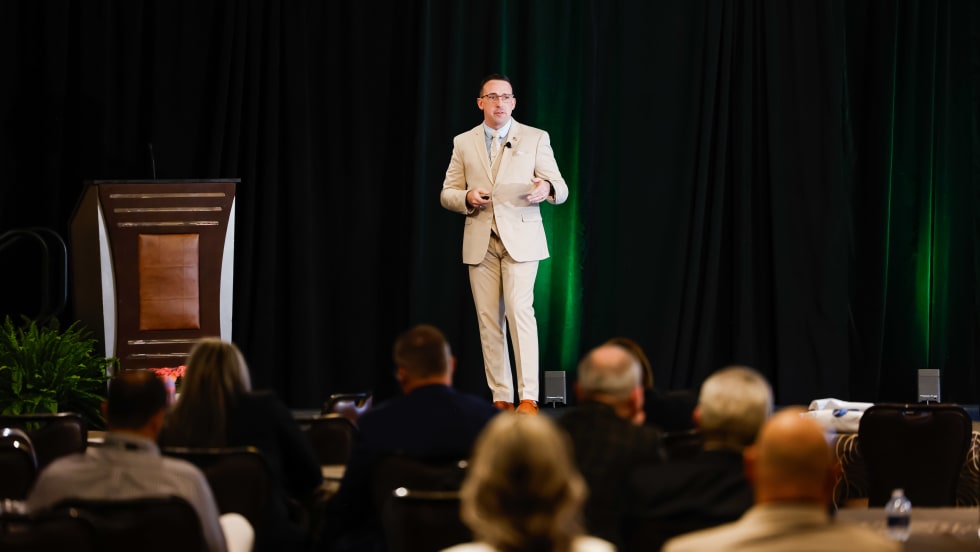
Humble and Hungry: 12 Rules for an F&I Life
Dustin Gingerich, with a decade in the F&I business under his belt, shares his thoughts on leadership, building trust with customers, and the importance of learning and innovation.
Read More →
Focus on the Opening
F&I managers must learn as much as possible about their customers, starting before they walk into their offices. The bulk of today’s consumers expect that, and good results will follow.
Read More →
F&I Reaches for the Sky
The increasingly important profit center continued making gains in the first quarter, according to StoneEagle data, ancillary products proving more popular as consumers hold onto their buys longer.
Read More →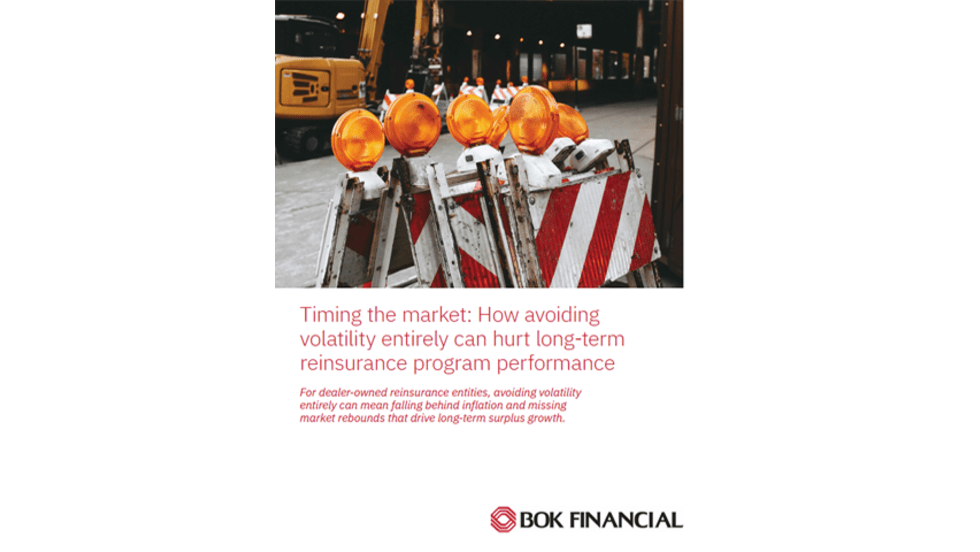
What Market Timing Mistakes Mean for Your Reinsurance Program
When volatility hits, dealer-owned reinsurance programs face a familiar temptation: pull back and wait for calmer waters. New data from BOK Financial shows why that instinct can quietly cost you years of surplus growth.
Read More →
The 90/10 Rule
In this video, Ryan Ruff explains the rule that elite sales professionals use to turn ordinary conversations into unforgettable customer experiences.
Read More →