



Will New Players Threaten Aptiv’s Success?
The question comes down to who will write the software for advanced features like hands-free driving: chipmakers, carmakers, or Tier I suppliers.

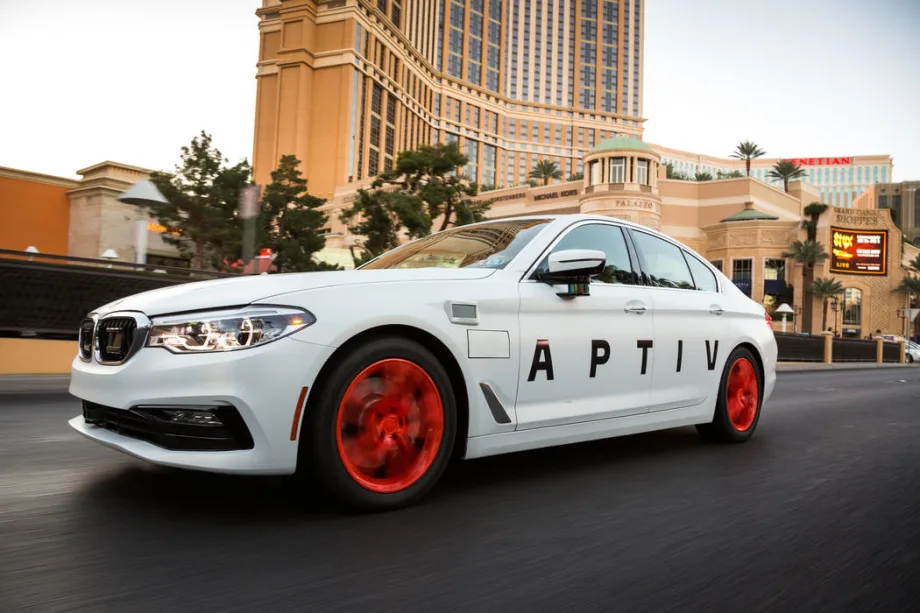
Reviewjournal.com
From humble beginnings as a General Motors Corp.parts unit spin off, Aptiv soared to $48 billion in market value in 2021 after its evolution to a tech company supporting the shift to electric, autonomous vehicles.
Now industry changes challenge Aptiv’s success. Carmakers are moving software and engineering tasks in-house and Silicon Valley giants, like Intel Corp., Qualcomm, and Nvidia Corp., are moving in.
Shifts in the $1.3 trillion auto supply chain are making room for newcomers and threaten the traditional order of things. The question now comes down to who will write the software for advanced features like hands-free driving, asks Brian Johnson, an auto analyst for Barclays PLC in a Bloomberg article. The answer is it could be chipmakers that shift to software development, carmakers with software skills, or Tier I suppliers like Aptiv.
Aptiv, remade by Chief Executive Officer Kevin Clark since 2015, stands ready to take it on. The company’s focuses on vehicle hardware and electronics and vehicle software.
Once at the helm, Clark removed slow-growth businesses and completed acquisitions in telematics, software and automated-driving startups. The company spun off its engine and transmission business in 2017 and renamed the remaining company, previously known as Delphi Automotive Plc.
Clark’s deals set Aptiv apart from peers. Wall Street responded well to the changes, sending Aptiv’s stock price soaring.
The company’s shares closed at $162 Dec. 23, roughly seven times its 2011 IPO price. It trades at 36 times blended forward earnings, a multiple that rivals big name tech companies and is nearly triple the average of its industry peers.
As vehicles become more complex, only a select few will be able to deliver the software and hardware car companies need. “The reality is, there are very few suppliers who have the capability to do that today,” Clark told Bloomberg.
Clark attributes Aptiv’s growth to groundwork laid by his predecessor, Rodney O’Neal. Delphi, he says, might have been liquidated were it not for O’Neal, who convinced the federal government, GM, and creditors of the company’s future in electric, connected cars.
O’Neal made painful cuts to propel the company toward this future. He cut Delphi’s product lines from 119 to 33, closed over 70 sites, replaced its unionized U.S. workforce with cheaper overseas labor and cut pensions for white-collar employees. He moved the company headquarters to Troy, Michigan, to save the company hundreds of millions of dollars in taxes.
The megatrends O’Neal envisioned have taken hold. But the question remains whether Aptiv and its competitors will benefit from them. Automakers are eying in-vehicle software as a profit center. By sending new features via software update to your car, automakers hope to get consumers to add new offerings without buying a new car.
“We think Aptiv’s software strategy has a reasonable chance of success, but there’s also a chance that Aptiv will be relegated to contract manufacturing,” Alexander Potter, an analyst at Piper Sandler, wrote in a Nov. 7 research note. “We trust Aptiv; we don’t always trust Aptiv’s customers.’’
Stellantis NV was Aptiv’s biggest customer in 2020, using Aptiv’s driver-assistance software to provide new features for Jeeps including lane centering and cruise control. Stellantis held an event in December that touted suppliers for future self-driving and software services and made no mention of Aptiv.
Ford Motor Co. overlooked Aptiv’s driver-assistance software when it expanded its partnership with Mobileye in 2020.
Aptiv has a portfolio of other products so losses in driver-assistance software offerings will not put the company under.
Originally posted on Auto Dealer Today
More Digital

AI: Facilitator, Not Fixer, in F&I
The dealerships that thrive in the years ahead will be those that embrace technology while continuing to invest in the people who make customer interactions count.
Read More →
Simple But Effective Hacking Surges
Data from the past year at U.S. auto dealerships finds that email and identity phishing are growing threat sources that can dispense with malware by exploiting trust.
Read More →
The Future of Car Dealerships
Artificial intelligence is reshaping the service-drive experience and will help retailers stay competitive.
Read More →
Structure Leads to Optimized Auto Listings
As the average car-buying journey has shifted to a blend of digital and retail, a dealership’s vehicle listings must be optimized to answer shoppers’ questions clearly and accurately.
Read More →
Real Intelligence
AI, though it presents many opportunities for productivity, efficiency and more, isn’t a one-for-one stand-in for people. It can augment human capital but not replace it altogether.
Read More →
Zurich Launches Advisor IQ for F&I Manager Coaching
The new platform uses real transaction data and artificial intelligence-driven insights to help car dealerships improve consistency and performance.
Read More →
F&I in the Digital Age
Digital retailing has not made the F&I manager obsolete. If anything, it has revealed how valuable the role can become when technology is used correctly.
Read More →
Need for Speed: EV Apps Lack Consistency
Fifty-five percent of surveyed EV owners said their mobile applications had a major or moderate impact on their purchasing decisions, but connectivity issues remain a problem.
Read More →
Four Keys to Your Digital Trail Defense
Federal regulators are cracking down on hidden fees. This protective measure could mean the difference between winning and losing a lawsuit or surviving a duel with the Dark Side.
Read More →
Hyundai Hosts Tech Talent Forum
Technology leaders from Hyundai Motor Group will have open discussions at the inaugural HMG Tech Talent Forum on topics ranging from autonomous driving to 'smart' manufacturing.
Read More →