



N.C. Dealerships Reach $225K Settlement in Predatory Loan Case
Two used-car dealerships and their owner reached a settlement this month with the Department of Justice and the state attorney general. The settlement resolves a lawsuit that alleged the dealerships charged African American buyers more for loans and repossessed vehicles without reasonable notice.
CHARLOTTE, N.C. — Two used-car dealerships must change how they do business and repay customers who were affected by their predatory lending practices, North Carolina Attorney General Roy Cooper announced earlier this month.
Cooper, the Civil Rights Division of the U.S. Department of Justice and the U.S. Attorney for the Western District of North Carolina brought a lawsuit against Auto Fare, Inc., Southeastern Auto Corp. and their owner, Zuhdi A. Saadeh in January 2014. The settlement reached Feb. 10 resolves that lawsuit.
“All consumers deserve to be treated fairly when they buy a car,” Cooper said. “We hope this case sends a strong message that car dealers cannot use race when targeting buyers with overpriced cars and oppressive loans.”
According to the lawsuit, the dealerships charged African American customers prices far above market rate for vehicles and signed them up for predatory loans. Cooper contends that the defendants’ actions violated North Carolina’s Unfair and Deceptive Trade Practices Act and federal officials alleged violations of the Equal Credit Opportunity Act. The settlement came after the court denied the defendants’ motion to dismiss the case and agreed that intentionally targeting African American customers with unfair loans, a practice known as reverse redlining, is illegal discrimination.
Under the settlement, Auto Fare, Southeastern Auto Corp. and Saadeh must change their business and lending practices to make sure their loans and vehicle repossessions are fair. The settlement also requires defendants to pay $225,000 to compensate consumer victims.
Both Auto Fare and Southeastern Auto Corp. are “buy here, pay here” used car dealerships, meaning Saadeh and the companies sell cars as well as provide financing to customers. Customers enter into installment sale contracts that allow them to pay for a car over a period of time.
As alleged in the lawsuit, Saadeh required unusually high down payments and charged 29% interest on car loans, the maximum allowed under state law. Payments and interest rates were set without actually assessing customers’ credit histories or their ability to make payments.
For example, as detailed in the complaint, Saadeh purchased a 2001 BMW for $7,610. The suggested retail value of the car was $10,625 but Saadeh sold it for $12,900 — a 70% markup. Even though the consumer’s only income at the time was unemployment payments, Saadeh approved financing. The customer paid $2,500 down and then made bi-weekly payments of $200. With an interest rate of 29%, the consumer ended up paying a total $20,013.42 for the car — approximately 188% of its suggested retail value.
When consumers could not keep up with the payments on their predatory car loans, the lawsuit alleged that Saadeh repossessed vehicles without reasonable notice. In some instances, the dealerships repossessed cars even though the owners were not behind on their loan payments. Saadeh sometimes used GPS devices installed without the customers’ consent to locate and repossess cars.
To prevent these unfair practices from happening in the future, the settlement requires the dealerships to charge competitive sales prices, limit buyers’ projected monthly payments to no more than 25% of a borrower’s income, offer interest rates at least five percentage points below the state’s rate cap, and offer lower interest rate for borrowers who are at lower credit risk. The dealerships must avoid adding hidden fees on top of the required down payment.
The settlement also requires Saadeh’s dealerships to allow consumers to get an independent inspection of the car before buying it, disclose more information at the time of sale (such as the presence of a GPS or automatic shut off device), provide down payment refunds to borrowers who quickly go into default, and not repossess a vehicle until at least two consecutive payments have been missed — and only after giving borrowers notices before repossession.
More F&I

Why Your F&I PVR Is Misleading You
Here’s a handy checklist of the numbers to track in 2026 instead.
Read More →
Auto Consumer Anxiety Presents Opportunity
A survey of U.S. drivers found the majority are concerned about finances and the economy, but those fears make many ready to buy vehicle-protection products.
Read More →
Humble and Hungry: 12 Rules for an F&I Life
Dustin Gingerich, with a decade in the F&I business under his belt, shares his thoughts on leadership, building trust with customers, and the importance of learning and innovation.
Read More →
Focus on the Opening
F&I managers must learn as much as possible about their customers, starting before they walk into their offices. The bulk of today’s consumers expect that, and good results will follow.
Read More →
F&I Reaches for the Sky
The increasingly important profit center continued making gains in the first quarter, according to StoneEagle data, ancillary products proving more popular as consumers hold onto their buys longer.
Read More →
Timing the Market Can Hurt Long-Term Program Performance
For dealer-owned reinsurance entities, avoiding volatility entirely can mean falling behind inflation and missing market rebounds that drive long term surplus growth. Missing just a handful of strong market days can materially impact cumulative returns—an important reminder for long horizon trust and investment strategies.
Read More →
The 90/10 Rule
In this video, Ryan Ruff explains the rule that elite sales professionals use to turn ordinary conversations into unforgettable customer experiences.
Read More →
Your Office Is Talking
What’s the atmosphere saying about you to your customers? You can make minor adjustments and additions that transform your space into one that creates trust with the people on the other side of the desk.
Read More →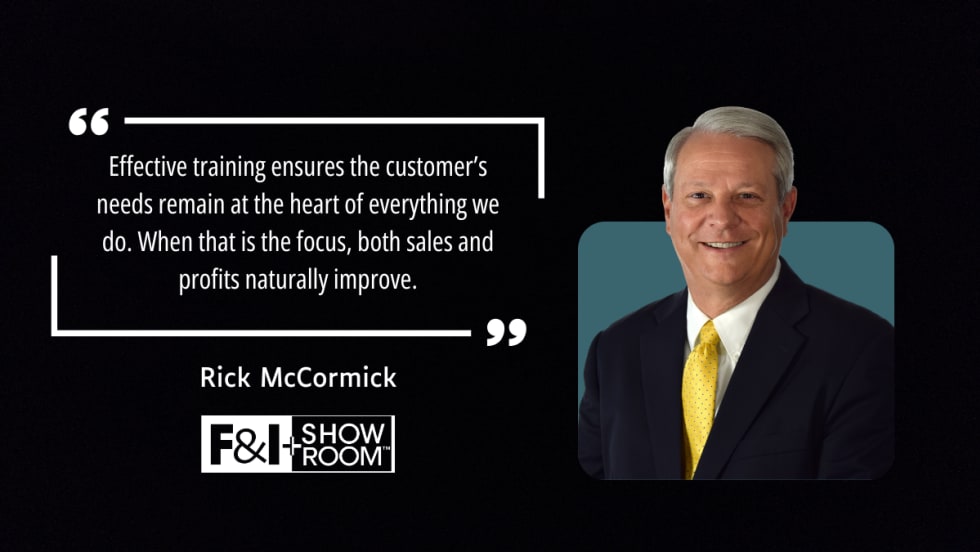
F&I Training Fundamentals
How can auto dealerships help F&I managers fulfill their vital role in the most effective ways? Industry expert Rick McCormick shares his insights on the best ways to train these professionals and help them maintain good habits.
Read More →
Not Just Any Tire Will Do
More consumers and businesses are opting for all-season options for various reasons as safety, sustainability and convenience push practical change.
Read More →