



FTC Official Releases 7 Deadly Sins of Dealer Advertising
Ahead of her appearance at the Innovate 2015 conference, the FTC official who led Operation Ruse Control has released a list of advertising sins that have put dealers on her regulatory radar.
SAN CLEMENTE, Calif. — The Federal Trade Commission official who led the agency’s Operation Ruse Control, which resulted in 252 auto-related enforcement actions, shared this week the seven deadly sins of advertising that put dealers on her regulatory radar.
Cindy Liebes, director of the Federal Trade Commission’s Southeast Region, shared her list ahead of her Sept. 22 keynote address at DealerSocket’s 2015 Innovate conference, where she will outline the lessons learned from the FTC’s Operation Ruse Control.
“No doubt, one of the FTC’s top priorities is protecting consumers in the auto marketplace. However, I’ve also heard from many honest dealers saying they can’t compete with the dealer down the street who doesn’t follow the rules,” Liebes said. “Regulatory actions against unscrupulous dealers promote fair competition, which is good for any industry and protects the players trying to do the right thing.
“While I can’t speak about current nonpublic investigations, it’s important for dealers to know that the FTC is committed to bringing law enforcement actions in the auto industry,” she added. “We don’t pay attention to the size of a dealer either. Big and small stores need to get their house in order.”
According to Liebes, dealers’ violations include:
Twisting the facts about add-ons: For example, a California-based company deceptively claimed in online ads and through a network of authorized dealers that car buyers who purchased its biweekly payment program would save money. Consumers weren’t told that the cost of the add-on often outstripped any savings. This case resulted in a $2.475 million settlement of refunds and fee waivers.
Lowballing your pitch: Several dealers recently crossed the line by using headlines to tout bargain prices while failing to adequately disclose the true cost of the deal. For example, one Florida dealership pitched “used cars as low as $99.” But $99 was just the minimum bid for cars offered at a liquidation sale, and that didn’t include substantial mandatory fees. The ads also included photos of loaded cars without clearly explaining that some pictures featured — like spoilers and sunroofs — weren’t included in the price.
Luring customers with misleading “zero” promises: One California dealer’s deceptive use of zero promised “$0 initial payment, $0 down payment, $0 drive-off lease.” Another ad promised “$0 down, 0% APR financing, 0 payments and 0 problems.” But consumers had to pay much more upfront to lease or purchase the cars. And “0% APR?” The annual percentage rate for financing those cars for the advertised payment was way more than 0%.
Hiding the strings attached to a deal: An Alabama dealership highlighted eye-catching prices without clearly explaining what the vehicle would really cost consumers. In some cases, ads featured prices that factored in special discounts or rebates that weren’t available to everyone. For example, some prices applied only to recent college graduates, a restriction not prominently disclosed.
Burying key disclaimers in fine print: Fine-print footnotes, unclear “disclaimers” that consumers must scroll down to see, or other buried information won’t live up to the FTC’s “clear and conspicuous” standard. Advertisers often ask how big a disclosure must be, but it’s more than a matter of font size. A clear and conspicuous disclosure is one sufficient for consumers to actually notice, read and understand.
Ignoring applicable credit laws: One common pothole is using certain “triggering terms” under the Consumer Leasing Act, Truth in Lending Act, Reg. Z or Reg. M without making required disclosures. For example, advertising monthly lease payments kicks in a requirement under the Consumer Leasing Act that you disclose other facts about the transaction. Examples are total amount due at lease signing, whether a security deposit is required, and the number, amount and timing of scheduled payments.
Violating prior orders: The FTC may seek monetary civil penalties for violations of prior FTC administrative orders. For example, the FTC recently brought two actions alleging violations of administrative orders, which prohibited dealers from deceptively advertising the cost of buying or leasing a car. One action resulted in the dealer group paying a hefty civil penalty, while the other action is pending. These actions show that there can be a financial cost for violating FTC orders.
To learn more about Liebes’ address as well as other sessions slated for this month Innovate 2015 Conference, visit www.myinnovate2015.com.
More F&I

Why Your F&I PVR Is Misleading You
Here’s a handy checklist of the numbers to track in 2026 instead.
Read More →
Auto Consumer Anxiety Presents Opportunity
A survey of U.S. drivers found the majority are concerned about finances and the economy, but those fears make many ready to buy vehicle-protection products.
Read More →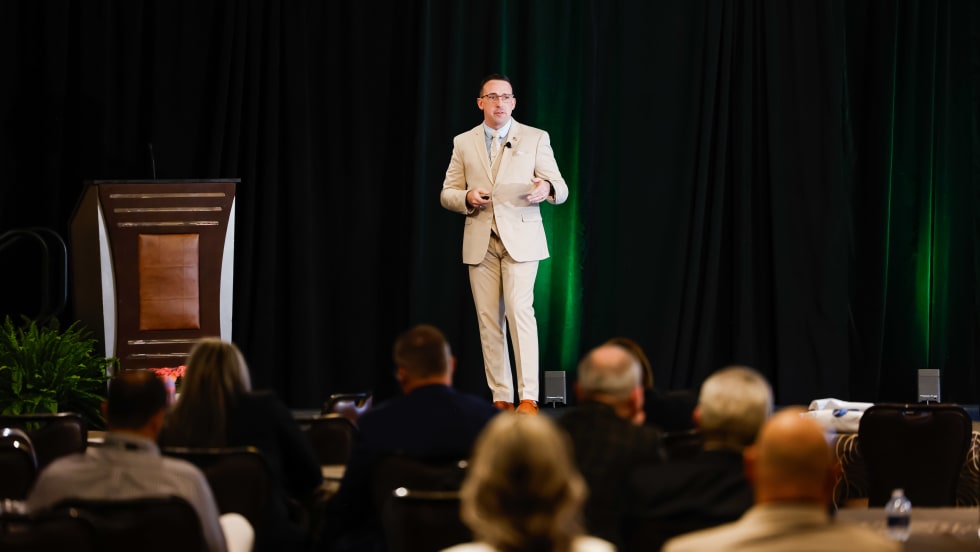
Humble and Hungry: 12 Rules for an F&I Life
Dustin Gingerich, with a decade in the F&I business under his belt, shares his thoughts on leadership, building trust with customers, and the importance of learning and innovation.
Read More →
Focus on the Opening
F&I managers must learn as much as possible about their customers, starting before they walk into their offices. The bulk of today’s consumers expect that, and good results will follow.
Read More →
F&I Reaches for the Sky
The increasingly important profit center continued making gains in the first quarter, according to StoneEagle data, ancillary products proving more popular as consumers hold onto their buys longer.
Read More →
Timing the Market Can Hurt Long-Term Program Performance
For dealer-owned reinsurance entities, avoiding volatility entirely can mean falling behind inflation and missing market rebounds that drive long term surplus growth. Missing just a handful of strong market days can materially impact cumulative returns—an important reminder for long horizon trust and investment strategies.
Read More →
The 90/10 Rule
In this video, Ryan Ruff explains the rule that elite sales professionals use to turn ordinary conversations into unforgettable customer experiences.
Read More →
Your Office Is Talking
What’s the atmosphere saying about you to your customers? You can make minor adjustments and additions that transform your space into one that creates trust with the people on the other side of the desk.
Read More →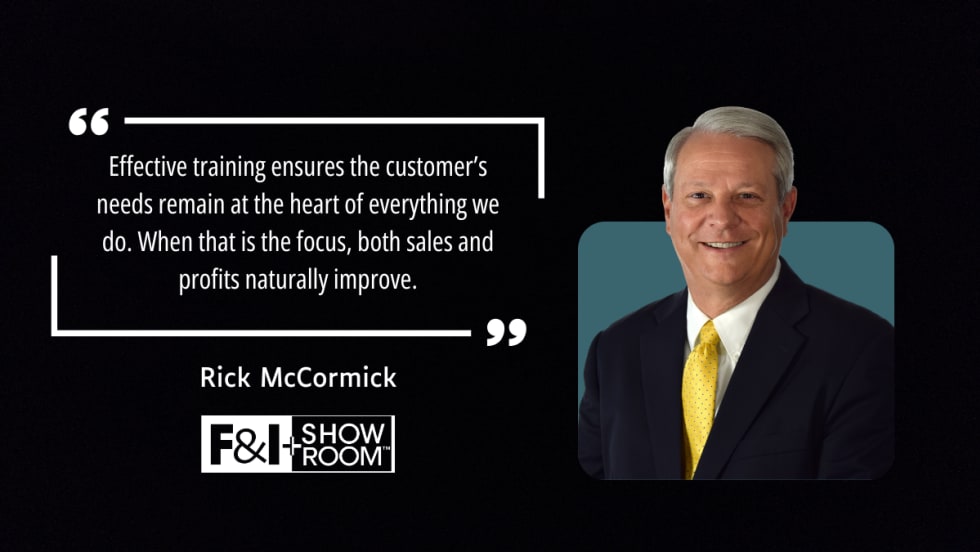
F&I Training Fundamentals
How can auto dealerships help F&I managers fulfill their vital role in the most effective ways? Industry expert Rick McCormick shares his insights on the best ways to train these professionals and help them maintain good habits.
Read More →
Not Just Any Tire Will Do
More consumers and businesses are opting for all-season options for various reasons as safety, sustainability and convenience push practical change.
Read More →