



CFPB: More than 40% of U.S. Adults Struggle to Make Ends Meet
The bureau released results of a national survey that measures the financial well-being of specific consumer groups as well as the population as a whole. The regulator also announced the release of a new tool designed to allow consumers to measure their level of financial well-being.
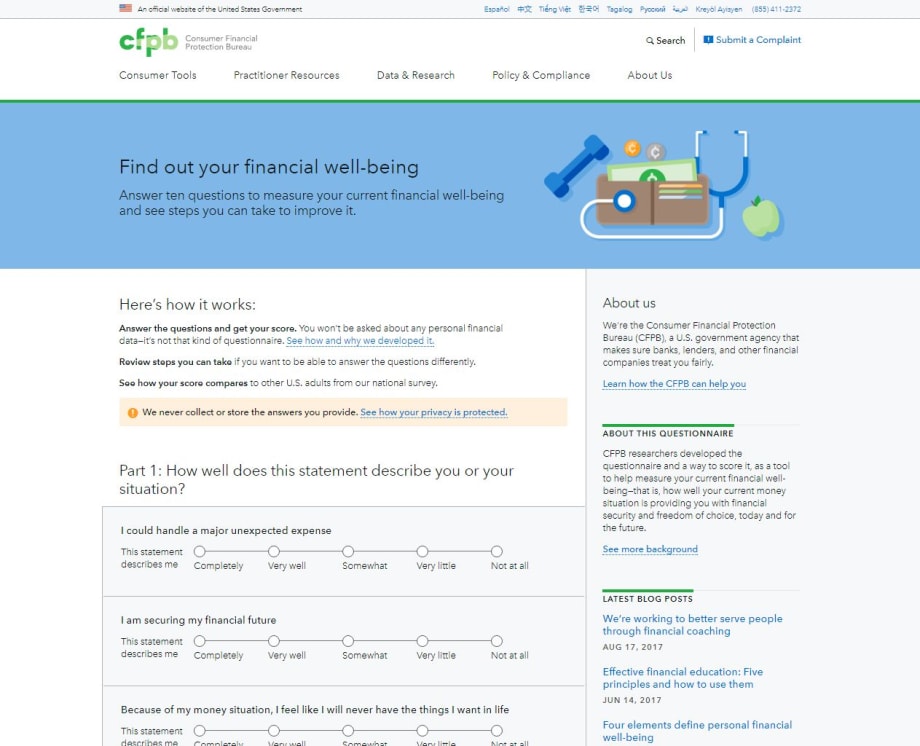
WASHINGTON, D.C. — More than 40% of U.S. adults struggle to make ends meet. That’s the conclusion of a national survey conducted by the Consumer Financial Protection Bureau (CFPB) on the financial well-being of U.S. consumers.
The survey provides measurements and insights on the financial well-being of specific consumer groups as well as the population as a whole. In addition to the survey, the bureau also released an interactive online tool allowing consumers to measure their level of financial well-being.
“These survey results are beginning to measure and examine the financial well-being of consumers,” said CFPB Director Richard Cordray. “And the new tool we are releasing allows consumers to measure their own financial well-being and helps them take better control of their financial futures.”
The National Financial Well-Being Survey was conducted by the CFPB in 2016. Using the 10-question scale developed by the CFPB, the survey provides the first-ever national data directly measuring the financial well-being of U.S. consumers. Upon answering the 10 questions provided, consumers were given a score from 0-100.
In the survey, the average consumer score was 54. The consumer sample used to conduct the survey was designed to be representative of U.S. households. In addition to responding to the questions which are included in the financial well-being scale, participants answered questions about a host of other measures, including individual, household, and family characteristics; income and employment; savings and safety nets; financial experiences; and money behaviors, skills, and attitudes.
According to results, more than 40% of adults report struggling to make ends meet. Of the national representative sample of consumers surveyed, 43% of consumers report struggling to pay bills. Additionally, more than a third, or 34%, reported experiencing material hardships in the past year, including running out of food, not being able to afford a place to live, or lacking the money to seek medical treatment.
Additionally, the survey showed that financial well-being is higher for older adults, especially those aged 65 and older. That segment’s average score was 61. On the other end of the spectrum, younger adults 34 years of age or younger tended to have the lowest financial well-being score with an average of 51.
Scores of 50 or below are associated with both a high probability of struggling to make ends meet and of experiencing hardship. In contrast, scores of 61 and above are associated with low probability of having trouble paying for basic needs or making ends meet.
The CFPB is also releasing an interactive online tool to enable people to evaluate their own financial well-being and explore ways to take control of their finances. This new tool is based on the CFPB financial well-being scale, which was released in 2015 for use by financial education professionals working with consumers.
The tool allows consumers to use the financial well-being scale themselves, and see their resulting financial well-being score online. Consumers can track their financial well-being score over time, or see how they compare to other consumers nationally, including by income, age, and employment status. Additionally, consumers can access CFPB resources to help take control of their finances and make progress towards financial goals, and find free or low-cost help from financial professionals.
More F&I

Why Your F&I PVR Is Misleading You
Here’s a handy checklist of the numbers to track in 2026 instead.
Read More →
Auto Consumer Anxiety Presents Opportunity
A survey of U.S. drivers found the majority are concerned about finances and the economy, but those fears make many ready to buy vehicle-protection products.
Read More →
Humble and Hungry: 12 Rules for an F&I Life
Dustin Gingerich, with a decade in the F&I business under his belt, shares his thoughts on leadership, building trust with customers, and the importance of learning and innovation.
Read More →
Focus on the Opening
F&I managers must learn as much as possible about their customers, starting before they walk into their offices. The bulk of today’s consumers expect that, and good results will follow.
Read More →
F&I Reaches for the Sky
The increasingly important profit center continued making gains in the first quarter, according to StoneEagle data, ancillary products proving more popular as consumers hold onto their buys longer.
Read More →
Timing the Market Can Hurt Long-Term Program Performance
For dealer-owned reinsurance entities, avoiding volatility entirely can mean falling behind inflation and missing market rebounds that drive long term surplus growth. Missing just a handful of strong market days can materially impact cumulative returns—an important reminder for long horizon trust and investment strategies.
Read More →
The 90/10 Rule
In this video, Ryan Ruff explains the rule that elite sales professionals use to turn ordinary conversations into unforgettable customer experiences.
Read More →
Your Office Is Talking
What’s the atmosphere saying about you to your customers? You can make minor adjustments and additions that transform your space into one that creates trust with the people on the other side of the desk.
Read More →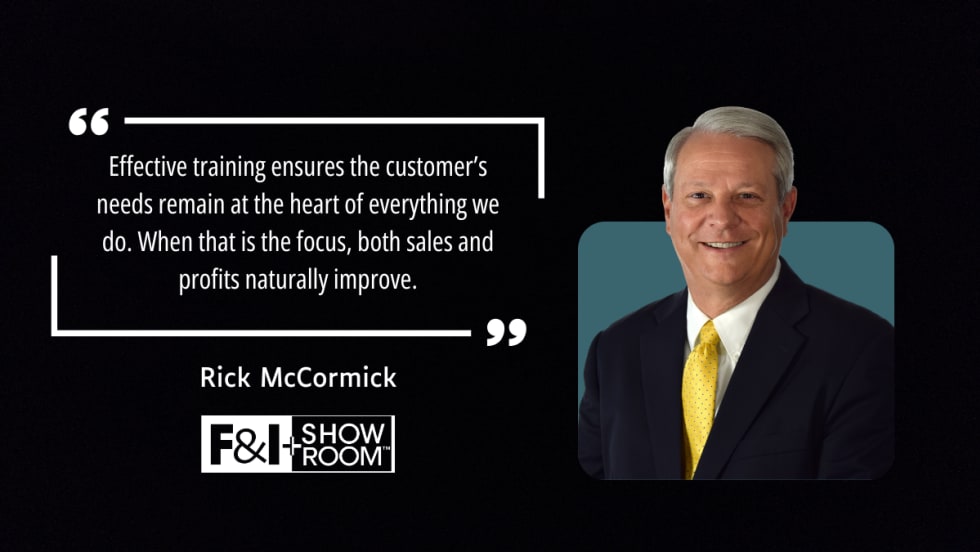
F&I Training Fundamentals
How can auto dealerships help F&I managers fulfill their vital role in the most effective ways? Industry expert Rick McCormick shares his insights on the best ways to train these professionals and help them maintain good habits.
Read More →
Not Just Any Tire Will Do
More consumers and businesses are opting for all-season options for various reasons as safety, sustainability and convenience push practical change.
Read More →