



4 Keys to Inventory Management
Tim Zierden, general manager of inventory management solutions at DealerTrack, shares how a dealership can improve its inventory management.
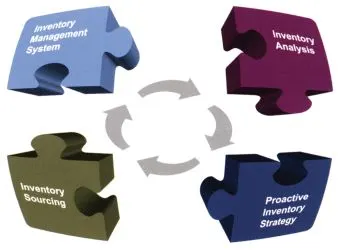
Use a four-part plan to help you manage your used-vehicle inventory.
Look at the capital sitting on your lot and showroom floor and you’ll quickly see that your pre-owned and new-vehicle inventory are your dealership’s most valuable assets. So, is your dealership’s process for converting these assets into profit extracting the maximum value from every vehicle? If not, there’s a four-part inventory strategy that can help jump start growth and ensure your store’s inventory is working for the dealership in the form of more deals, more profit, and less waste.
If your dealership is buying and selling on gut instinct, or you don’t have a handle on which models turn in 20 days versus which sit for 90, or perhaps your trade-in strategy is to get the customer in a new vehicle instead of considering where you can move his or her old vehicle, you’re throwing money away every day.
To be successful in today’s market, dealers need to have concrete inventory strategies and processes in place. This means doing much more than just stocking the correct quantity of vehicles. Managing your inventory for profitability consists of four interlocking pieces that make up a comprehensive inventory strategy: inventory analysis, proactive strategy, inventory sourcing, and inventory management systems. Let’s take a closer look at each piece of your inventory strategy.
1. Inventory Analysis
Inventory analysis consists of assessing every vehicle on
your lot, including those vehicles you are accepting in trade and those you
have planned for disposal. With thorough analysis, you can identify and
maintain the right mix of core and non-core inventory. A dealership can also
determine the optimal turn cycle to prevent inventory remaining too long on
your lot and costing you money, as well as determine the optimal time to buy
and sell inventory. It can also help establish pricing parameters that work for
your dealership’s market.
2. Proactive Strategy
Once you have a handle on your inventory, you need to create a proactive strategy for actively managing, marketing, buying and selling your vehicles. Your proactive strategy should include plans for buying and selling vehicles that take into account gross profit, return on investment (ROI), days to turn, average cost of sale and seasonality. Your strategy should also include best practices for evaluating and appraising trades realistically, establishing a concrete aging plan, and setting a pricing structure that fits your market and region.
3. Inventory Sourcing
How you source your vehicles is an integral part of inventory management. Your sourcing strategy includes how the dealership determines how often wholesale vehicles are purchased and how trade-in decisions are made. When assessing a trade, many dealerships look at the condition of the vehicle and forget to evaluate the need for the vehicle. A sound remarketing strategy takes into account a particular model’s past sales performance and aging history, as well as the current market demand and residual value.
4. Inventory Management Systems
Inventory management systems were created to help dealerships implement, maintain, and fine-tune their inventory plans. Dealers who use inventory management systems realize quicker vehicle turns and a higher ROI than dealers that don’t. Choosing the right system can make a significant contribution to your inventory management efforts.
Tim Zierden is general manager of inventory management solutions at DealerTrack. He can be reached at tim.zierden@bobit.com.
More F&I

AI: Facilitator, Not Fixer, in F&I
The dealerships that thrive in the years ahead will be those that embrace technology while continuing to invest in the people who make customer interactions count.
Read More →
Modern Technology Objection Handling
In this video, Trent White shares how to confidently handle technology-based objections by helping customers understand the value of protection, even with modern vehicle technology.
Read More →
Consistency at Scale: Driving F&I Performance
With 75 rooftops across the Sunshine State, Morgan Auto Group has proven to Floridians that it knows a thing or two about driving performance in a competitive market. But it didn’t start at the top.
Read More →
Gitty Up on GAP
The foundational finance-and-insurance product hasn’t kept up with the latest conditions for auto dealers. Is the time ripe?
Read More →
How AI-Powered Coaching Is Transforming F&I Performance
See how AI-powered coaching can turn F&I customer conversations into actionable insights that support compliance, performance and profitability
Read More →
Sell Value, Build Trust
In this video, Trent White explains why selling on value, not fear, builds lasting customer trust, reduces cancellations, and drives long-term success.
Read More →
F&I Sales Give Dealers First-Half Lift
Product business shored up total profits to avoid an overall revenue tanking as product penetrations held steady, StoneEagle reported.
Read More →
Targeted Training Drives Results
Today’s technology, instead of threatening F&I managers, can actually make them better, according to an industry veteran who’s watched market setbacks roil the unprepared.
Read More →
Double the Change, Double the Chance
When an F&I manager gets a customer refusal, it’s a wise move to tweak more than one thing in the product offering.
Read More →
Just Do It
F&I managers need training, but instead of resisting application or expecting perfection, they should improve by simply acting on what they learn.
Read More →