



E-Contracting’s Missing Link
Integration has been one of the obstacles in the way of the industry’s push toward e-contracting. One technology expert says that will no longer be the case going forward, especially for product providers.
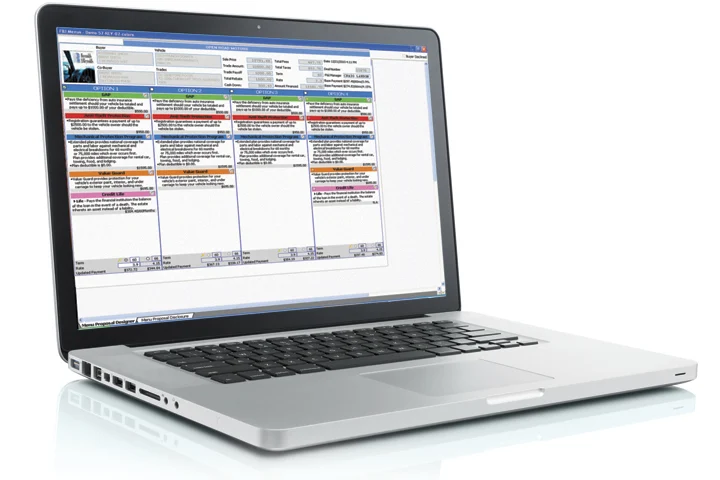
The auto finance industry’s decade-old push toward e-contracting has served as a nice template for F&I product providers. However, there is one step providers may be able to skip, a prospect that could speed up the delivery of the paperless future both segments envision for the F&I office.
The F&I product segment is where the auto finance industry was a decade ago in its drive toward e-contracting. Web portals that allowed dealers to submit credit applications ruled the day, as they do currently for today’s product providers. Advancements in how business applications are designed and distributed, however, are speeding up the F&I product industry’s progress. That progress also raises the prospect of F&I managers being able to book all product and finance contracts without ever having to leave their dealership management system (DMS).
The Birth of e-Contracting
The concept of e-contracting was born in the late 1990s. At that time, finance sources began introducing online credit apps. It wasn’t until secure Internet connections were developed that these online credit systems flourished. One of the first companies to come online with such a system was Household Finance Superhighways. Like other trailblazers, the company developed a single-lender Website that could receive credit applications.
These sites also became great dealer communication platforms for finance sources, especially for captive finance companies. Aside from being able to distribute new rates, captive finance companies used them to deliver service bulletins and host loyalty-building dealer contests. The goal was to load these credit portals with as much content as possible to keep their dealers from visiting their competitors’ sites.
The single-lender sites worked great, but they were inefficient. F&I managers were forced to learn procedures for submitting credit apps for each platform. This is the stage at which product providers now find themselves, and the challenge will undoubtedly be the same.
The main problem with the portal sites is that F&I managers must rekey basic information about the customer for each site they visit to price a product. And once they’ve done that, they are forced to switch back to the DMS, input the products selected and then check the figures before printing the finance contract. It’s true that most F&I professionals can price products by memory, but that may not be feasible in the near future as the list of rated F&I products continues to grow.
The biggest issue with having documents prepared on separate systems is the lack of integration and crosschecking. There are provider portals available today that can read from the DMS, which eliminates the need for rekeying. However, only a few of these platforms can push product information back to the DMS. Linking through certified and even “hostile” integration has been a great short-term solution, but there is a better way.[PAGEBREAK]
Detour Ahead
The next logical step for F&I product providers would be aggregator platforms. When DealerTrack introduced its credit platform early last decade, you would think the connected finance companies benefited the most. They did, but not without some grumbling.
Yes, DealerTrack’s credit platform did put those finance sources a mouse click away from hundreds of F&I managers, but it also erased the edge some sources had gained through their portal sites. The biggest fear among finance sources in those days was they would be commoditized by the credit aggregation systems. It was for that reason that a group of captives got together to form RouteOne in 2002.
F&I product providers, especially those affiliated with finance companies, know that story well. But their biggest concern is that aggregator platforms will foster price comparisons, which is why many simply won’t play that game unless they can control the rules.
Two things can alter the path of providers and technology companies alike: service-oriented architecture (SOA) and Web services. SOA refers to a design approach in which components are created with concise interfaces, with each component performing a distinct set of related functions. A Web service is a way to deliver a company’s solutions from an SOA system.
What a Web service represents to providers is a way to make portal functionality available to outside systems such as — you guessed it — the DMS. It also represents a cost-effective way to organize IT resources, as a Web service offers more options to providers on how they deliver their services. They can expose the services to multiple menu systems, connect directly to a DMS, or allow a provider to join a network hosting multiple dealer systems.
In the dealership environment, Web services will allow product prices and finance rates to be presented over the DMS in a controlled environment. It also will allow all contract forms to be prepared by the DMS.
At present, the DMS supports plain-paper contracting by means of a virtual forms library. Using Web services, these forms can be prepared in real-time by the provider, allowing dealerships to deliver an electronic funding package to the finance source. F&I managers also will be able to book product contracts automatically.
This isn’t science fiction. The networks and services are already in place, and DMS providers are actively putting the other pieces of this “e-puzzle” together. In fact, my company was founded specifically for this purpose.
The main benefit of this scenario to F&I managers is that they can perform duties on one system. Providers benefit from various cost savings, including the ability to change rates automatically. The benefit to a car buyer is if they scrape a rim driving off the lot, that road hazard contract they purchased will already have been booked by the time they took delivery of the vehicle. And this is why it’s critical that your dealership familiarizes itself with e-contracting, because this future isn’t far off.
Mark Virag is the managing director of Provider Exchange Network. He can be reached at mirag@opendealerexchange.com.
More Digital

AI: Facilitator, Not Fixer, in F&I
The dealerships that thrive in the years ahead will be those that embrace technology while continuing to invest in the people who make customer interactions count.
Read More →
Simple But Effective Hacking Surges
Data from the past year at U.S. auto dealerships finds that email and identity phishing are growing threat sources that can dispense with malware by exploiting trust.
Read More →
The Future of Car Dealerships
Artificial intelligence is reshaping the service-drive experience and will help retailers stay competitive.
Read More →
Structure Leads to Optimized Auto Listings
As the average car-buying journey has shifted to a blend of digital and retail, a dealership’s vehicle listings must be optimized to answer shoppers’ questions clearly and accurately.
Read More →
Real Intelligence
AI, though it presents many opportunities for productivity, efficiency and more, isn’t a one-for-one stand-in for people. It can augment human capital but not replace it altogether.
Read More →
Zurich Launches Advisor IQ for F&I Manager Coaching
The new platform uses real transaction data and artificial intelligence-driven insights to help car dealerships improve consistency and performance.
Read More →
F&I in the Digital Age
Digital retailing has not made the F&I manager obsolete. If anything, it has revealed how valuable the role can become when technology is used correctly.
Read More →
Need for Speed: EV Apps Lack Consistency
Fifty-five percent of surveyed EV owners said their mobile applications had a major or moderate impact on their purchasing decisions, but connectivity issues remain a problem.
Read More →
Four Keys to Your Digital Trail Defense
Federal regulators are cracking down on hidden fees. This protective measure could mean the difference between winning and losing a lawsuit or surviving a duel with the Dark Side.
Read More →
Hyundai Hosts Tech Talent Forum
Technology leaders from Hyundai Motor Group will have open discussions at the inaugural HMG Tech Talent Forum on topics ranging from autonomous driving to 'smart' manufacturing.
Read More →