



The Importance of Understanding What Motivates Different Generations
Dealers today understand that the value of personalization can exponentially drive the opportunity of maximizing profit potential — the same is true when selling F&I products to consumers.
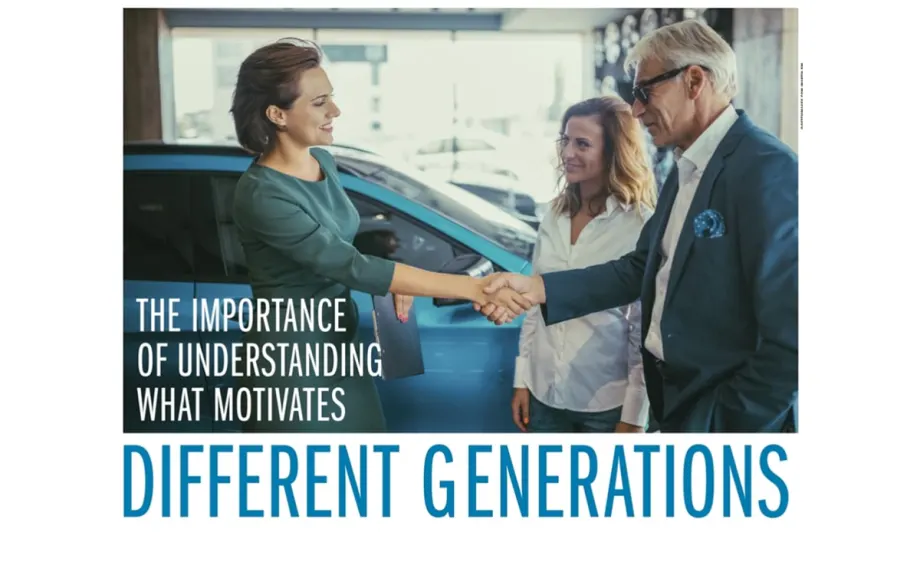
Dealers today understand that the value of personalization can exponentially drive the opportunity of maximizing profit potential — the same is true when selling F&I products to consumers.
IMAGE: Martin-DM via GettyImages.com
It is clear that what is important to a Millennial may not be as important to a Baby Boomer. Each generation that has the spending power to purchase and finance a car loan has different wants, needs, and motivating factors. It’s important that dealers and F&I managers know these differences when working with their customer.
Understanding each of these demographics, their differences, and what stimulates each of their buying behaviors is key for any dealer or manager in understanding how to not only reach market potential, but also in keeping them as a long-term customer.
Deeper Personalization for Different Generations
Dealers today understand that the value of personalization can exponentially drive the opportunity of maximizing profit potential, as well as sustaining a positive long-term relationship with their customer.
The same is true when selling F&I products to consumers, and while every customer has their own personalized set of preferences, it is just as important to acknowledge what resonates from one generation to the next.
Millennials have become an interesting group to market towards; in fact, they’ve gathered a lot of attention today to understand their habits. This may be because people in this age group surpassed Baby Boomers in terms of the number of individuals with the ability to spend, with 79.4 million people between the ages of 22 and 36 years old. Naturally, this is a premier target for vehicle shopping, but it’s not the only group dealers should be focused on. Understanding the differences and emotional appeals of not only this demographic, but also Gen-X, Boomers, and even Gen-Z, can make the difference between a good sales quarter and a great one.
How to Target Different Generational Segments
There are many reasons why it’s important to be able to differentiate your customer base by demographic and age group. Factors such as income, geography, gender, and age are some of the most dynamic market divisions. However, age specifically is divided out today between five general demographic categories, signaling five distinct buyer groups.
Gen-Z: born after 1996; oldest is currently 24 years old; population around 67 million
Millennials: born 1981-1995; currently aged 24-39; population around 79 million
Generation X: born 1965-1980; currently aged 39-54; population around 65 million
Baby Boomers: born 1946-1964; currently aged 55-73; population around 75 million
Silent Generation: born before 1946; currently aged 74 and up; population around 28 million
Strategizing for Different Generational Buyers
Everyone is a consumer, but not everyone will have the same necessities, nor will the same promotional characteristics be as attractive to everyone on the same level. Different generations and age groups are motivated by a unique set of factors and by differing worldviews established by their own set of experiences. Dealers, salespeople, and F&I managers must be vigilant of these differences in generational values and how it translates to the car-shopping experience. There are a few distinct generational values dealers should understand that can help determine generational shopping behaviors and needs.
Gen-Z grew up experiencing the Great Recession in their pre-teen years, which means they witnessed an entire household collected wealth across the country get wiped out. At the same time, this age group has always known the power of the internet and the smartphone. These will shape their lives into being digitally proficient in their shopping skills but also conscious of real value.
Millennials have been known to be more self-focused than other generations, initiating an emotional connection to their shopping experiences. Like generations before them, they appreciate when companies see them as important, and they were the first generation to experience a sense of immediate gratification of needs. Never before could delivery services ship something and it would arrive in the same day or even within a few minutes. Consequently, the first generation to grow up with social media, they’re deeply influenced by friend recommendations when it comes to branded experiences over random advertisement.
Generation Xers grew up without the digital world (i.e. internet, social media, and smartphones). However, they quickly adapted to these technologies. This confluence makes them appreciate the power of tech, but they also have an appreciation for traditional ways of doing business inside the showroom with mutually respectful in-person relationships and branded experiences.
Baby Boomers have lived a life with the understanding that “seeing is believing,” therefore they want peace of mind that what you’re selling is going to satisfy their time and energy. More than anything they want to know that they’re getting value and quality for their money.
The Silent Generation is the most difficult to sell to due to the economic scars of the depression era, and thus they usually will not buy a product if they can’t justify a need for it. When they do make a purchase, their primary focus is on quality and reliability.
Understanding each of these demographics, their differences, and what stimulates each of their buying behaviors is key for any dealer or manager in understanding how to not only reach market potential, but also in keeping them as a long-term customer.
Tim Blochowiak is vice president of dealer sales at Protective Asset Protection, a full-service provider of F&I programs offering vehicle protection plans, GAP, ancillary products, training, and other services through vehicle dealerships.
More Showroom
New-Vehicle Prices Stay Put
Affordability pressures and model availability shaped new-vehicle sales in September, according to an analysis by Kelley Blue Book.
Read More →
EV Buyer Consideration Shifts
What drives American consumers to purchase an electric vehicle is shifting as the question moves away from Should I?' to 'Which features and experience do I want to have?'
Read More →
Year-to-Date Auto Sales Holding Their Own
A forecast through August shows that automakers have shifted strategies to keep deliveries and revenues up despite tariffs and other economic challenges.
Read More →
Slow to Robo
Ten years of polling consumers shows autonomous vehicles’ profiles have risen considerably, but even more people now want at least some level of control if they go that route.
Read More →
Dealers a Little Down
A third-quarter Cox Automotive survey finds them in a mixed mood, bummed by fallen customer traffic but encouraged by better profits, costs and EV interest.
Read More →
European EV Sales Skyrocket
The EV market on the continent held strong in July with almost 25% of new-car sales being fully electric units, a stark contrast to the U.S., where EV sales declined about 42%.
Read More →
Mitsubishi Unveils U.S. Plan
The automaker announced a strategy that includes an expanded lineup and dealership presence, along with more ‘rugged’ and electric models.
Read More →
Used Lots Getting the Business
Many consumers are seeking out the units to save money, and the demand – higher in July than normal – is keeping supply limited and prices up.
Read More →
Used Market Stabilizes
The Carfax Used Car Index noted a major drop in used-vehicle price increases in July after several months of hikes.
Read More →
California Hybrids Reach State Record
The Golden State still leads the country in electric-vehicle registrations, but much like the rest of the U.S. its hybrid market share is up while full electrics stabilize after a dramatic first-quarter dip.
Read More →