



35% of New Vehicle Sales at Risk if Incentives and Rebates are Eliminated
IRVINE, Calif. — AutoVIBES, a monthly automotive study from Harris Interactive and Kelley Blue Book, concludes that a majority of consumers are timing their new vehicle purchases based on available incentives.
Manufacturers continue to look at ways they can reduce and eventually eliminate new vehicle incentives. Based on new research, however, this may be more difficult than they think.
According to AutoVIBES research, 67% of consumers planning to buy a new vehicle in the next 12 months say their purchase timing is "very much or somewhat" affected by the availability of incentives. Of that group, 52% (or 35% of the total sample) said they were "not at all likely" or "not very likely" to purchase a new car if incentives were not offered.
"The latest wave of AutoVIBES demonstrates that manufacturers considering pulling incentives on certain cars right now could be at risk of losing a third of that model's new car sales," said Rick Wainschel, director of marketing research at Kelley Blue Book. "AutoVIBES has been tracking and trending consumer reliance on incentives among active car shoppers. We are generally seeing two-thirds of consumers accelerating their purchase due to the availability of incentives."
News reports over the past several months conclude that manufacturers with the greatest amount of incentives generated smaller profits during 2003.
"Incentives have allowed manufacturers and dealers to be flexible with pricing —- raising incentives when demand is low and dropping them when demand is high. The manufacturers have adjusted and have now figured out how to control incentive levels in an effort to be profitable," said Charlie Vogelheim, executive editor at Kelley Blue Book. "Manufacturers have been looking for ways to reduce incentives, but based on AutoVIBES research, doing so could have a significant effect on overall sales."
"In January, reliance on incentives dropped down to 62%, but in February quickly jumped back up to the 67% level we have been trending for the last five months," said Scott Upham, senior vice president of automotive and transportation research for Harris Interactive. "Based on the automotive-buying climate, incentives have become an important tool for consumers and manufacturers alike."
The February wave of AutoVIBES was conducted from Feb. 19-22 among 1,933 U.S. adults ages 18 and over who are in the market to purchase or lease a new vehicle within the next 12 months.
More F&I

Just Do It
F&I managers need training, but instead of resisting application or expecting perfection, they should improve by simply acting on what they learn.
Read More →
Dealer Lender Preferences Revealed
When lenders provide consistent, fast service, their overall satisfaction scores with dealers greatly improve, according to JD Power research.
Read More →
Leading with Purpose
In this video, Trent White explains how understanding your people’s 'why' is a key leadership responsibility of F&I professionals and how that mindset drives dealership engagement, trust and performance.
Read More →
Integrating Nontraditional F&I Products
The niche presents a strategic advantage for auto dealerships as they move to adapt to fast-changing consumer expectations in today’s market.
Read More →
Trust Is Personal
Technology, no matter how efficient, can’t replace what the human F&I manager can do, which is to bridge the divide between cyberspace and the in-store experience.
Read More →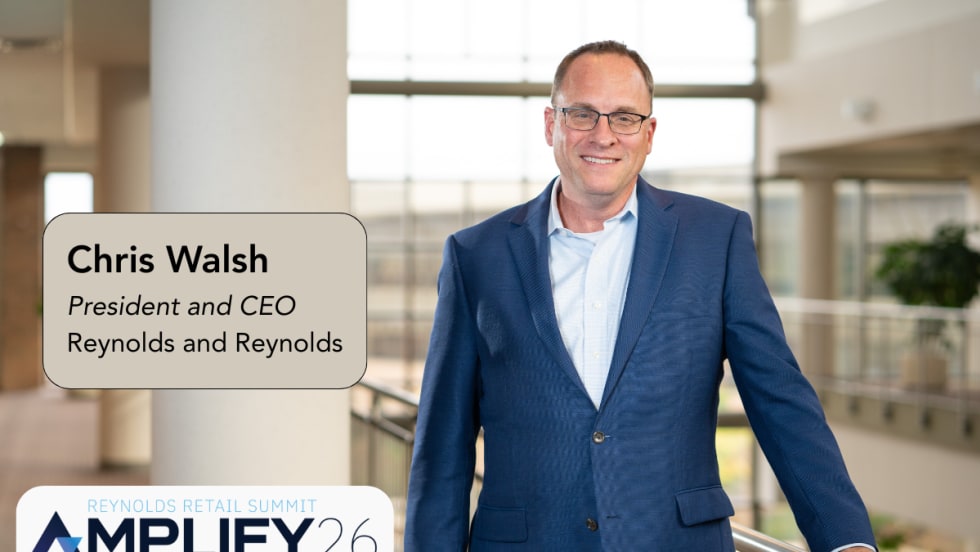
Amplify 2026 Billed as Turning Innovation Into Results
Reynolds and Reynolds says its annual retail summit will connect dealers with practical strategies, peer insight, and technology-driven ideas.
Read More →
Own Your Outcome: F&I in the Digital Customer Journey
Finance has historically been the last step in the car-buying process, but it doesn’t have to be. The customer’s journey starts long before they arrive at the dealership, and so should F&I’s involvement.
Read More →
Tariffs Could Raise Insurance Premiums
As U.S. import tariffs affect repair costs, consumers might find it more affordable to replace a damaged vehicle, according to recent Insurify tariff analysis.
Read More →
Smaller Loans, Longer Terms
The youngest generation of car buyers is more likely to finance less expensive vehicles, more than half of generation Z consumers borrowing less than $25,000.
Read More →
New Lifetime Battery F&I Product Meant to Drive Dealer Traffic
EFG Cos. offering is intended to create lifetime auto dealer engagement with customers.
Read More →