



Autonomous Vehicle Development to be Stalled by Technological and Regulatory Barriers
Global Data predicts that focus will shift onto ‘lower-level’ AVs that require greater human supervision, while merger & acquisition (M&A) activity will continue to be driven by transport technology such as robotaxis.

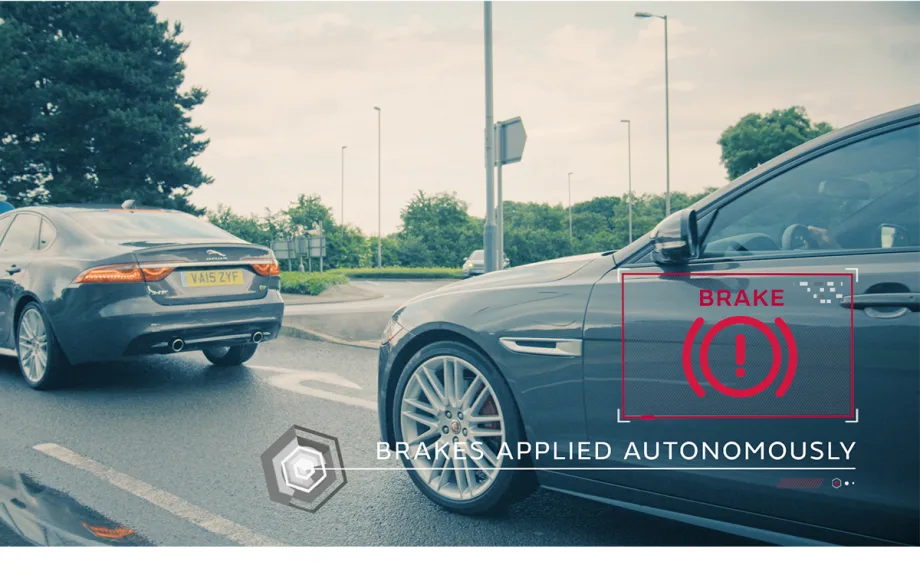
Global Data predicts that focus will shift onto ‘lower-level’ AVs that require greater human supervision, while merger & acquisition (M&A) activity will continue to be driven by transport technology such as robotaxis.
GLOBAL DATA – Autonomous vehicles (AVs) are currently more hype than substance, given the significant technological, financial, and regulatory barriers to their widespread use, according to GlobalData. In its latest report, ‘Tech, Media, & Telecom (TMT) Predictions 2022 – Thematic Research’, the leading data and analytics company predicts that focus will shift onto ‘lower-level’ AVs that require greater human supervision, while merger & acquisition (M&A) activity will continue to be driven by transport technology such as robotaxis.
Amrit Dhami, Thematic Analyst at GlobalData, offers her view on these predictions:
Technological barriers will shift focus onto lower-level AVs:
“By 2035, 5.1 million ‘level 4’ AVs—AVs that can drive themselves only within a geofenced area—and 2.7 million level 5 AVs—AVs that can handle all driving tasks in all circumstances and environments—will be on the world’s roads. However, their production will slow down while automakers grapple with regulatory and technological hurdles.
“Both level 4 and 5 AVs are far harder to develop than level 3s, which are AVs that allow the driver to take their eyes off the road at times, and level 2s, which are AVs that involve autonomous control of steering and acceleration under human supervision.
“The technological leap between level 2 and level 3 automation has some automakers questioning whether aiming for level 3 is worth it. Given the high financial and time costs, it may be worth investing purely in driverless level 4 and 5 vehicles in the long run. GlobalData predicts that automakers will focus on level 2 semiautonomous capabilities for now, including auto-braking and blind spot detection, which offer a clearer return on investment than fully self-driving cars until technological and regulatory hurdles are addressed.”
The regulatory vacuum around AVs will be addressed:
“The momentum around AVs at the moment appears to be more hype than substance, as there are still challenges to overcome before self-driving vehicles can reach the mass market.
“President Biden has rightly opened the floodgates for further scrutiny and safety-related clampdowns on autonomous features. Before level 5 AVs can be allowed on the roads, the regulatory vacuum surrounding them needs to be addressed. For instance, who is responsible for a crash—the driver or the automaker? The vehicle might need to make a value judgment in a situation where collision is unavoidable—how do programmers decide who or what to save?”
TaaS is dictating strategic partnerships:
“TaaS is dictating strategic partnerships between companies in the AV sector and is driving the development of autonomous trucks and taxis. By 2025, level 4 robotaxis will be available across the world’s urban areas.
“Tech giants such as Apple, Alphabet, Amazon, and Baidu have been keen to leave a mark in the AV sector. Smaller AV competitors will be taken over by larger bodies to leave only the most established firms on the scale of Waymo or Cruise to compete. We’ve already seen Uber bow out by selling its self-driving division to Aurora, following dozens of crashes—one fatal—and the need to make up for losses elsewhere in the business.
“TaaS is the most significant driver of demand for AVs and is dictating strategic partnerships. Alibaba is funding AutoX’s robotaxis, while FedEx, Aurora, and PACCAR are set to launch their autonomous truck service in 2023.”
More Showroom

California Sees Quarterly Gains
California’s new-vehicle market saw a boost in hybrids in the third quarter and its first overall quarterly market gain of the year.
Read More →
New-Vehicle Prices Stay Put
Affordability pressures and model availability shaped new-vehicle sales in September, according to an analysis by Kelley Blue Book.
Read More →
EV Buyer Consideration Shifts
What drives American consumers to purchase an electric vehicle is shifting as the question moves away from Should I?' to 'Which features and experience do I want to have?'
Read More →
Year-to-Date Auto Sales Holding Their Own
A forecast through August shows that automakers have shifted strategies to keep deliveries and revenues up despite tariffs and other economic challenges.
Read More →
Slow to Robo
Ten years of polling consumers shows autonomous vehicles’ profiles have risen considerably, but even more people now want at least some level of control if they go that route.
Read More →
Dealers a Little Down
A third-quarter Cox Automotive survey finds them in a mixed mood, bummed by fallen customer traffic but encouraged by better profits, costs and EV interest.
Read More →
European EV Sales Skyrocket
The EV market on the continent held strong in July with almost 25% of new-car sales being fully electric units, a stark contrast to the U.S., where EV sales declined about 42%.
Read More →
Mitsubishi Unveils U.S. Plan
The automaker announced a strategy that includes an expanded lineup and dealership presence, along with more ‘rugged’ and electric models.
Read More →
Used Lots Getting the Business
Many consumers are seeking out the units to save money, and the demand – higher in July than normal – is keeping supply limited and prices up.
Read More →
Used Market Stabilizes
The Carfax Used Car Index noted a major drop in used-vehicle price increases in July after several months of hikes.
Read More →