



Cases Claim GM, Nissan Finance Bias
Two class-action lawsuits are contending that tens of thousands of black consumers nationwide have been charged millions of dollars more than white consumers seeking auto loans from two prominent automobile finance companies.
General Motors Acceptance Corporation (GMAC) and Nissan Motor Acceptance Corporation (NMAC), the car makers' captive finance arms, deny the accusations in court documents and argue that studies supporting the accusations are flawed.
Gary Klein, senior attorney with the National Consumer Law Center in Boston, one of several lawyers and law firms involved in the case, claimed GMAC and NMAC "engineered and participated in a discriminatory kickback system that materially hurt African-American car buyers."
The cases were filed in 1998 under seal, but court documents were recently unsealed on motions by news organizations. The details were first reported Sunday by the New York Times.
The lawsuits seek refunds for affected consumers. Klein said that could mean tens of thousands of people may be entitled to refunds that could total more than $100 million in each
company's case.
The suits gained class-action status in August from two federal judges who refused to dismiss the suits. The U.S. Justice Department also joined the case in August, saying finance companies should be held liable under the federal Equal Credit Opportunity Act.
The Nissan lender trial, scheduled for September 2001, has been conditionally expanded by U.S. District Judge Todd Campbell to include blacks across the country. The General Motors lender trial, scheduled for February 2002, was limited by U.S. District Judge Aleta Trauger to blacks in Tennessee.
The cases are certified for class actions against the finance companies only -- not car dealers. GMAC and NMAC each filed appeals in late September with the 6th U.S. Circuit Court of Appeals arguing that they should not be held responsible for the car dealers' conduct.
GMAC said it has a zero-tolerance policy for discrimination and that there is no proof that thousands of consumers have been discriminated against. "We're not a direct lender," said GMAC spokesman James E. Farmer. "We have no knowledge of a customer's race, and we have no knowledge of negotiations between dealers and customers."
Nissan Motor Acceptance Corporation (NMAC) also vigorously defended its fair lending history and challenged claims of discriminatory practices brought against it by the group of trial lawyers.
Research conducted on behalf of the plaintiffs by Dr. Debby A. Lindsey analyzed the lending practices of all African-American and white NMAC customers in Tennessee in an effort to demonstrate racial bias on the part of NMAC. However the research did not compare the most relevant issue when comparing lending practices of the two groups -- credit worthiness, according to Nissan officials.
"The statistical information submitted by the plaintiffs' counsel, upon which they base their lawsuit, is inaccurate and provides no factual data showing a disparate impact on African-Americans," said Anne Fortney, NMAC's outside legal counsel. "It is inappropriate and unfair to base claims of discriminatory practices on such analysis."
NMAC enlisted economist Dr. Harold Black, Vanderbilt University and statistical analyst Dr. Janet Thornton, Economic Research Services to analyze the plaintiffs' research. They say they found numerous inaccuracies in Dr. Lindsey's report.
"In effect, the plaintiffs' study compares apples and oranges," said Dr. Janet Thornton, Economic Research Services. "Their research inappropriately assumed that the contracts were for African-Americans and white Americans who had similar credit ratings. This was not the case. They also did not consider any of the other factors that are actually used to determine the cost of credit."
GMAC's Farmer said the study was an oversimplification of the loan process and failed to consider such variables as how much a consumer was paying for a car and how much of a down payment was made. "They sampled only 700 black customers in Tennessee; to say that means tens of thousands have been overcharged is disturbing," he said.
The actual "cost of credit" in an auto finance contract is determined by several factors, including the consumer's relative creditworthiness, the type of vehicle purchased, whether the vehicle is new or used, the length of the contract, the cost of the vehicle, special warranties or other "add-ons," the value of an trade-in and the amount of any other down payment. Determining the cost of credit to a consumer by this type of non-biased, financial risk-related analysis is a legal, practical and necessary lending practice, Nissan officials said.
This cost of credit cannot be expressed as merely a percentage amount, sometimes called an Annual Percent Rate (APR). The plaintiffs' research only considered the contract dollar cost of credit for each customer, with no analysis of any other fact that could cause two customers to have different actual costs of credit, according to Fortney.
"The most important variable to be considered in any financing contract is the applicant's creditworthiness and the plaintiff in this case did not have good credit," added Fortney. "The fact is Ms. Carson's loan was refused by three other creditors. If NMAC had not purchased the contract, in all likelihood she would have received an even higher rate from a sub-prime lender."
NMAC does not loan money directly to consumers, and in many states it is prohibited from doing so. Similar to other finance companies, NMAC acquires loans by purchasing them from independent automobile dealers. Automobile dealers make these loans to their customers, typically conditioned upon the dealer's ability to sell the loan to one of their financing sources.
No Nissan dealer is required to sell any loan or any minimum number of loans to NMAC, therefore, NMAC has no ability to control the finance charge that any customer will pay, according to Fortney. If NMAC decides not to buy a loan with a certain finance charge on it, the dealer can still sell that same loan to a different finance source. Therefore, the plaintiffs' allegations that NMAC or any other finance source can control the amount of finance charges that a dealer's customer will pay is false, Fortney said.
More F&I

Just Do It
F&I managers need training, but instead of resisting application or expecting perfection, they should improve by simply acting on what they learn.
Read More →
Dealer Lender Preferences Revealed
When lenders provide consistent, fast service, their overall satisfaction scores with dealers greatly improve, according to JD Power research.
Read More →
Leading with Purpose
In this video, Trent White explains how understanding your people’s 'why' is a key leadership responsibility of F&I professionals and how that mindset drives dealership engagement, trust and performance.
Read More →
Integrating Nontraditional F&I Products
The niche presents a strategic advantage for auto dealerships as they move to adapt to fast-changing consumer expectations in today’s market.
Read More →
Trust Is Personal
Technology, no matter how efficient, can’t replace what the human F&I manager can do, which is to bridge the divide between cyberspace and the in-store experience.
Read More →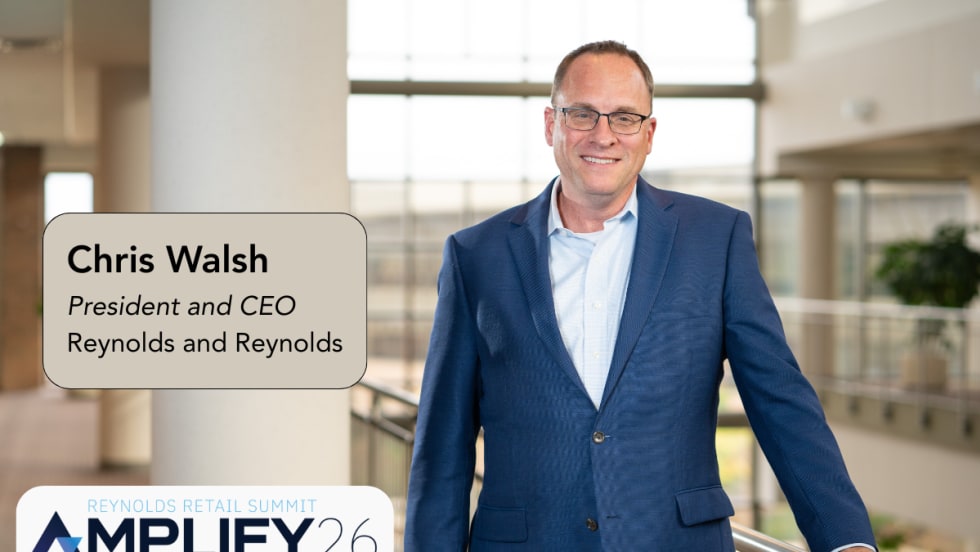
Amplify 2026 Billed as Turning Innovation Into Results
Reynolds and Reynolds says its annual retail summit will connect dealers with practical strategies, peer insight, and technology-driven ideas.
Read More →
Own Your Outcome: F&I in the Digital Customer Journey
Finance has historically been the last step in the car-buying process, but it doesn’t have to be. The customer’s journey starts long before they arrive at the dealership, and so should F&I’s involvement.
Read More →
Tariffs Could Raise Insurance Premiums
As U.S. import tariffs affect repair costs, consumers might find it more affordable to replace a damaged vehicle, according to recent Insurify tariff analysis.
Read More →
Smaller Loans, Longer Terms
The youngest generation of car buyers is more likely to finance less expensive vehicles, more than half of generation Z consumers borrowing less than $25,000.
Read More →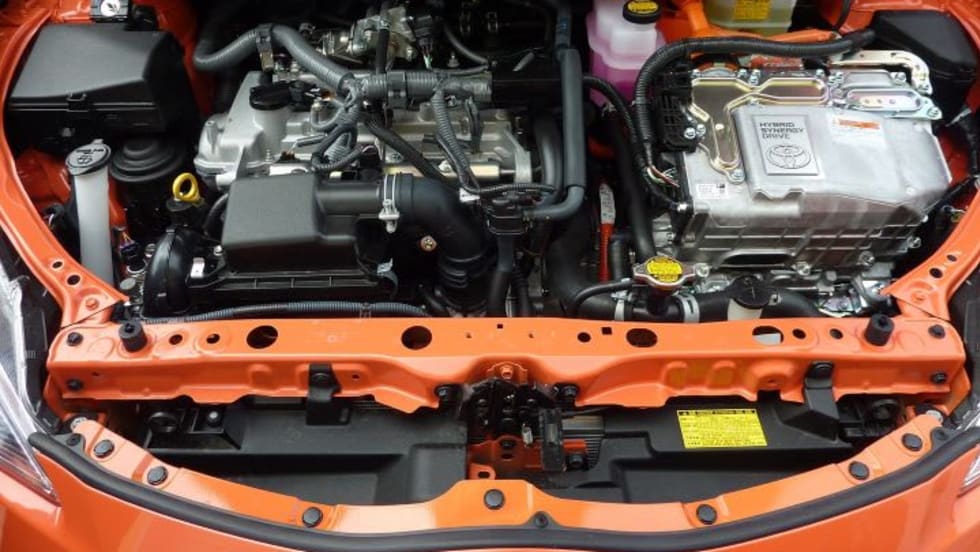
New Lifetime Battery F&I Product Meant to Drive Dealer Traffic
EFG Cos. offering is intended to create lifetime auto dealer engagement with customers.
Read More →