



Chargeoffs Hit Wells Fargo, Chase, Capitol One Bottom Lines
Three non-captive lenders felt the impact of larger chargeoffs in their auto portfolios, with Capital One reporting quarterly and annual losses, and profits down at Wells Fargo and Chase.
Three non-captive lenders felt the impact of larger chargeoffs in their auto portfolios, with Capital One reporting quarterly and annual losses, and profits down at Wells Fargo and Chase. Because of this, Capital One and Wells Fargo are being more cautious in their lending in order to properly assess risk.
“Growth in losses did slow in 2007, delinquencies remained lower than a year ago — although they increased somewhat late in the year primarily due to seasonality — and the targeted improvements in the collection process have now been completed,” said Tom Shippee, president and CEO of Wells Fargo Financial, in a press release. “While overall risk in this business has been reduced, revenue growth has moderated as we slowed the business down.”
Capital One Auto Finance reported a net loss for 2007 of $33.8 million, versus net income of $233.5 million in 2006. In the fourth quarter of 2007, the auto finance sector posted a net loss of $112.4 million, primarily due to the effects of credit worsening, according to a company release.
Increases in charge-off and delinquency rates were a result of expected seasonal patterns, credit normalization and weakening in the U.S. economy, according to company officials. The company, however, is taking steps to increase the quality of its portfolio.
“Tightened underwriting and increased prices implemented in the fourth quarter have resulted in better credit profiles and higher pricing on the portfolio. An intended effect of the tightened underwriting has been to reduce the amount of originations. In 2008, the company expects to further reduce originations and focus its dealer prime business on a much smaller network of dealers,” the release reported.
Wells Fargo Auto Finance also reported an increase in charge-offs in its auto portfolio, as well as higher losses and slower growth in the auto portfolio in 2007. “The $28 million increase in auto charge-offs in the fourth quarter was consistent with historical, second half of the year seasonal trends,” a company release reported.
The company does predict continued increases in charge-offs, due to the current state of the economy.
“Full year 2007 auto charge-offs were $1.02 billion (3.45 percent of average auto loans) compared with $857 million (3.15 percent) in 2006. These results were consistent with our expectations and represent a stabilization of new business originations and collections activities within this business. Given the weakness in housing and the overall state of the U.S. economy, it is likely that net charge-offs will be higher in 2008,” said Chief Credit Officer Mike Loughlin, in a release.
Wells Fargo is also moving toward focusing on a higher-quality portfolio.
“Results in 2007 were significantly impacted by the auto business stemming from a decision in late 2006 to slow the growth rate of this business in order to concentrate on reducing losses, delinquencies, and to improve the loan collection process,” said Shippee in the release.
Chase Auto Finance also saw a large decline in income, primarily due to increased charge-offs and losses.
“Auto finance net income was $49 million, a decrease of $16 million, or 25 percent, from the prior year. Net revenue was $450 million, up $39 million, or 9 percent, reflecting higher automobile operating lease revenue. The provision for credit losses was $133 million, up $36 million, reflecting an increase in estimated losses. The net charge-off rate was 1.27 percent compared with 0.75 percent in the prior year,” the company reported in a press release.
More F&I

Just Do It
F&I managers need training, but instead of resisting application or expecting perfection, they should improve by simply acting on what they learn.
Read More →
Dealer Lender Preferences Revealed
When lenders provide consistent, fast service, their overall satisfaction scores with dealers greatly improve, according to JD Power research.
Read More →
Leading with Purpose
In this video, Trent White explains how understanding your people’s 'why' is a key leadership responsibility of F&I professionals and how that mindset drives dealership engagement, trust and performance.
Read More →
Integrating Nontraditional F&I Products
The niche presents a strategic advantage for auto dealerships as they move to adapt to fast-changing consumer expectations in today’s market.
Read More →
Trust Is Personal
Technology, no matter how efficient, can’t replace what the human F&I manager can do, which is to bridge the divide between cyberspace and the in-store experience.
Read More →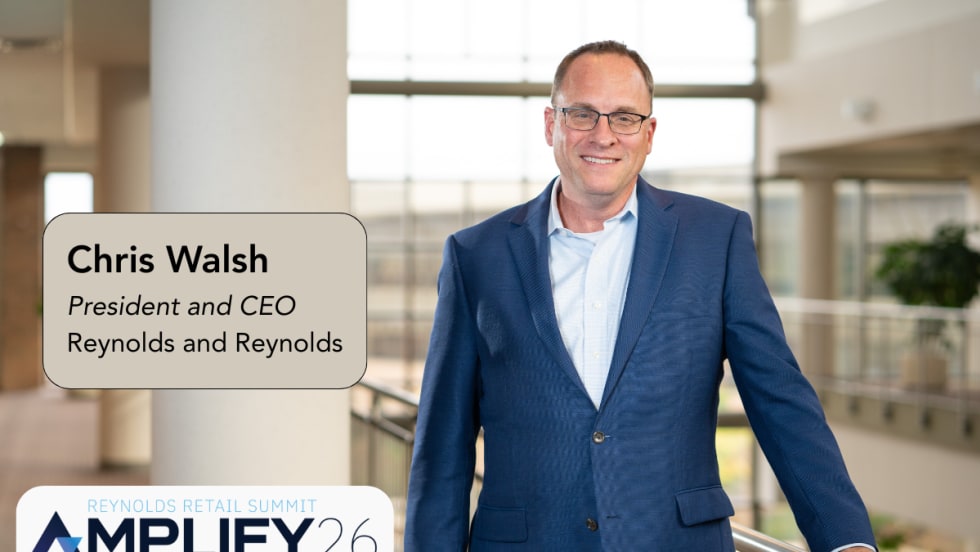
Amplify 2026 Billed as Turning Innovation Into Results
Reynolds and Reynolds says its annual retail summit will connect dealers with practical strategies, peer insight, and technology-driven ideas.
Read More →
Own Your Outcome: F&I in the Digital Customer Journey
Finance has historically been the last step in the car-buying process, but it doesn’t have to be. The customer’s journey starts long before they arrive at the dealership, and so should F&I’s involvement.
Read More →
Tariffs Could Raise Insurance Premiums
As U.S. import tariffs affect repair costs, consumers might find it more affordable to replace a damaged vehicle, according to recent Insurify tariff analysis.
Read More →
Smaller Loans, Longer Terms
The youngest generation of car buyers is more likely to finance less expensive vehicles, more than half of generation Z consumers borrowing less than $25,000.
Read More →
New Lifetime Battery F&I Product Meant to Drive Dealer Traffic
EFG Cos. offering is intended to create lifetime auto dealer engagement with customers.
Read More →