



Chrysler Dealers to Appeal Claims Court Loss
An attorney representing hundreds of former Chrysler franchisees in a $1 billion lawsuit against the federal government plans to file an appeal that could make its way to the U.S. Supreme Court.

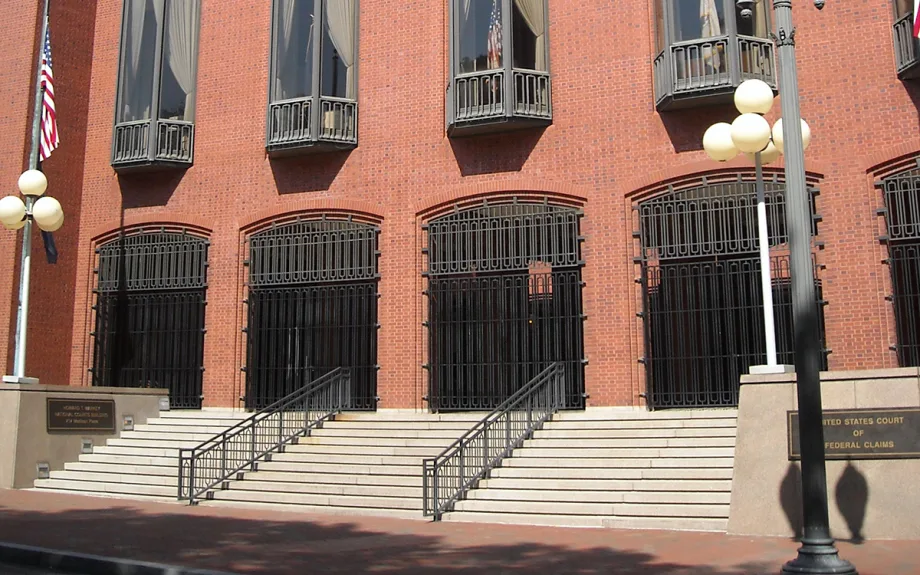
In October, the U.S. Court of Federal Claims ruled that hundreds of Chrysler dealers disenfranchised as a condition of a 2009 federal bailout of their manufacturer were not owed compensation under the Fifth Amendment’s Takings Clause.
Photo by AgnosticPreachersKid via Wikimedia Commons
WASHINGTON — A group of about 300 disenfranchised Chrysler dealers will appeal a U.S. Claims Court decision that absolved the federal government of responsibility for the loss of their businesses, attorney Len Bellavia of Bellavia Blatt PC announced.
The plaintiffs are among the 789 dealers whose agreements were terminated in May 2009. The group represented about 25% of Chrysler’s U.S. retail network but accounted for only 14% of sales.
But factory executives didn’t make the decision on their own. An Obama administration task force made trimming Chrysler’s roster a condition of accepting federal funds that kept the manufacturer afloat during a Chapter 11 bankruptcy brought on by plummeting new vehicle sales at the outset of the Great Recession.
Read: FCA, PSA Reach Tentative Merger Deal
Bellavia said the dealers are collectively owed about $1 billion under the Fifth Amendment’s Takings Clause, which requires the federal government to compensate citizens whose private property is seized for public use.
The court denied that claim, pointing in part to testimony from Steven Rattner, the head of the auto task force, and former Chrysler CEO Bob Nardelli. They agreed the factory accepted the terms willingly and in its “best business judgment,” according to Nardelli.
Bellavia expressed disappointment in the verdict but said the 10-year-old case was always likely to wind its way through multiple appeals, whatever the Claims Court decision.
“Both sides understood the trial court was the first step,” Bellavia told Auto Dealer Today. “Even if we won, I would have advised my clients not to take a victory lap. We all knew the appellate court will decide the unique legal issues in this case.”
“It was economic coercion. If Chrysler wanted the bailout, they had to accede to the government’s directive.”
Bellavia stressed that the decision made no note of a provision in the government-drafted loan documents that mandated the closure of a certain number of dealerships. He said this amounted to coercion on the government’s part, an uncommon claim in Takings Clause cases and one to which the court attempted to apply a literal interpretation.
“Coercion in the takings context is not a common matter of proof. ‘Coercion’ connotes this notion of almost a physical force. And that’s not what we were arguing. We weren’t saying the government twisted Chrysler’s arm to file for bankruptcy and terminate dealers,” Bellavia said. “We claimed the coercion as a condition of the bailout. It was economic coercion. If Chrysler wanted the bailout, they had to accede to the government’s directive.”
Originally posted on Auto Dealer Today
More Showroom
California Sees Quarterly Gains
California’s new-vehicle market saw a boost in hybrids in the third quarter and its first overall quarterly market gain of the year.
Read More →
New-Vehicle Prices Stay Put
Affordability pressures and model availability shaped new-vehicle sales in September, according to an analysis by Kelley Blue Book.
Read More →
EV Buyer Consideration Shifts
What drives American consumers to purchase an electric vehicle is shifting as the question moves away from Should I?' to 'Which features and experience do I want to have?'
Read More →
Year-to-Date Auto Sales Holding Their Own
A forecast through August shows that automakers have shifted strategies to keep deliveries and revenues up despite tariffs and other economic challenges.
Read More →
Slow to Robo
Ten years of polling consumers shows autonomous vehicles’ profiles have risen considerably, but even more people now want at least some level of control if they go that route.
Read More →
Dealers a Little Down
A third-quarter Cox Automotive survey finds them in a mixed mood, bummed by fallen customer traffic but encouraged by better profits, costs and EV interest.
Read More →
European EV Sales Skyrocket
The EV market on the continent held strong in July with almost 25% of new-car sales being fully electric units, a stark contrast to the U.S., where EV sales declined about 42%.
Read More →
Mitsubishi Unveils U.S. Plan
The automaker announced a strategy that includes an expanded lineup and dealership presence, along with more ‘rugged’ and electric models.
Read More →
Used Lots Getting the Business
Many consumers are seeking out the units to save money, and the demand – higher in July than normal – is keeping supply limited and prices up.
Read More →
Used Market Stabilizes
The Carfax Used Car Index noted a major drop in used-vehicle price increases in July after several months of hikes.
Read More →