



Chrysler Reveals 5-Year Plan Business Plan
Chrysler Group LLC unveiled its five-year business plan on Nov. 4, and said it's working to introduce a test fleet of plug-in hybrid minivans and trucks in 2011 and possibly an all-electric vehicle in 2012.
AUBURN HILLS, Mich. — Chrysler Group LLC unveiled its five-year business plan Wednesday, and said it's working to introduce a test fleet of plug-in hybrid minivans and trucks in 2011 and possibly an all-electric vehicle in 2012.
Robert Kidder, chairman of the board, said the leadership team's "top priority is to invest to create a compelling brand and product offering." Unlike in the past, "Chrysler will manage the supply chain to match customer demand and production," he said.
In the meantime, internal combustion engine vehicles will dominate the automaker's lineup, with increased focus on fuel efficiency using start-stop systems and Fiat engine technology. All of Chrysler Group's four vehicle brands — Chrysler, Dodge, Jeep, and the new Ram truck standalone brand — are expected to benefit either by sharing components, platforms, or engines and technology with Fiat vehicles.
In 2012 and 2013, the Chrysler brand will get four all-new vehicles based on Fiat architecture, while Dodge will get three Fiat-based passenger cars.
Ralph Gilles, president and CEO of the Dodge car brand, reported a "complete repackaging" of Dodge car brand models with a "new options mix" will be fully implemented by the end of the fourth quarter this year, and a "complete overhaul of branding, marketing, positioning and point of sale" to be completed in the second quarter 2010.
Dodge Ram Brand President and CEO Fred Diaz's vision is to make the Dodge Ram brand a "unique Ram brand identity, separating Ram from Dodge," and focused on its truck portfolio and customers.
For the full business plan, click here: http://www.chryslergroupllc.com/business/.
More F&I

Sell Value, Build Trust
In this video, Trent White explains why selling on value, not fear, builds lasting customer trust, reduces cancellations, and drives long-term success.
Read More →
F&I Sales Give Dealers First-Half Lift
Product business shored up total profits to avoid an overall revenue tanking as product penetrations held steady, StoneEagle reported.
Read More →
Targeted Training Drives Results
Today’s technology, instead of threatening F&I managers, can actually make them better, according to an industry veteran who’s watched market setbacks roil the unprepared.
Read More →
Double the Change, Double the Chance
When an F&I manager gets a customer refusal, it’s a wise move to tweak more than one thing in the product offering.
Read More →
Just Do It
F&I managers need training, but instead of resisting application or expecting perfection, they should improve by simply acting on what they learn.
Read More →
Dealer Lender Preferences Revealed
When lenders provide consistent, fast service, their overall satisfaction scores with dealers greatly improve, according to JD Power research.
Read More →
Leading with Purpose
In this video, Trent White explains how understanding your people’s 'why' is a key leadership responsibility of F&I professionals and how that mindset drives dealership engagement, trust and performance.
Read More →
Integrating Nontraditional F&I Products
The niche presents a strategic advantage for auto dealerships as they move to adapt to fast-changing consumer expectations in today’s market.
Read More →
Trust Is Personal
Technology, no matter how efficient, can’t replace what the human F&I manager can do, which is to bridge the divide between cyberspace and the in-store experience.
Read More →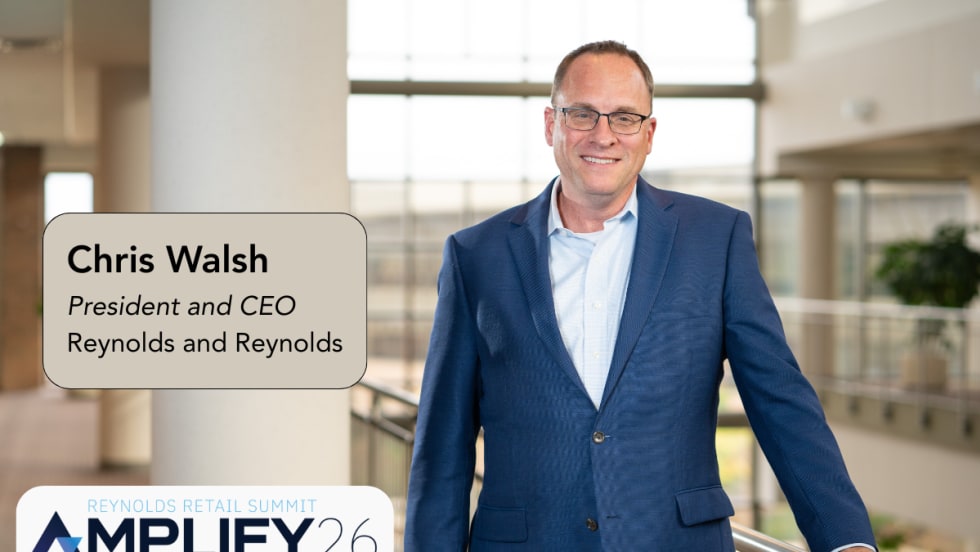
Amplify 2026 Billed as Turning Innovation Into Results
Reynolds and Reynolds says its annual retail summit will connect dealers with practical strategies, peer insight, and technology-driven ideas.
Read More →