



Consolidation Continues with Asbury’s Pending Miller Acquisition
Asbury adds to the auto retail megadeals trend with its pending acquisition of Larry H. Miller Dealerships.

Asbury
Asbury Automotive Group Inc.'s has announced it will buy Larry H. Miller Dealerships in a super-sized deal hailed as one of the largest ever in auto retail.
The Asbury-Larry H. Miller deal is expected to close by year end. Asbury said with the acquisition, the company will become the fourth-largest U.S. new-vehicle retailer as measured by annual revenue, predicted to reach $13.7 billion.
Asbury also indicated plans to continue its acquisition strategy with more deals in the future.
The acquisition closely follows two megadeals disclosed last month: Group 1 Automotive Inc.'s pending acquisition of Prime Automotive group and Sonic Automotive’s agreement to buy RFJ Auto Partners Inc. The deals follow a trend started with Lithia Motors Inc. acquisition of Suburban Collection’s 34 stores in April.
When a slate of smaller acquisitions gets added into, it’s clear 2021 has been one of the biggest years ever for dealership mergers and acquisitions. Some experts predict the trend will continue.
"I do expect that this is just the beginning of mega-transactions being announced over the next 12 months, assuming the financial markets continue to support the financing of these kinds of acquisitions," said Erin Kerrigan, managing director at Kerrigan Advisors, told Automotive News.
Kerrigan called the $3.2 billion Asbury-Larry H. Miller deal "a harbinger for the future." She also predicted family-owned groups will continue the trend to sell to or merge with larger companies.
Kerrigan predicts more acquisitions in the second half of the year, estimating 100 transactions for each of the year's final two quarters and a 2021 total of about 350 transactions. That would compare with a record 289 in 2020.
Publicly traded retailers are riding the wave of increased dealership profitability and improved access to capital to ramp up their buy-sell activity.
George Karolis, president of Presidio Group, a Denver- and Atlanta-based investment banking and advisory firm, told Automotive News that today's market remains strong for sellers.
“Capital markets are wide open," Karolis said. "Both debt and equity capital are at the lowest levels in terms of costs that they've ever been. The M&A environment is very active and wide open."
The power of scale is factoring into the M&A activity as Kerrigan notes that event the largest private groups are seeing larger size will dictate success. She noted, “Even a company as large as Larry Miller decided that they are better positioned to succeed as part of a larger organization than on their own.”
Data from the National Automobile Dealers Association shows a trend for dealers to own more stores.
In 2020, the industry's share of owners with one to five dealerships was 93.5 percent, down from 96.2 in 2011, according to NADA. But the share of owners with six to 10 dealerships hit 4.3% in 2020, up from 2.7% in 2011. At that time, just 0.1% of owners operated over 50 dealerships, the same percentage as in 2011.
Automotive News Research & Data Center finds the U.S. dealerships owned by the top 150 groups is on the rise, increasing from 13% in 2010 to 21.1% in 2020. And the 10 largest groups made 8.4 % of U.S. new-vehicle sales in 2020, while the top 150 delivered 23.1%.
With 2021’s acquisition pace, those shares will likely rise higher for 2021 and beyond.
Brady Schmidt, CEO of National Business Brokers Inc. in Irvine, Calif., calls the surge bigger and “a lot more significant” than the first wave of the 1990s and early 2000s, when public retailers began forming.
"Vertical alignment, the buying power, the sway that these groups are going to have with manufacturers is going to change factory relations with these large companies," he told Automotive News. "They're going to wield more power, more influence, in negotiating with the factories. They're becoming much more of a larger force in the industry."
Originally posted on Auto Dealer Today
More Showroom
California Sees Quarterly Gains
California’s new-vehicle market saw a boost in hybrids in the third quarter and its first overall quarterly market gain of the year.
Read More →
New-Vehicle Prices Stay Put
Affordability pressures and model availability shaped new-vehicle sales in September, according to an analysis by Kelley Blue Book.
Read More →
EV Buyer Consideration Shifts
What drives American consumers to purchase an electric vehicle is shifting as the question moves away from Should I?' to 'Which features and experience do I want to have?'
Read More →
Year-to-Date Auto Sales Holding Their Own
A forecast through August shows that automakers have shifted strategies to keep deliveries and revenues up despite tariffs and other economic challenges.
Read More →
Slow to Robo
Ten years of polling consumers shows autonomous vehicles’ profiles have risen considerably, but even more people now want at least some level of control if they go that route.
Read More →
Dealers a Little Down
A third-quarter Cox Automotive survey finds them in a mixed mood, bummed by fallen customer traffic but encouraged by better profits, costs and EV interest.
Read More →
European EV Sales Skyrocket
The EV market on the continent held strong in July with almost 25% of new-car sales being fully electric units, a stark contrast to the U.S., where EV sales declined about 42%.
Read More →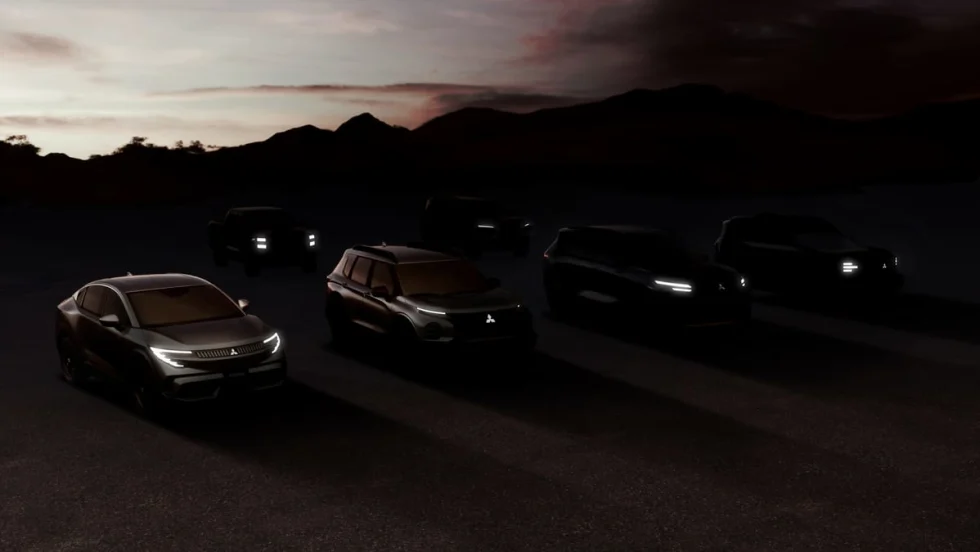
Mitsubishi Unveils U.S. Plan
The automaker announced a strategy that includes an expanded lineup and dealership presence, along with more ‘rugged’ and electric models.
Read More →
Used Lots Getting the Business
Many consumers are seeking out the units to save money, and the demand – higher in July than normal – is keeping supply limited and prices up.
Read More →
Used Market Stabilizes
The Carfax Used Car Index noted a major drop in used-vehicle price increases in July after several months of hikes.
Read More →