



Crash Tests Show Automatic Braking Needs Tweaks
AAA study finds technology chokes at higher speeds, moving vehicles in its path at intersections.

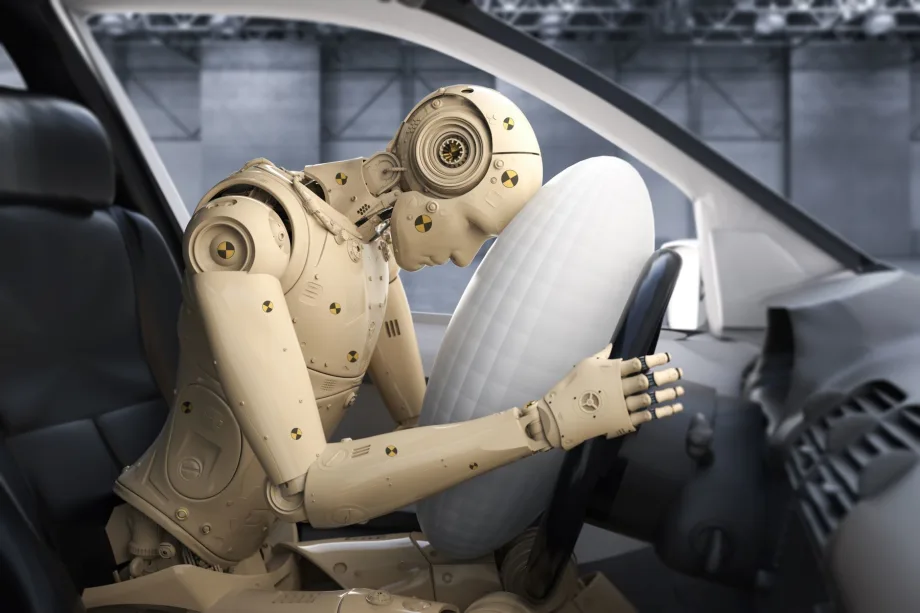
AAA says better design, test protocols needed.
IMAGE: Getty Images/PhonlamaiPhoto
AAA says its research shows automatic emergency braking doesn’t work as it should.
The motor club federation conducted crash tests on the 2022 models of the Chevrolet Equinox LT, Ford Explorer XLT, Honda CR-V Touring and Toyota RAV4 LE.
Though AAA says the crash-prevention technology of AEB has cut down on injuries and fatalities, its current generation doesn’t adequately handle higher speeds or detect moving vehicles in its path at intersections.
“Automatic Emergency Braking does well at tackling the limited task it was designed to do. Unfortunately, that task was drawn up years ago, and regulator’s slow-speed crash standards haven’t evolved,” said Greg Brannon, director of AAA’s automotive engineering and industry relations.
“Testing requirements for this technology, or any vehicle safety system for that matter, must be updated to handle faster, more realistic speeds and scenarios with the greatest safety benefit for drivers.”
AAA tested the technology’s performance on rear-end crashes against stationary vehicles at speeds of 30 miles per hour and 40 miles per hour, plus crashes against moving vehicles at intersections – T-bone and unprotected left-turn collisions. The AEB struggled at higher speeds and failed to detect moving vehicles in its path at intersections, AAA said.
At 30 mph, the technology prevented a rear-end collision for 17 of 20 tests runs. In tests resulting in a crash, the impact speed was reduced by 86%. At 40 mph, though, it prevented a rear-end crash in only six of 20 tests. For tests resulting in a crash, the impact speed was reduced by 62%.
In the T-bone and left-turn tests, crashes happened every time, as the technology failed to alert the driver and slow the vehicle’s speed, AAA reported.
AAA urged carmakers and regulators to zero in on AEB design and test protocols for the kinds of crashes that commonly involve injuries and fatalities.
More Showroom

New Cars Less Affordable
Buying conditions eroded for American shoppers last month due to inflation and interest rates, though they fared better than a year ago.
Read More →
October Sales Divided
Inventory trends split between the new- and used-vehicle markets, though prices continued to rise for both in October.
Read More →
Auto Transaction Prices Hit New Height
October sales of big, pricey models push up the average, even as budget-conscious consumers snag more economical options.
Read More →
Making the Safe Choice
Kelley Blue Book has turned households with teen drivers onto safe and affordable options for their vehicles of choice
Read More →
Inventory Holds Steady
September new-vehicle inventory rose slightly month-over-month, but dealer lots are laden with MY2026 vehicles as the typical model year changeover trudges along.
Read More →
October Auto Sales Fall With the Leaves
A forecast anticipates retail deliveries are down this month as consumers continue to face cost challenges, though more are tapping long loans in order to buy.
Read More →
California Sees Quarterly Gains
California’s new-vehicle market saw a boost in hybrids in the third quarter and its first overall quarterly market gain of the year.
Read More →
New-Vehicle Prices Stay Put
Affordability pressures and model availability shaped new-vehicle sales in September, according to an analysis by Kelley Blue Book.
Read More →
EV Buyer Consideration Shifts
What drives American consumers to purchase an electric vehicle is shifting as the question moves away from Should I?' to 'Which features and experience do I want to have?'
Read More →
Year-to-Date Auto Sales Holding Their Own
A forecast through August shows that automakers have shifted strategies to keep deliveries and revenues up despite tariffs and other economic challenges.
Read More →