



Drivers Don’t Trust Lane Centering Systems, IIHS Finds
A new report from the Insurance Institute for Highway Safety finds the majority of drivers say their semiautonomous safety systems failed to consistently detect road markings and other vehicles.

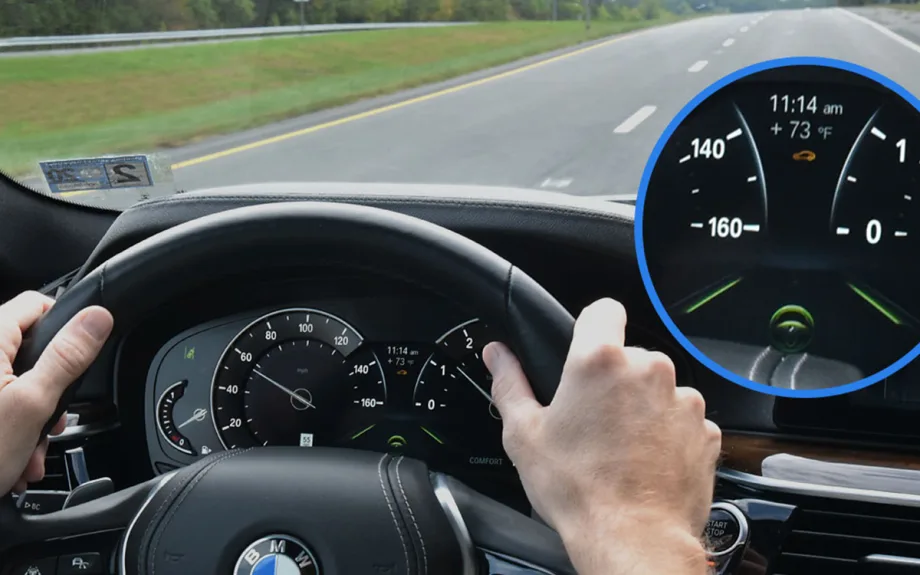
This latest test research from IIHS confirms findings from a similar 2018 study that found drivers are more comfortable with systems that make smooth, gradual speed or steering adjustments.
Photo courtesy IIHS
ARLINGTON, Va. — Drivers remain skeptical about lane-centering systems, even though they are relatively confident in the performance of adaptive cruise control systems, according to recent research conducted by the Insurance Institute for Highway Safety.
Over 75% of participants agreed that the automated systems accelerated and decelerated the vehicle smoothly and detected moving vehicles ahead. But fewer than half agreed that the technologies consistently detected lane markings on the roadway, detected stopped vehicles ahead, or that they knew whether the automation detected lane markings on the roadway.
The goal of the research was to learn about the connection between acceptance of automated systems and driver perceptions of how well the technologies function.
Drivers’ impressions of automated technology in general were colored by how well they perceived the lane-centering technology to work.
The results showed that drivers had more faith in the automated systems’ ability to maintain a steady speed and safe distance from the vehicle in front of them as compared to a system’s ability to keep them in their lane.
Drivers’ impressions of automated technology in general were colored by how well they perceived the lane-centering technology to work. Their perceptions of the effectiveness of lane-centering systems had a bigger impact on how they rated the overall driving experience, analysts said. On average, drivers were mostly neutral about whether automation improved the overall driving experience.
IIHS notes that the key takeaway is this: For automated technologies to make driving safer, motorists have to accept them and use them correctly.
Previous research shows that collision-avoidance systems can eliminate or mitigate many crashes. Experts agree that some 75% of crashes are due to driver error.
Originally posted on Auto Dealer Today
More Showroom
California Sees Quarterly Gains
California’s new-vehicle market saw a boost in hybrids in the third quarter and its first overall quarterly market gain of the year.
Read More →
New-Vehicle Prices Stay Put
Affordability pressures and model availability shaped new-vehicle sales in September, according to an analysis by Kelley Blue Book.
Read More →
EV Buyer Consideration Shifts
What drives American consumers to purchase an electric vehicle is shifting as the question moves away from Should I?' to 'Which features and experience do I want to have?'
Read More →
Year-to-Date Auto Sales Holding Their Own
A forecast through August shows that automakers have shifted strategies to keep deliveries and revenues up despite tariffs and other economic challenges.
Read More →
Slow to Robo
Ten years of polling consumers shows autonomous vehicles’ profiles have risen considerably, but even more people now want at least some level of control if they go that route.
Read More →
Dealers a Little Down
A third-quarter Cox Automotive survey finds them in a mixed mood, bummed by fallen customer traffic but encouraged by better profits, costs and EV interest.
Read More →
European EV Sales Skyrocket
The EV market on the continent held strong in July with almost 25% of new-car sales being fully electric units, a stark contrast to the U.S., where EV sales declined about 42%.
Read More →
Mitsubishi Unveils U.S. Plan
The automaker announced a strategy that includes an expanded lineup and dealership presence, along with more ‘rugged’ and electric models.
Read More →
Used Lots Getting the Business
Many consumers are seeking out the units to save money, and the demand – higher in July than normal – is keeping supply limited and prices up.
Read More →
Used Market Stabilizes
The Carfax Used Car Index noted a major drop in used-vehicle price increases in July after several months of hikes.
Read More →