



Economical Electric
GM says it sells the cheapest electric vehicle in the U.S. market. It explains how it made improvements to the entry-level EV while keeping its price down.

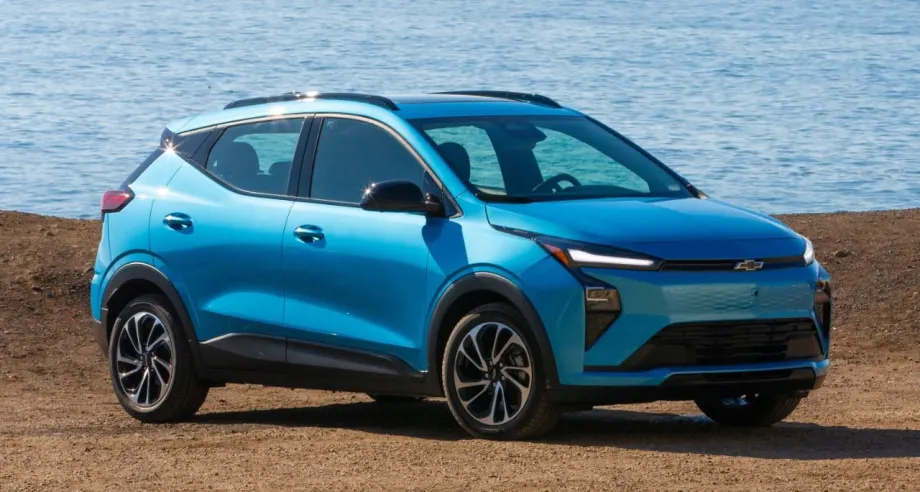
GM says its 2027 Bolt has the lowest asking price of any electric vehicle on the U.S. market, despite it making improvements to the model.
General Motors
General Motors claims to make the least expensive electric vehicle for sale in the U.S.
The 2027 version of the Chevrolet Bolt, GM’ entry-level electric model that went into a year’s hiatus in 2024, will sell for a starting asking price of $28,995.
GM said it improved the Bolt, adding 15 miles of range, faster charging of up to 150 kilowatts, a North American Charging Standard port and more while keeping its price down in an inflated market.
That effort was all the more important after a federal tax credit for EV purchases and leases ended on Oct. 1, eliminating an up to $7,500 savings for consumers. That’s on top of general inflation that’s challenging mass-market shoppers.
Getting there came from leveraging existing GM EV technologies, according to the automaker.
“Everybody thinks you get the [manufacturer's suggested retail price] down by removing content,” said GM Chief Engineer Jeremy Short. “More important than all that is economies of scale. That is by far the most powerful driver in this.”
Short said GM actually saved some money by tapping components and technologies from its greater EV lineup.
The new subcompact crossover Bolt has a larger driver display and touchscreen than previous iterations, taken from midsize GM trucks’ interior components. GM also adapted the Chevrolet Equinox’s wheel-turning power for the Bolt.
Still the Bolt is still the Bolt, GM emphasized.
“The Bolt has a pretty well-defined customer,” Short said. “Trying to sell them something else isn’t necessarily what they’re looking for. This is the best car for their money and the best car for their lifestyle. It does everything they want at the price they want.”
More Showroom

California Sees Quarterly Gains
California’s new-vehicle market saw a boost in hybrids in the third quarter and its first overall quarterly market gain of the year.
Read More →
New-Vehicle Prices Stay Put
Affordability pressures and model availability shaped new-vehicle sales in September, according to an analysis by Kelley Blue Book.
Read More →
EV Buyer Consideration Shifts
What drives American consumers to purchase an electric vehicle is shifting as the question moves away from Should I?' to 'Which features and experience do I want to have?'
Read More →
Year-to-Date Auto Sales Holding Their Own
A forecast through August shows that automakers have shifted strategies to keep deliveries and revenues up despite tariffs and other economic challenges.
Read More →
Slow to Robo
Ten years of polling consumers shows autonomous vehicles’ profiles have risen considerably, but even more people now want at least some level of control if they go that route.
Read More →
Dealers a Little Down
A third-quarter Cox Automotive survey finds them in a mixed mood, bummed by fallen customer traffic but encouraged by better profits, costs and EV interest.
Read More →
European EV Sales Skyrocket
The EV market on the continent held strong in July with almost 25% of new-car sales being fully electric units, a stark contrast to the U.S., where EV sales declined about 42%.
Read More →
Mitsubishi Unveils U.S. Plan
The automaker announced a strategy that includes an expanded lineup and dealership presence, along with more ‘rugged’ and electric models.
Read More →
Used Lots Getting the Business
Many consumers are seeking out the units to save money, and the demand – higher in July than normal – is keeping supply limited and prices up.
Read More →
Used Market Stabilizes
The Carfax Used Car Index noted a major drop in used-vehicle price increases in July after several months of hikes.
Read More →