



Edmunds.com: February Sales Will Keep SAAR on Steady Path
This month's new-car sales (including fleet sales) are expected to be approximately 937,000 units, a 20.1 percent increase from February 2010 and a 14.4 percent increase from January 2011, according to Edmunds.com.
SANTA MONICA, Calif. — This month's new-car sales (including fleet sales) are expected to be approximately 937,000 units, a 20.1 percent increase from February 2010 and a 14.4 percent increase from January 2011, according to Edmunds.com.
Retail sales are expected to be approximately 743,000 units, up from approximately 662,000 last month, a 12 percent bump that’s in line with the expected seasonal increase.
Edmunds.com analysts predict that February's seasonally adjusted annualized rate (SAAR) will be 12.64 million, up from 12.54 in January 2011. SAAR for retail sales remained flat from last month at about 10.1 million.
Average automaker incentives in the U.S. are estimated to be $2,530 per vehicle sold in February 2011, down $31, or 1.2 percent, from January 2011, and down $127, or 4.8 percent, from February 2010.
“February started slow, but it gained plenty of momentum over President’s Day weekend,” commented Edmunds.com Senior Analyst Jessica Caldwell. ”It was also the fifth consecutive month with a SAAR over 12 million, which is a good sign as the industry presses forward into March.”
February 2011 had 24 selling days, the same as February 2010. The chart below sets forth month-over-month comparisons:
Change from February 2010 | Change from January 2011 | |
Chrysler | 3.7% | 24.9% |
Ford | 7.0% | 19.7% |
GM | 36.7% | 8.4% |
Honda | 16.3% | 23.0% |
Nissan | 26.6% | 23.7% |
Toyota | 28.8% | 11.2% |
Industry Total | 20.1% | 14.4% |
“General Motors continues to have the highest market share, but it also leads the other Big 6 automakers in incentive spending by a healthy margin,” added Caldwell. “Toyota’s market share, on the other hand, has fallen to its lowest level since its issues with unintended acceleration reached its peak this time last year. It can’t start rolling out their new products fast enough.”
Edmunds.com predicts Toyota will sell 128,800 units in February 2011, up 28.8 percent from February 2010 and up 11.2 percent from January 2011. Toyota's market share is expected to be 13.7 percent in February 2011, up from 12.8 percent in February 2010 but down from 14.1 percent in January 2011.
The combined monthly U.S. market share for Chrysler, Ford and General Motors (GM) domestic nameplates is estimated to be 46.2 percent in February 2011, down from 47.2 percent in February 2010 but up from 45.9 percent in January 2011.
Edmunds.com predicts Chrysler will sell 87,600 units in February 2011, up 3.7 percent compared to February 2010 and up 24.9 percent from January 2011. This would result in a new car market share of 9.3 percent for Chrysler in February 2011, down from 10.8 percent in February 2010 but up from 8.6 percent as in January 2011.
Edmunds.com predicts Ford will sell 151,900 units in February 2011, up 7.0 percent compared to February 2010 and up 19.7 percent from January 2011. This would result in a new car market share of 16.2 percent of new car sales in February 2011 for Ford, down from 18.2 percent in February 2010 but up from 15.5 percent in January 2011.
Edmunds.com predicts GM will sell 193,500 units in February 2011, up 36.7 percent compared to February 2010 and up 8.4 percent from January 2011. GM's market share is expected to be 20.7 percent of new vehicle sales in February 2011, up from 18.1 percent in February 2010 but down from 21.8 percent in January 2011.
Edmunds.com predicts Honda will sell 93,800 units in February 2011, up 16.3 percent from February 2010 and up 23.0 percent from January 2011. Honda’s market share is expected to be 10.0 percent in February 2011, down from 10.3 percent in February 2010 but up from 9.3 percent in January 2011.
Edmunds.com predicts Nissan will sell 88,900 units in February 2011, up 26.6 percent from February 2010 and up 23.7 percent from January 2011. Nissan's market share is expected to be 9.5 percent in February 2011, up from 9.0 percent in February 2010 and up from 8.8 percent in January 2011.
More F&I

AI: Facilitator, Not Fixer, in F&I
The dealerships that thrive in the years ahead will be those that embrace technology while continuing to invest in the people who make customer interactions count.
Read More →
Modern Technology Objection Handling
In this video, Trent White shares how to confidently handle technology-based objections by helping customers understand the value of protection, even with modern vehicle technology.
Read More →
Consistency at Scale: Driving F&I Performance
With 75 rooftops across the Sunshine State, Morgan Auto Group has proven to Floridians that it knows a thing or two about driving performance in a competitive market. But it didn’t start at the top.
Read More →
Gitty Up on GAP
The foundational finance-and-insurance product hasn’t kept up with the latest conditions for auto dealers. Is the time ripe?
Read More →
How AI-Powered Coaching Is Transforming F&I Performance
See how AI-powered coaching can turn F&I customer conversations into actionable insights that support compliance, performance and profitability
Read More →
Sell Value, Build Trust
In this video, Trent White explains why selling on value, not fear, builds lasting customer trust, reduces cancellations, and drives long-term success.
Read More →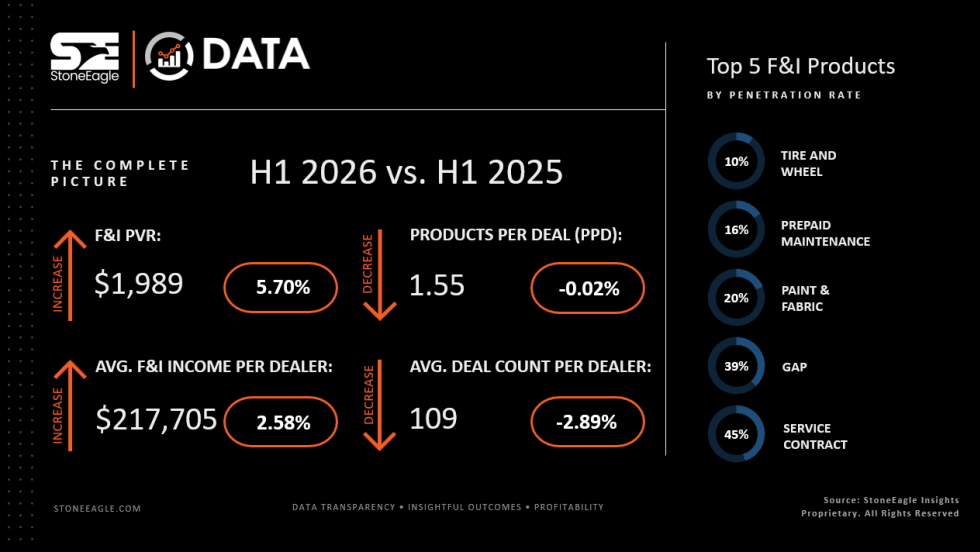
F&I Sales Give Dealers First-Half Lift
Product business shored up total profits to avoid an overall revenue tanking as product penetrations held steady, StoneEagle reported.
Read More →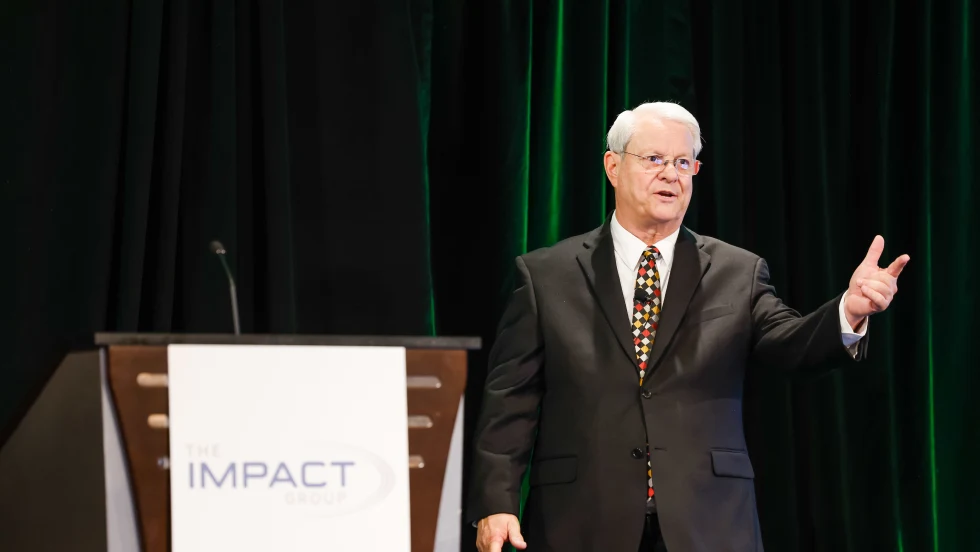
Targeted Training Drives Results
Today’s technology, instead of threatening F&I managers, can actually make them better, according to an industry veteran who’s watched market setbacks roil the unprepared.
Read More →
Double the Change, Double the Chance
When an F&I manager gets a customer refusal, it’s a wise move to tweak more than one thing in the product offering.
Read More →
Just Do It
F&I managers need training, but instead of resisting application or expecting perfection, they should improve by simply acting on what they learn.
Read More →