



Facebook’s New Ad Tool Impresses Pilot Dealer
South Carolina dealership is capturing six to eight additional sales per month using Facebook’s new advertising tool, which pulls data from Datalogix and Polk to deliver more targeted ad campaigns.
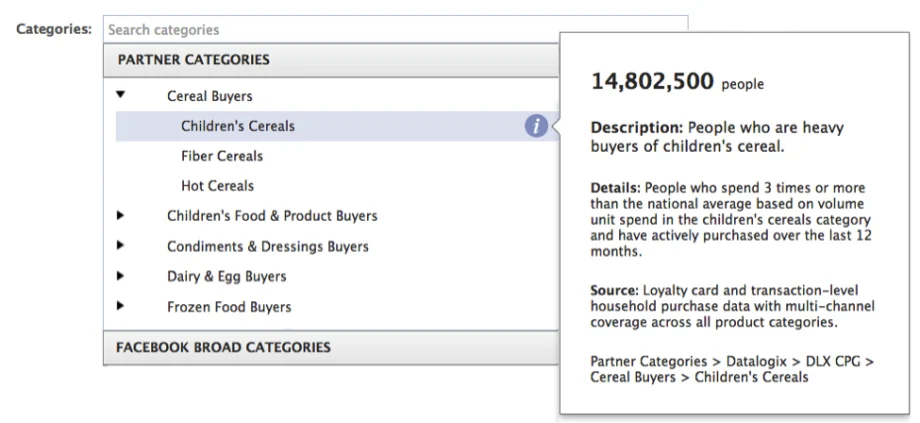
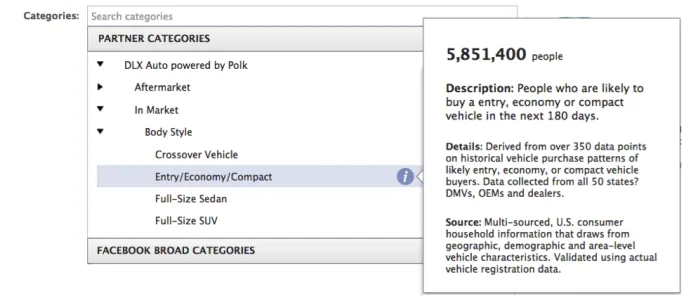
CHARLESTON, S.C. — Hendrick Honda is gaining about six to eight additional vehicle sales per month thanks to a new advertising tool Facebook rolled out on this past week. Partner Categories sources data captured by the social network and its new partners in the auto industry.
Don Boyle, the Charleston, S.C.-based dealership’s general manager, said the operation has piloted the new advertising feature for the past six months, spending approximately $1,000 per month on the site. And so far, he likes what he’s seen.
“We get a lot of activity from it,” he says. “It’s focused and directed, you can track it, monitor it, see how much exposure you’re getting and you definitely know what your return on investment is.”
The days of blindly serving up an ad online to anyone within a dealer’s ZIP code or designated market area (DMA) could be fading. With Partner Categories, a Honda dealer, for instance, can not only identify Facebook users who own that brand or a competitive make, the dealer will know if those customers are actually due for a new vehicle.
“It’s adding a layer of purchase intent to the normal, broad targeting capabilities of Facebook,” says Facebook Autos Client Partner Patrick Workman. “That, inherently, is a huge opportunity because now you can really fine-tune your campaigns in order to make them very efficient and focused to individuals that are likely to purchase a vehicle in the time frame designated.”
Partner Categories is powered by partnerships the social network has forged with Datalogix, Epsilon and Acxiom. Noteworthy for dealers is the information coming from Datalogix, which collects digital media and offline purchasing data. The Westminster, Colo.-based company also maintains a relationship with Polk, a key industry data source.
Joe Kyriakoza, general manager for Datalogix’s automotive division, explained that Polk feeds his company with its predictions about future purchase behavior based on vehicle purchase history. “We are the exclusive provider of Polk’s automotive models to the online universe, and our technology allows us to take every household-level model and bring them into an online universe,” he says. “Every marketer knows and wants tailored interests doing this type of targeting.”
Facebook’s Workman said dealers can either work through their digital marketing providers or use the site’s Power Editor tool, which allows marketers to administer multiple ad campaigns, to manage the new feature. Used together, the two features will allow dealers to target owners of a specific marque. Dealers can even drill down to consumers who expect to be in the market for a new vehicle within the next 60 days, Workman added. But there is one catch.
“All of the information is anonymous,” Workman noted. “We create targeting clusters in order to give automotive marketers the ability to reach that audience.”
As for how the system works, Kyriakoza offered this explanation on how Datalogix’s proprietary technology syncs with Facebook’s software: “In essence, Facebook receives hashed information from us on the interests we’ve collected, matches that hashed up information with Facebook’s and turns those mashed groups into non-personally identifiable target groups.
“What we’re trying to do for dealers and OEMs is make their online marketing more effective, more accurate and help them deliver on what marketing for them is meant to do: drive sales in stores,” he added.
Hendrick Honda’s Boyle admitted he wasn’t convinced about promoting his store on Facebook before, but he said he jumped right in once he learned of the new targeting approach. Now he’s a fan.
“It’s going to become where people are going to have to be [advertising on Facebook] if they want to participate in any sort of social media car selling,” Boyle noted, explaining that dealers who only have a Facebook page “to be social” no longer have a competitive edge on the site. “Now they can customize everything and really drill it down instead of just shooting out a blanket of ads.”
— Stephanie Forshee
More F&I

AI: Facilitator, Not Fixer, in F&I
The dealerships that thrive in the years ahead will be those that embrace technology while continuing to invest in the people who make customer interactions count.
Read More →
Modern Technology Objection Handling
In this video, Trent White shares how to confidently handle technology-based objections by helping customers understand the value of protection, even with modern vehicle technology.
Read More →
Consistency at Scale: Driving F&I Performance
With 75 rooftops across the Sunshine State, Morgan Auto Group has proven to Floridians that it knows a thing or two about driving performance in a competitive market. But it didn’t start at the top.
Read More →
Gitty Up on GAP
The foundational finance-and-insurance product hasn’t kept up with the latest conditions for auto dealers. Is the time ripe?
Read More →
How AI-Powered Coaching Is Transforming F&I Performance
See how AI-powered coaching can turn F&I customer conversations into actionable insights that support compliance, performance and profitability
Read More →
Sell Value, Build Trust
In this video, Trent White explains why selling on value, not fear, builds lasting customer trust, reduces cancellations, and drives long-term success.
Read More →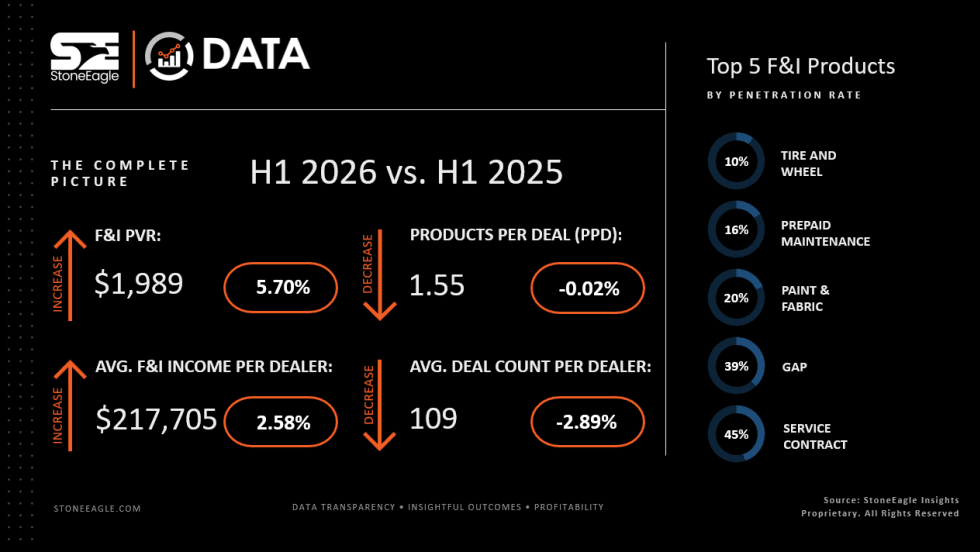
F&I Sales Give Dealers First-Half Lift
Product business shored up total profits to avoid an overall revenue tanking as product penetrations held steady, StoneEagle reported.
Read More →
Targeted Training Drives Results
Today’s technology, instead of threatening F&I managers, can actually make them better, according to an industry veteran who’s watched market setbacks roil the unprepared.
Read More →
Double the Change, Double the Chance
When an F&I manager gets a customer refusal, it’s a wise move to tweak more than one thing in the product offering.
Read More →
Just Do It
F&I managers need training, but instead of resisting application or expecting perfection, they should improve by simply acting on what they learn.
Read More →