



Fitch: U.S. Auto ABS Losses Rise in 3Q; Softness to Continue
The prolonged stressed state of the U.S. consumer and seasonal pressures pushed U.S. auto loan ABS losses and delinquencies higher in the most recent period, according to the latest Auto Loan ABS index results from Fitch Ratings.
NEW YORK — The prolonged stressed state of the U.S. consumer and seasonal pressures pushed U.S. auto loan ABS losses and delinquencies higher in the most recent period, according to the latest Auto Loan ABS index results from Fitch Ratings.
“Weaker used vehicle values driven by seasonal factors contributed to the worsening auto ABS performance,” said Senior Director Hylton Heard. “However, used-vehicle values remain strong overall and declines were less than typically experienced during this time of the year.”
Despite these pressures, auto ABS performance looks to be stable through the end of the year. Prime auto loan ABS annualized net losses (ANL) rose three consecutive months to 0.90 percent through September, correlating with historical patterns in which used-vehicle values typically fall in September.
Prime ANL levels are expected to range from 1 percent to 1.30 percent and hold well below 2009 levels consistent with the continued strong performance of the 2009 and early 2010 collateral vintages.
Prime ANL rose 34 percent quarter-over-quarter through September, but were 46 percent improved over the same period in 2009. The ANL rate of 0.90 percent in September was within range of 0.85 percent-0.94 percent recorded during the same period in 2007.
Prime auto loan ABS delinquencies of 60+ days increased to 0.64 percent in September, up 12.3 percent from August, but notably down over September 2009 by 23.8 percent. Current delinquencies are relatively in line with the 10-year total average for the index of 0.57 percent despite high unemployment figures, low consumer confidence and rising personal bankruptcies.
Subprime 60+ day delinquencies increased in September to 3.89 percent. Though the figure is 25.1 percent higher than in August, it is 21.7 percent lower than a year earlier. Subprime ANL rose in September to 6.75 percent, up 22.5 percent month-over-month, representing a decline of 30.3 percent from the 2009 number. Due to the limited subprime auto ABS issuance in recent periods, monthly subprime index results are more subject to individual transaction volatility.
Fitch's outlook for prime and subprime auto loan ABS ratings performance is currently stable/positive for the remainder of 2010. Primary catalysts include positive asset performance from the 2009 and 2010 vintages and support of structural features present in transactions. Through the mid-October, rating upgrades in 2010 have outnumbered 2009 levels by almost 4:1.
Fitch's prime auto loan indices total approximately $39.7 billion issued from 73 transactions, while the subprime indices comprise the performance of 20 transactions totaling $5.9 billion.
More F&I

AI: Facilitator, Not Fixer, in F&I
The dealerships that thrive in the years ahead will be those that embrace technology while continuing to invest in the people who make customer interactions count.
Read More →
Modern Technology Objection Handling
In this video, Trent White shares how to confidently handle technology-based objections by helping customers understand the value of protection, even with modern vehicle technology.
Read More →
Consistency at Scale: Driving F&I Performance
With 75 rooftops across the Sunshine State, Morgan Auto Group has proven to Floridians that it knows a thing or two about driving performance in a competitive market. But it didn’t start at the top.
Read More →
Gitty Up on GAP
The foundational finance-and-insurance product hasn’t kept up with the latest conditions for auto dealers. Is the time ripe?
Read More →
How AI-Powered Coaching Is Transforming F&I Performance
See how AI-powered coaching can turn F&I customer conversations into actionable insights that support compliance, performance and profitability
Read More →
Sell Value, Build Trust
In this video, Trent White explains why selling on value, not fear, builds lasting customer trust, reduces cancellations, and drives long-term success.
Read More →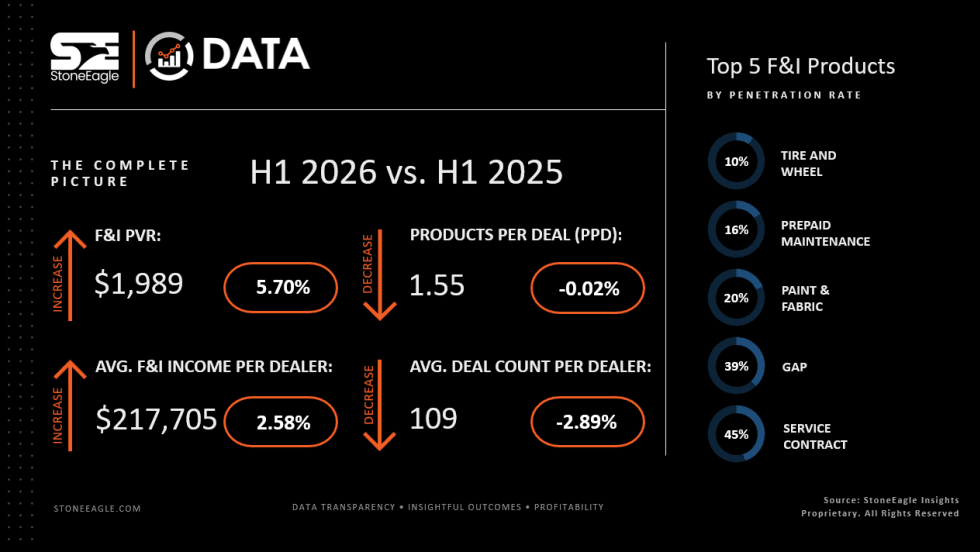
F&I Sales Give Dealers First-Half Lift
Product business shored up total profits to avoid an overall revenue tanking as product penetrations held steady, StoneEagle reported.
Read More →
Targeted Training Drives Results
Today’s technology, instead of threatening F&I managers, can actually make them better, according to an industry veteran who’s watched market setbacks roil the unprepared.
Read More →
Double the Change, Double the Chance
When an F&I manager gets a customer refusal, it’s a wise move to tweak more than one thing in the product offering.
Read More →
Just Do It
F&I managers need training, but instead of resisting application or expecting perfection, they should improve by simply acting on what they learn.
Read More →