



Lease Credit Approval Rates Rise to 72.3% Entering March
Online credit applications increase as shoppers seek alternative means of vehicle acquisition.


Online credit applications increase as shoppers seek alternative means of vehicle acquisition.
CINCINNATI – Swapalease.com, the nation’s largest car lease marketplace, reports car lease credit applicants registered a 72.3% approval rate in February, an increase from the January rate of 70%. The desire to have more flexibility in a lease has continued to be a primary driver for more people to seek vehicle leases with shorter terms that they can afford on secondary markets such as Swapalease.com.
We will closely monitor how these trends evolve with COVID-19 on everyone’s minds these days.
According to a recent article from BHPH Report, dealers that have begun making credit applications conveniently available to shoppers online have also seen a spike in credit applications.
February experienced a slightly higher number of applicants with qualifications for taking over another person’s lease contract during the month and a higher approval rating. February saw a slight increase in approval ratings in comparison to February 2019, where only 65.9% of lease applicants were approved. In February of 2018, 65.2% of applicants were approved.
February data showed that 72.2% of applicants were approved in February 2017, and 70% were approved in February 2016.
“We are seeing an increase in the number of applicants looking to take over another person’s lease in February, as shoppers have been seeking alternative outlets like Swapalease.com to find vehicles with terms that suit their unique and personal needs,” said Scot Hall, Executive Vice President of Swapalease.com. “Shoppers want faster credit decisions and vehicle options available to them, right at their fingertips from the convenience of their own home. We will closely monitor how these trends evolve with COVID-19 on everyone’s minds these days.”
Swapalease.com matches a person wanting out of their existing vehicle lease contract with a car shopper looking to take over a short-term vehicle lease. The marketplace has thousands of cars and trucks available for transfer to anywhere in the continental U.S.
More F&I

AI: Facilitator, Not Fixer, in F&I
The dealerships that thrive in the years ahead will be those that embrace technology while continuing to invest in the people who make customer interactions count.
Read More →
Modern Technology Objection Handling
In this video, Trent White shares how to confidently handle technology-based objections by helping customers understand the value of protection, even with modern vehicle technology.
Read More →
Consistency at Scale: Driving F&I Performance
With 75 rooftops across the Sunshine State, Morgan Auto Group has proven to Floridians that it knows a thing or two about driving performance in a competitive market. But it didn’t start at the top.
Read More →
Gitty Up on GAP
The foundational finance-and-insurance product hasn’t kept up with the latest conditions for auto dealers. Is the time ripe?
Read More →
How AI-Powered Coaching Is Transforming F&I Performance
See how AI-powered coaching can turn F&I customer conversations into actionable insights that support compliance, performance and profitability
Read More →
Sell Value, Build Trust
In this video, Trent White explains why selling on value, not fear, builds lasting customer trust, reduces cancellations, and drives long-term success.
Read More →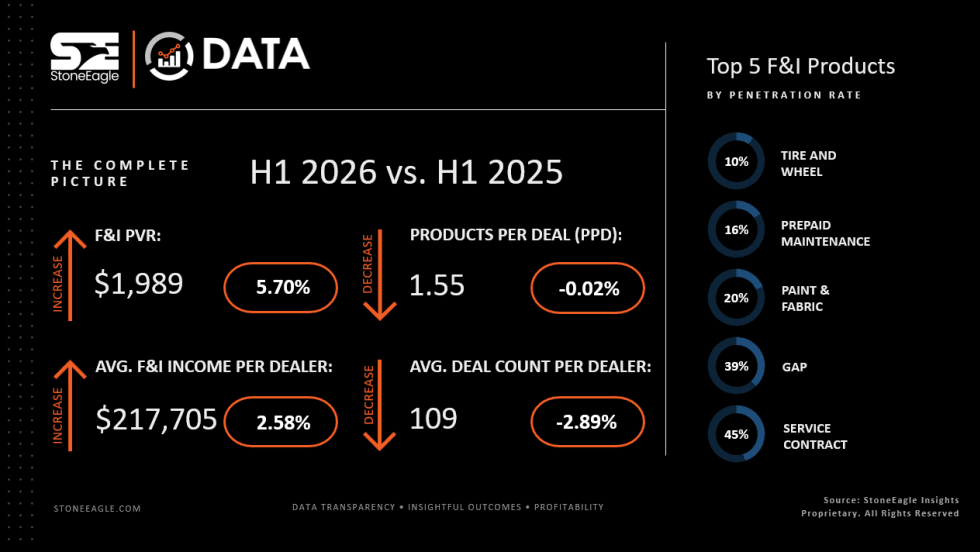
F&I Sales Give Dealers First-Half Lift
Product business shored up total profits to avoid an overall revenue tanking as product penetrations held steady, StoneEagle reported.
Read More →
Targeted Training Drives Results
Today’s technology, instead of threatening F&I managers, can actually make them better, according to an industry veteran who’s watched market setbacks roil the unprepared.
Read More →
Double the Change, Double the Chance
When an F&I manager gets a customer refusal, it’s a wise move to tweak more than one thing in the product offering.
Read More →
Just Do It
F&I managers need training, but instead of resisting application or expecting perfection, they should improve by simply acting on what they learn.
Read More →