



LoJack Issues Warning About 'Connected Car Thieves'
LoJack launched a campaign this month to educate and alert vehicle owners about the sophisticated techniques employed by today's 'connected vehicle thief.' The information shared can be used by F&I managers to educate consumers about the need for vehicle-recovery systems.
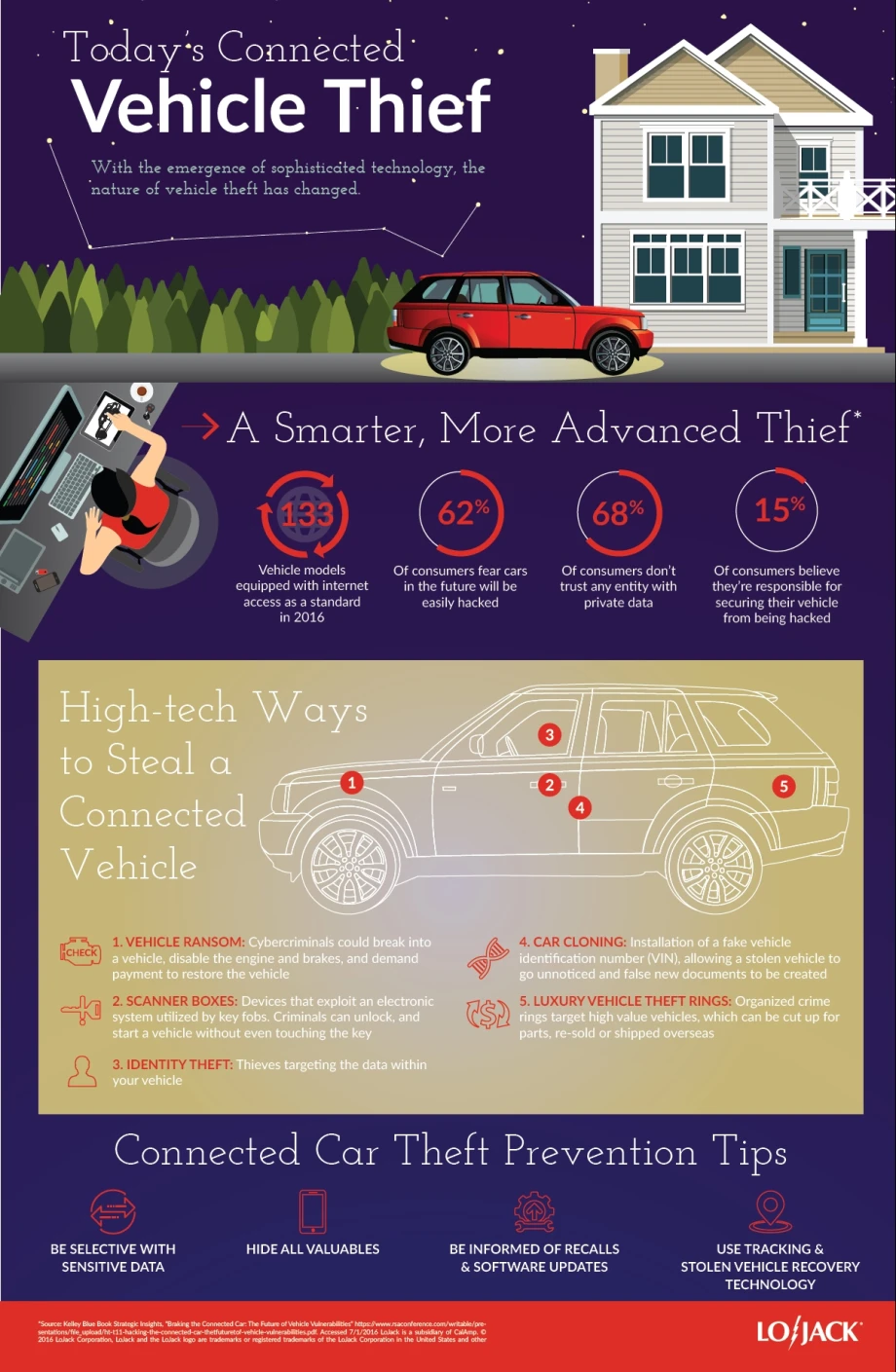
CANTON, Mass. and IRVINE, Calif. — LoJack, a wholly-owned subsidiary of CalAmp, is alerting consumers to some of the sophisticated techniques vehicle thieves are using to break into today’s connected vehicle. The information shared is part of a consumer campaign the firm rolled out as part of this month’s National Vehicle Theft Protection Month, but it could also be used by F&I managers to educate consumers about the need for vehicle-recovery systems.
With the emergence of sophisticated connected vehicles and Internet of Things technology, the nature of auto theft is changing, the company said. And according to the FBI's Preliminary Semiannual Uniform Crime Report, auto theft in the first half of 2015 topped what was recorded during the first half of 2014.
“Vehicle theft is starting to shift because of advanced techniques introduced by the ‘connected vehicle thief,’” said Patrick Clancy, vice president of LoJack Law Enforcement. "These criminals are smart, connected and more difficult to impede. They are targeting not only vehicles but also onboard data that, once obtained, can be damaging and difficult to recover. This campaign is designed to educate vehicle owners and businesses about the changing nature of auto theft, who the adversaries are, and what can be done to remain vigilant so that their lives are not negatively impacted by theft."
The following are some of the methods and tactics used by today’s connected vehicle thief:
Car Cloning: Savvy thieves create and install a fake vehicle identification number (VIN), allowing a stolen vehicle to go unnoticed. Hackers then use the stolen VINs to create new documents, hiding the fact that the underlying vehicle is stolen.
Vehicle Ransom: Cybercriminals could leverage “ransomware” to break into a vehicle, disable the engine and brakes, and demand payment to restore the car to its functional state.
Scanner Boxes: These are devices that can exploit an electronic system controlled by key fobs. Criminals can then unlock and even start a vehicle without even touching the key.
Identity Theft: Thieves are targeting the data available within the car, including credit card details, location information, Social Security numbers and driver’s license numbers.
Luxury Vehicle Theft Rings: Organized crime rings target higher value vehicles, which can then be cut up for parts, resold or shipped overseas. These theft rings utilize complex schemes, such as copying smart keys and using stolen credit reports to illegally finance vehicles.
LoJack also listed some safety tips F&I managers can share with their customers:
Be Selective With Sensitive Data: Be aware that personal data stored in your vehicle, such as credit card information or home address in an onboard GPS system, could be vulnerable to theft.
Update Manufacturer Software: Download the latest firmware and software upgrades from the vehicle manufacturer as they become available. Ask about updates when visiting the service department of your dealership.
Stay Informed of Recalls: Stay abreast of vehicle-enabled cyberattacks, and check with your vehicle manufacturer about any security recalls or alerts.
Use Theft Prevention Products: Immobilizers and visible, audible warning devices are good deterrents and can provide advanced protection.
Install a Tracking Device: Consider installing a tracking device operated by law enforcement so that stolen assets have a better chance of being recovered.
Keep Your Assets Close: Do not leave smart phones and tablets unattended, as they can be used to access more data. Additionally, use proper safety protocols on vehicles with keyless ignitions.
Practice Common Sense: Never leave keys in the vehicle with the engine running and don't hide a spare key in the car. Additionally, lock all doors when exiting the vehicle. It seems obvious, but car owners are still victimized by not taking these basic safety precautions.
For information and tips on how to protect your customers against the connected vehicle thief, visit LoJack’s Auto Theft Blog by clicking here.
More F&I

AI: Facilitator, Not Fixer, in F&I
The dealerships that thrive in the years ahead will be those that embrace technology while continuing to invest in the people who make customer interactions count.
Read More →
Modern Technology Objection Handling
In this video, Trent White shares how to confidently handle technology-based objections by helping customers understand the value of protection, even with modern vehicle technology.
Read More →
Consistency at Scale: Driving F&I Performance
With 75 rooftops across the Sunshine State, Morgan Auto Group has proven to Floridians that it knows a thing or two about driving performance in a competitive market. But it didn’t start at the top.
Read More →
Gitty Up on GAP
The foundational finance-and-insurance product hasn’t kept up with the latest conditions for auto dealers. Is the time ripe?
Read More →
How AI-Powered Coaching Is Transforming F&I Performance
See how AI-powered coaching can turn F&I customer conversations into actionable insights that support compliance, performance and profitability
Read More →
Sell Value, Build Trust
In this video, Trent White explains why selling on value, not fear, builds lasting customer trust, reduces cancellations, and drives long-term success.
Read More →
F&I Sales Give Dealers First-Half Lift
Product business shored up total profits to avoid an overall revenue tanking as product penetrations held steady, StoneEagle reported.
Read More →
Targeted Training Drives Results
Today’s technology, instead of threatening F&I managers, can actually make them better, according to an industry veteran who’s watched market setbacks roil the unprepared.
Read More →
Double the Change, Double the Chance
When an F&I manager gets a customer refusal, it’s a wise move to tweak more than one thing in the product offering.
Read More →
Just Do It
F&I managers need training, but instead of resisting application or expecting perfection, they should improve by simply acting on what they learn.
Read More →