



Nissan Commits to Spending $17.6 Billion on Battery-Powered Vehicles Over Next 5 Years
Automaker reports batteries will power half of the vehicles it sells by 2030.

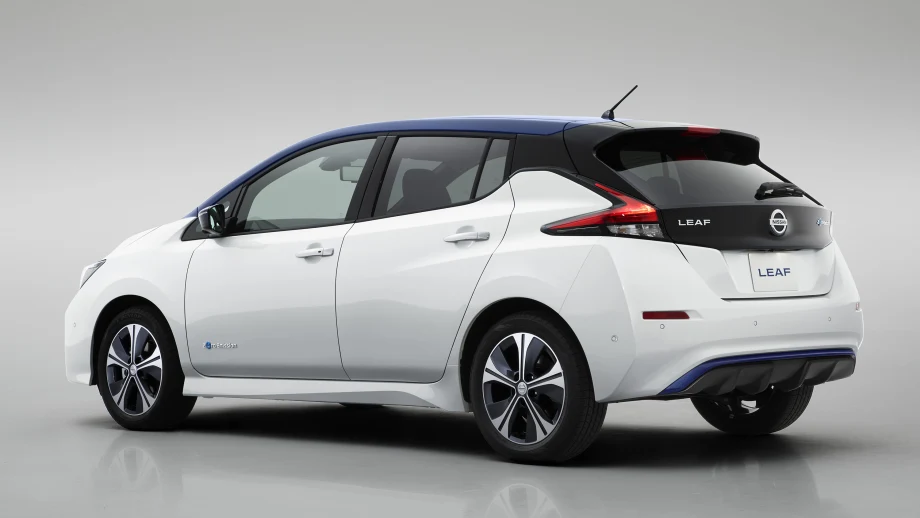
Nissan Leaf
Nissan
Nissan Motor Co. reported it plans to spend $17.6 billion over the next five years on battery-powered vehicles as it adds 20 new battery-powered vehicles to its lineup.
The automaker strives to recapture the prominence it held in the EV market after introducing the Leaf EV over a decade ago. Investors seek to invest in car makers investing heavily in EVs, including Tesla, Ford and Volkswagen.
Nissan CEO Makoto Uchida reports the company will leverage its 10-year head start in electrification to take a lead role in EV development. The amount the company plans to invest in the next five years, he says, is twice what it has spent on electric vehicles since 2010.
Uchida said he wants Nissan to take a lead role as cars shift from gasoline to electric power, but he was cautious about setting EV sales targets. Former leader Carlos Ghosn, Nissan and partner Renault SA, once promised to sell 1.5 million electric vehicles by 2016, a target they missed by a wide margin.
Nissan announced that nine of the 20 new vehicles to be introduced by 2026 will be purely battery powered EVs. The others will include Nissan’s version of gasoline-electric hybrids, vehicles powered by electric motors but equipped with a small gasoline engine to recharge the battery while driving.
Currently, EV sales are usually driven by government regulation. This will change as the technology behind the vehicles improves, according to Ashwani Gupta, Nissan’s chief operating officer. “The tipping point of EV adoption will be driven by advancement in electric platforms, powertrains and battery technologies,” Gupta said.
President Biden recently signed an executive order that aims to have EVs represent half of all new car sales by 2030. But Nissan strives to have its pure-electric or hybrid vehicles generate 40% of its U.S. sales by that date. Uchida did not provide a breakdown by vehicle type.
Nissan is working to remove expensive materials, such as cobalt from its EV batteries, to reduce the cost to $75 per kilowatt-hour. That would be 65% cheaper than the Leaf.
Nissan is also investing over $1 billion in solid-state batteries to replace the liquid electrolyte in current lithium-ion batteries with a solid electrolyte. This technology will make batteries lighter and safer, Nissan said.
Nissan will expand battery-production capacity globally to power its new vehicles. The company aims to have 52 gigawatt-hours of battery production available by 2026. Currently, Nissan plants in the U.S., U.K. and Japan can produce batteries with capacity of around 7.5-gigawatt-hours a year.
Originally posted on Auto Dealer Today
More Digital
Fixed-Ops Automation Can Help Dealerships Stand Out
Technology turns everyday service repairs into lasting customer loyalty and dealer profitability.

AI and the Auto Dealer
These are risks you can’t ignore as the technology becomes more and more of a presence in the auto retail environment.

Data Drives Success
Dealerships that make decisions based on data rather than gut instinct or experience have a leg up on their competitors, according to a recent survey.

AI: Facilitator, Not Fixer, in F&I
The dealerships that thrive in the years ahead will be those that embrace technology while continuing to invest in the people who make customer interactions count.

Simple But Effective Hacking Surges
Data from the past year at U.S. auto dealerships finds that email and identity phishing are growing threat sources that can dispense with malware by exploiting trust.
The Future of Car Dealerships
Artificial intelligence is reshaping the service-drive experience and will help retailers stay competitive.

Structure Leads to Optimized Auto Listings
As the average car-buying journey has shifted to a blend of digital and retail, a dealership’s vehicle listings must be optimized to answer shoppers’ questions clearly and accurately.

Real Intelligence
AI, though it presents many opportunities for productivity, efficiency and more, isn’t a one-for-one stand-in for people. It can augment human capital but not replace it altogether.

Zurich Launches Advisor IQ for F&I Manager Coaching
The new platform uses real transaction data and artificial intelligence-driven insights to help car dealerships improve consistency and performance.
F&I in the Digital Age
Digital retailing has not made the F&I manager obsolete. If anything, it has revealed how valuable the role can become when technology is used correctly.