



Shortage of Inventory, Not Buyers Challenges U.S. Auto Industry
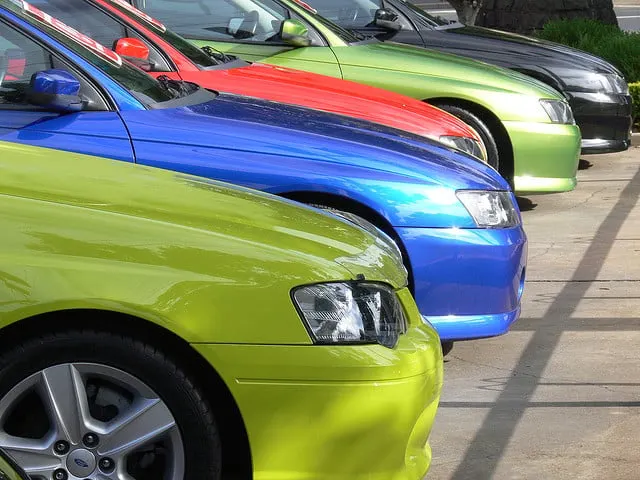
The U.S. auto industry has no shortage of buyers currently, but it lacks the inventory to satisfy them.

Creative Commons
U.S. auto sales plunged 16% in the first quarter as inventory challenges make it impossible for dealers to fulfill pent-up consumer demand. Even if most automakers start building vehicles at full capacity, it will take some time to get through back orders, according to David Christ, head of the Toyota Division at Toyota Motor North America.
Industry totals will not be available until all automakers report Q1 sales results. Ford Motor Co., Volvo, Daimler, Volkswagen, Audi and Jaguar Land Rover still need to report sales data.
Reported data shows Toyota Motor Corp. outsold General Motors by 5,484 vehicles in Q1, despite an overall sales decline of 15%.
Dealerships report selling vehicles on a one-in, one-out basis; almost as soon as a vehicle reaches the lot, a customer shows up to take delivery.
Forecasting firms are now revising 2022 sales projections. LMC Automotive and J.D. Power expect light-vehicle sales total of 15.3 million for 2022, down from an earlier forecast of 15.9 million, in the U.S. Cox Automotive cut its forecast from 16 million to 15.3 million.
Market experts suggest the current sales pace is a poor reflection of the market as factories struggle to supply the market. They predict that by the second half of this year, will be positioned to satisfy U.S. consumers.
March's vehicle supply was 2.3 million lower than March 2020 and 1.5 million fewer than March 2021, Cox reported.
Supply chain disruptions and an estimated 4.5 million units of pent-up demand means manufacturers will likely struggle to hit demand until 2023, according to J.D. Power. Because of ongoing supply chain issues, second-quarter sales will reflect those of the first quarter.
High demand has led to higher-than-average transaction prices and low incentives.
TrueCar reports the average transaction price rose 16% in the first quarter to $43,841, while the average incentive per vehicle fell 51% to $1,680.
The Russian invasion triggered a surge in U.S. gasoline prices, and this has had a slight impact. Toyota has heard of customers canceling full-size SUV and pickup orders, but the next customers in line usually pick up the dropped order.
Edmunds finds 41% of new vehicles were sold within a week of arriving at the dealership, compared with 20% in 2021. "The lack of inventory is what ultimately depressed new-vehicle sales in the first quarter," Jessica Caldwell, Edmunds' executive director of insights, said in a statement.
Fleet sales also fell in Q1, making up just 13% of the market and down from its typical range of 25% to 33%, according to J.D. Power. However, fleet sales will likely rise as daily-rental-car companies replenish their stock.
GM increased fleet deliveries 10% in Q1, accounting for 24% of its total sales.
Though Q1 sales figures look bleak, automakers now sell nearly every vehicle they build with low or nonexistent incentives.
Originally posted on Auto Dealer Today
More Showroom
California Sees Quarterly Gains
California’s new-vehicle market saw a boost in hybrids in the third quarter and its first overall quarterly market gain of the year.
Read More →
New-Vehicle Prices Stay Put
Affordability pressures and model availability shaped new-vehicle sales in September, according to an analysis by Kelley Blue Book.
Read More →
EV Buyer Consideration Shifts
What drives American consumers to purchase an electric vehicle is shifting as the question moves away from Should I?' to 'Which features and experience do I want to have?'
Read More →
Year-to-Date Auto Sales Holding Their Own
A forecast through August shows that automakers have shifted strategies to keep deliveries and revenues up despite tariffs and other economic challenges.
Read More →
Slow to Robo
Ten years of polling consumers shows autonomous vehicles’ profiles have risen considerably, but even more people now want at least some level of control if they go that route.
Read More →
Dealers a Little Down
A third-quarter Cox Automotive survey finds them in a mixed mood, bummed by fallen customer traffic but encouraged by better profits, costs and EV interest.
Read More →
European EV Sales Skyrocket
The EV market on the continent held strong in July with almost 25% of new-car sales being fully electric units, a stark contrast to the U.S., where EV sales declined about 42%.
Read More →
Mitsubishi Unveils U.S. Plan
The automaker announced a strategy that includes an expanded lineup and dealership presence, along with more ‘rugged’ and electric models.
Read More →
Used Lots Getting the Business
Many consumers are seeking out the units to save money, and the demand – higher in July than normal – is keeping supply limited and prices up.
Read More →
Used Market Stabilizes
The Carfax Used Car Index noted a major drop in used-vehicle price increases in July after several months of hikes.
Read More →