



A Costly Decision
The Federal Trade Commission has turned a helpful rule into another regulatory hurdle for dealers. The magazine’s resident compliance guru weighs in.


Sometimes smart people in positions of authority make stupid decisions when they fail to anticipate all the variables. A good example is a sales manager approving a deal when the salesperson has not fully disclosed that it’s a straw purchase. Well, the Federal Trade Commission (FTC) and a federal judge have apparently fallen into the same trap.
The agency and the judge are obviously smart people, but together they made a stupid decision to the detriment of car dealers. They took a rule that worked in the favor of both consumers and F&I offices, and turned it into another costly regulation.
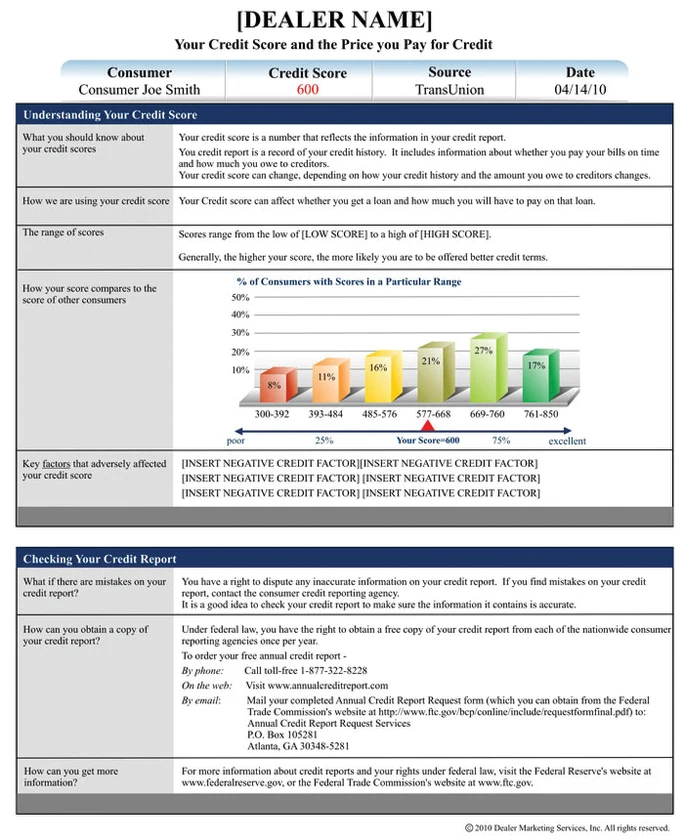
At issue is the FTC’s interpretation of a dealer’s responsibility in providing notices to consumers as required by the Risk-Based Pricing Rule. The FTC interprets the rule’s use of the word "use" to mean that dealers have to provide customers with a notice disclosing their credit score, even if it wasn’t the dealership staff who pulled the credit report.
Here’s what the FTC wrote about the word "use" in the July 15, 2011, edition of the Federal Register: "The finance source, at the behest of the automobile dealer, has obtained the reports and performed underwriting and has told the automobile dealer the wholesale buy rate at which it will purchase the contract. The original creditor incorporated the wholesale buy rate in the rate offered to the consumer, establishing a causal connection between the consumer report and the ultimate rate offered to the consumer. The original creditor has therefore ‘used’ the consumer report."
That’s a loose connection at best, don’t you think? Well, the National Automobile Dealers Association thought so, too, and sued the FTC. Unfortunately, it lost the first round in what promises to be a heavyweight fight with the regulator.
In what the NADA calls a "flawed decision" — and, as someone who knows the business, I agree — the U.S. Court judge sided with the FTC’s insistence that since the dealer uses the credit score, it is the same as if the dealer pulled the credit report himself.
The NADA argued that the rule did not contemplate the word "use" the same way the FTC interprets it in requiring a dealership to provide the notice if it simply passed the credit application along to a third-party finance source. But the judge disagreed with the NADA, which filed a notice of appeal on June 15.
Until the appeal is heard, it certainly sounds like dealerships should provide a credit score-disclosure notice to every customer with whom it consummates a retail or lease deal, even if it did not pull a credit report.
Unfortunately, this means if you have been in the habit of submitting the credit app to the lender and getting an approval before signing the customer up, you will need to get the credit score from the lender and generate a manual notice. In other words, as the NADA accurately pointed out, you incur the unnecessary expense of pulling a credit report just so that you can provide the notice before consummating the deal.
This situation is unfortunate, because I had actually grown to like the rule’s intentions. For consumers, it offered a chance for them to check the accuracy of their credit report. For the F&I office, it provided producers with a chance to help customers make the best financial decision. Well, we can still do that; it’s just going to cost a little bit more.
Gil Van Over is the president and founder of gvo3 & Associates, a national compliance consulting firm that specializes in F&I and sales compliance. E-mail him at gvo@bobit.com.
More F&I

AI: Facilitator, Not Fixer, in F&I
The dealerships that thrive in the years ahead will be those that embrace technology while continuing to invest in the people who make customer interactions count.
Read More →
Modern Technology Objection Handling
In this video, Trent White shares how to confidently handle technology-based objections by helping customers understand the value of protection, even with modern vehicle technology.
Read More →
Consistency at Scale: Driving F&I Performance
With 75 rooftops across the Sunshine State, Morgan Auto Group has proven to Floridians that it knows a thing or two about driving performance in a competitive market. But it didn’t start at the top.
Read More →
Gitty Up on GAP
The foundational finance-and-insurance product hasn’t kept up with the latest conditions for auto dealers. Is the time ripe?
Read More →
How AI-Powered Coaching Is Transforming F&I Performance
See how AI-powered coaching can turn F&I customer conversations into actionable insights that support compliance, performance and profitability
Read More →
Sell Value, Build Trust
In this video, Trent White explains why selling on value, not fear, builds lasting customer trust, reduces cancellations, and drives long-term success.
Read More →
F&I Sales Give Dealers First-Half Lift
Product business shored up total profits to avoid an overall revenue tanking as product penetrations held steady, StoneEagle reported.
Read More →
Targeted Training Drives Results
Today’s technology, instead of threatening F&I managers, can actually make them better, according to an industry veteran who’s watched market setbacks roil the unprepared.
Read More →
Double the Change, Double the Chance
When an F&I manager gets a customer refusal, it’s a wise move to tweak more than one thing in the product offering.
Read More →
Just Do It
F&I managers need training, but instead of resisting application or expecting perfection, they should improve by simply acting on what they learn.
Read More →