



Downturn Opens Door for Technology
Despite the prospect of losing dealer customers, software makers see a silver lining in today’s economic downturn. In fact, some providers believe the recession will be the vehicle to the industry’s digital future.

While selling cars, decreasing expenses, floorplanning and musing over the fate of General Motors and Chrysler dominate the discussions at dealerships these days, experts see a movement taking place. The closely held belief is that the current economic downturn will do what technology providers have attempted to do for decades.
Parallels have been drawn between the current recession and the one that hit the economy in 1982 and 1983. What came out of that period was the dealer management system (DMS), which, aside from availability, was hampered by the same thing impeding many of today’s revolutionary technologies: cost.
“If you look back at those times, that’s when dealer management systems started taking off. That’s when we got the ERA system going,” said Christopher Morris, product planning director for Reynolds and Reynolds. “It wasn’t so much that the market forced it. It was just that it became available and cost effective.”
Adjusting to their new reality of doing more with less, dealers are reexamining every dealership process, including processes related to technology usage. This self-reflection, technology providers say, is exactly what the industry needs.
“Now more than ever, dealers are seeking a better understanding of the technologies available to them,” said Brad Rogers, a RouteOne executive. “While they are not likely to spend thousands of dollars on new processes and procedures in this environment, dealers are looking to take better advantage of existing tools and systems.”
Loss of Dealers Shaping Technology Strategies
How many dealers will be lost this year is anyone’s guess. The National Automobile Dealers Association (NADA) said the number of dealership closures last year was 1,000, and projects another 900 will be lost this year. However, those predictions don’t factor in the unknown futures of Chrysler and GM.
The belief is that the industry will see a steep decline in the number of metro area dealerships, with the larger dealer groups being the ones that survive. However, small- to mid-size dealers are believed to have the advantage in the rural areas. And in this environment, technology insiders believe the smaller dealers are the ones with the upper hand.
David DeHaven, president of One View, a provider of document archiving and scanning solutions, is on the front lines of the battle for positioning among technology providers. He believes the small- to mid-size dealer simply offers more advantage to software makers.
“If you think about it, the competition isn’t for the big guys. That’s because technology companies simply don’t make big margins off the bigger guys,” he said. “And the second-tier vendors are having a tremendous impact in telling dealers to go month-to-month rather than by contract. And they’re doing that so these dealers won’t switch.”
Some DMS providers even admit the smaller dealers are the ones driving technology. Because they have less organizational structure than the large dealer groups, these dealer segments are looking for efficiencies and multitasking capabilities. And with so many uncertainties these days, dealers are looking for these capabilities in the one area they can control — inventory management.
“The industry is obviously contracting, and dealers are looking for ways to get their cost structures aligned. And one way to do that is technology,” said Raj Sundaram, senior vice president of dealer solutions and services at DealerTrack. “What’s also happening is the importance of the used-car business is coming to light in a big way. This is where technology can and needs to add significant value.”
[PAGEBREAK]
Inventory Management Spurring World-View Change
The big push in the used-car segment is getting the right vehicle data in front of dealers. It’s one of the reasons why companies continue to strengthen their inventory management solutions, either through acquisitions or by leveraging used-vehicle information offered by sources such as Black Book, Kelley Blue Book, NADA and Experian.
“Technology is becoming less and less isolated, as it becomes an interconnected Web,” said Reynolds’ Morris. “Monday through Friday we’re duking it out with DealerTrack in the trenches, but we’re also licensing their ALG and Chrome data for use in our DMS.”
Harnessing all of this information was one of the biggest challenges for the Chapman Automotive Group. With a half a dozen stores appraising cars, and different interpretations of book values among each rooftop, what the group needed was consistency, said Dan O’Connor, general sales manager at the group’s Mercedes-Benz store in Tucson, Ariz.
“I wanted people looking at specific bits of data as it pertained to different book values in the same order to achieve better and more consistent conclusions. What I came up with is what I call the connect-the-dot solution,” he said.
Examining his used-vehicle operations also helped O’Connor identify the role his F&I department could play. Not only could his F&I team help the sales department and the desk get deals properly structured early on in the process, but it could also help identify vehicles offering a better spread to cover negative equity.
“I think dealers have awakened to the fact that our business needs to evolve, and that we all need to be open minded to using technology to improve our processes,” he said. “It’s similar to playing poker. Successful poker players aren’t good guessers. It’s that they understand mathematical probability better than their competition.”
iPod Becoming Vehicle To New Reality
With the focus centered on sales, dealers are also looking for any and all ways to market their inventories. It’s one of the reasons why the iPhone was the center of conversation at the 2009 NADA Convention and Expo and the American Financial Services Association’s Vehicle Finance Conference and Exposition in January.
At the NADA convention, Dealer.com unveiled its MobileSites application, which tailors dealer Websites so they are viewable on an iPhone and other smart-phone devices. Other companies offering similar applications include Web2Cars.com, Cars.com and the Cobalt Group.
In a recent study conducted by the Cobalt Group, 73 percent of mobile Website traffic for its 10,000 dealers came from an iPhone. On weekends, iPhone usage jumped to 90 percent. And as these portable devices continue to shape consumer shopping habits, technology providers believe marketing inventories is only the beginning of what these devices can offer to the automotive industry.
“Today’s younger generation will want to buy a car with their iPhone,” said ADP Dealer Services’ Paul Rindone during the Vehicle Finance Conference’s “The Next Big Thing” panel discussion. “I think everyone knows this is where we’re supposed to be.”
While the vehicle to this new reality is clear, the road to this future remains unclear. It’s one of the reasons why many question what the future holds for front-end departments.
[PAGEBREAK]
It wasn’t long ago when the electronic kiosk was thought to be the future of F&I. Aside from cost and functionality, the paperwork requirements and the maze of regulations the department is responsible for cut that dream short. Still, as dealers continue to look for ways to do more with less, the age-old view of the hybrid front-end — where sales, desking and F&I functions are blended into one — continue to be resurrected.
“In my view, the typical desk manager has a short future,” said Julie Horns, business manager at Continental Chrysler Jeep, which is part of Continental Motors, the biggest dealer group in Illinois. “I think what it’ll come down to is a CarMax concept, where the salesperson is doing all the paperwork.”
Horns doesn’t disagree that changes are coming for front-end departments. In fact, like most technology experts, she sees a future where a single department will handle sales and the financing-related paperwork — duties she believes a F&I manager is best suited for. She also believes that F&I managers who fail to embrace technology will be the ones left behind.
“Over the years, I’ve seen a lot of good F&I people give up because they were unwilling to embrace technology and learn it,” she said. “It’s part of our job, and adapting isn’t always as bad as people envision.”
Technology Revolution Needed in F&I
Insiders say the industry still has several issues to address before its iPod future is realized, such as e-contracting’s future, the development of technology standards and an end to the data-access debate. The driving force behind any resolution, however, will have to be dealers.
When Horns’ dealership began e-contracting with Chrysler Financial last summer, she said it took her four to five deals and a couple of calls to her Chrysler rep before she had the process down. Today, getting an approval on an e-contracted deal takes 10 minutes.
“Our move to e-contracting really came down to the support of our dealer principal,” she said. “Bottom line, if the DP is not a fan, it’s not going to get pushed down the line.”
Horns said the motivating factor behind her dealership’s move to e-contracting was the dealer principal’s attempt to cut costs associated with paper printing. Decisions like that are exactly what technology providers hope the current economic downturn will stimulate.
Even One View’s DeHaven has noticed a change in mindset. “We had our biggest year ever at NADA,” he said. “Generally, we work with controllers and CFOs. The difference this year is we talked to a lot more dealer principals.”
Mark Thorpe, president of the Impact Group, noticed a similar change in mindset. In March, his company released a Web-based menu called FUSION. The reaction from dealers, he said, was surprising.
“We had our best March in our company’s history. I think I know why, but it was pretty surprising given the current market challenges,” he said. “I just think dealers are recognizing that what they’ve been doing up until now hasn’t given them the effectiveness and efficiencies they were looking for. Bottom line, we’re looking at a version of corporate Darwinism, and this is really survival of the fittest.”
More Digital

AI: Facilitator, Not Fixer, in F&I
The dealerships that thrive in the years ahead will be those that embrace technology while continuing to invest in the people who make customer interactions count.
Read More →
Simple But Effective Hacking Surges
Data from the past year at U.S. auto dealerships finds that email and identity phishing are growing threat sources that can dispense with malware by exploiting trust.
Read More →
The Future of Car Dealerships
Artificial intelligence is reshaping the service-drive experience and will help retailers stay competitive.
Read More →
Structure Leads to Optimized Auto Listings
As the average car-buying journey has shifted to a blend of digital and retail, a dealership’s vehicle listings must be optimized to answer shoppers’ questions clearly and accurately.
Read More →
Real Intelligence
AI, though it presents many opportunities for productivity, efficiency and more, isn’t a one-for-one stand-in for people. It can augment human capital but not replace it altogether.
Read More →
Zurich Launches Advisor IQ for F&I Manager Coaching
The new platform uses real transaction data and artificial intelligence-driven insights to help car dealerships improve consistency and performance.
Read More →
F&I in the Digital Age
Digital retailing has not made the F&I manager obsolete. If anything, it has revealed how valuable the role can become when technology is used correctly.
Read More →
Need for Speed: EV Apps Lack Consistency
Fifty-five percent of surveyed EV owners said their mobile applications had a major or moderate impact on their purchasing decisions, but connectivity issues remain a problem.
Read More →
Four Keys to Your Digital Trail Defense
Federal regulators are cracking down on hidden fees. This protective measure could mean the difference between winning and losing a lawsuit or surviving a duel with the Dark Side.
Read More →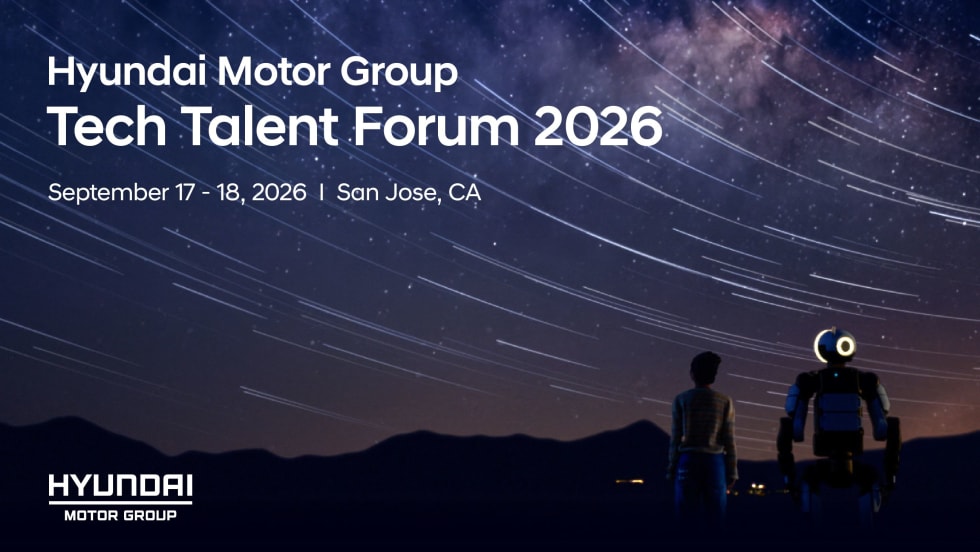
Hyundai Hosts Tech Talent Forum
Technology leaders from Hyundai Motor Group will have open discussions at the inaugural HMG Tech Talent Forum on topics ranging from autonomous driving to 'smart' manufacturing.
Read More →