



Final Fuel-Economy Rule Sets Lower Bar
Automakers must now achieve less-ambitious average for passenger cars, light trucks.

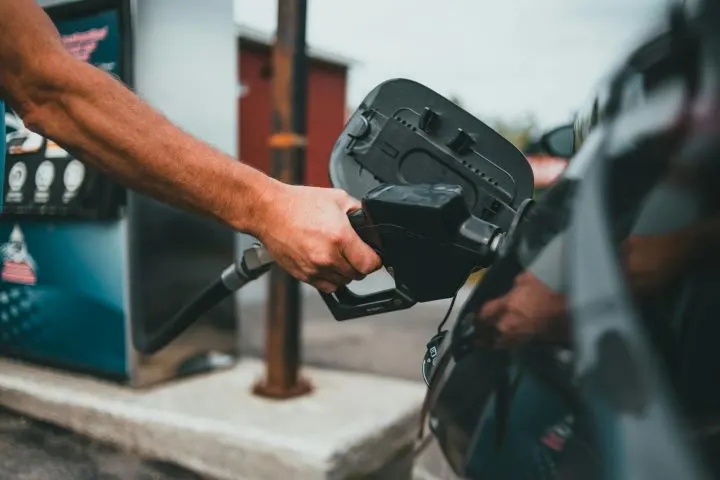
The new targets stand in stark contrast to the 13 miles per gallon the average U.S. vehicle got when Congress introduced fuel-economy standards in the 1970s.
Pexels/Erik McIean
The Biden administration finalized updated fuel-economy standards that are looser than proposed last year so that automakers can now achieve a lower bar over the next decade on new models’ fuel consumption.
Instead of an average fuel economy of about 58 miles per gallon for their fleets, companies must now achieve about a 54 miles per gallon threshold by 2032.
The bar-raising comes after demand for purely electric vehicles flattened in the U.S. following early adoption, failing to meet automakers’ ambitious estimates.
The new targets stand in stark contrast to the 13 miles per gallon that the average U.S. vehicle got when Congress introduced fuel-economy standards in the 1970s, the Department of Transportation said.
The final updated rule requires passenger cars’ fuel economy to increase 2% per year for model years 2027 to 2031 and light trucks’ to increase by the same measure for model years 2029 to 2031. The department said the gradual change will save owners more than $600 in fuel costs over their vehicles’ lifetimes and nealrly 70 billion gallons of gas by 2050.
“Not only will these new standards save Americans money at the pump every time they fill up, they will also decrease harmful pollution and make America less reliant on foreign oil,” U.S. Transportation Secretary Pete Buttigieg said in a press release.
The new rule complements a similarly scaled-back Environmental Protection Agency regulation of tailpipe emissions. Automakers can comply with the new standards with a mix of power train technologies, including hybrids and alternative-fuel vehicles.
Originally posted on Auto Dealer Today
More Industry
Connection Drives Consideration
Convenience and safety are top priorities for American drivers when it comes to connected vehicles and the services they expect with their next car.
Read More →
New-Vehicle Prices Stay Put
Affordability pressures and model availability shaped new-vehicle sales in September, according to an analysis by Kelley Blue Book.
Read More →
EV Buyer Consideration Shifts
What drives American consumers to purchase an electric vehicle is shifting as the question moves away from Should I?' to 'Which features and experience do I want to have?'
Read More →
Auto Nameplate Loyalty Holds in Tough Times
Consumers have been faithful to brands despite financial pressures, and JD Power says that’s because automakers have made some wise moves.
Read More →
Top New Jersey RV Store Sells
Myer’s RV Superstore is expanding its footprint in the state with two new locations that it acquired from Ed Hutchinson Jr.
Read More →
Alliance Analyzes Technician Pipeline
A new industry report examines the state of skilled trades in the U.S. and details the drivers of demand for automotive repair and how technicians enter and grow in the workforce.
Read More →
Luxury Rooftop Changes Hands
Genesis of Glenview is getting a new owner and a new location, but its name will stay the same.
Read More →
Future-Proof Your Business
A new industry outlook details several ways that automotive companies can use the rise in artificial intelligence and advanced technologies to their advantage.
Read More →
Dealership Buy-Sells Keep Going Up
First-half transactions reflect continued high appetite for acquisitions despite falling profits, the most sought-after franchises bringing record prices.
Read More →
California Makes Electric Moves
New laws in the Golden State aim to advance consumer access to public electric-vehicle chargers and reduce costs and barriers to its infrastructure.
Read More →