



LoJack/RoperASW Survey Finds Americans' Love Affair With Their Cars Is Strong
In a consumer survey conducted by RoperASW for LoJack Corp., which specializes in wireless stolen vehicle recovery technology, has found that Americans' love affair with the automobile is unabated.
This remains true despite environmental concerns, rising fuel prices and difficult economic times.
The majority of American car owners (58 percent) say their car provides them with joy and more than one-third (37 percent) say it provides them with a means of escape.
American consumers are also concerned about their cars' security, and about recovering their vehicle in the event that it is stolen. At the same time, two-thirds believe that the security of their vehicle is out of their control and the majority would consider having their vehicle stolen to be a hardship.
Financial concerns are only part of the story when it comes to consumers' reactions to vehicle theft. While 62 percent of car owners surveyed believe that vehicle theft presents a financial hardship, 50 percent cited emotional hardship as a likely result of having their car stolen. These figures highlight the close relationship that the American consumer enjoys with his or her car.
"Despite rising gas prices, increased concern about the economy and security concerns, Americans still love their cars," said Donna Driscoll, vice president of global marketing for LoJack Corp. "By providing a means of escape or an opportunity to define their owners, our cars continue to be an important part of the American way of life. Consumers want to be sure that they have done everything that they can to protect their vehicles, and to ensure that they are recovered should they be stolen."
In addition to their cars, consumers worry about losing the things they keep in their cars. Vehicle registration (93 percent), music CDs and cassettes (76 percent), tools (58 percent) and sports equipment (27 percent) topped the list of things consumers regularly keep in their cars.
Many respondents also felt that recovering the contents of the vehicle would be as important as recovering the vehicle itself, in the event of theft.
"Clearly, our research indicates that vehicle theft imposes more than just an inconvenience to the American consumer," Driscoll said. "It results in a variety of losses, including time, valuables left in the vehicle and the costs associated with repairing damage. As a result, facilitating the rapid recovery of stole vehicles is the best way to minimize the impact. This continues to be an important issue for consumers, especially as recent FBI statistics show that property crime --
and auto theft in particular -- is on the rise."
How the LoJack System Works
The patented LoJack System includes a small wireless radio-frequency transceiver that is hidden in the vehicle at the time of purchase. Each LoJack unit is registered to the vehicle identification number. Once a stolen vehicle is reported to the police, the vehicle identification number is matched to the LoJack unit by state law enforcement computers.
After the match, the LoJack system is activated by police, emitting silent radio signals from a small radio transceiver. Law enforcement vehicles and helicopters equipped with LoJack follow these signals to recover the stolen vehicle.
Police using LoJack have recovered more than 50,000 vehicles and one billion dollars in assets in the United States.
About LoJack
LoJack Corp. specializes in stolen vehicle recovery technology. In the United States, its stolen vehicle recovery system, utilized by law enforcement agencies, has maintained more than a 90 percent successful recovery rate during the 16 years it has been available to the consumer.
The LoJack System operates coast-to-coast in 20 states and the District of Columbia, representing the areas of the country with the greatest population density, highest number of new vehicle sales and greatest incidence of vehicle theft.
In addition, LoJack is operated by law enforcement and security organizations in more than 20 countries in Europe, Africa, Asia and the Western Hemisphere.
For more information, visit www.lojack.com.
More F&I
Integrating Nontraditional F&I Products
The niche presents a strategic advantage for auto dealerships as they move to adapt to fast-changing consumer expectations in today’s market.
Read More →
Trust Is Personal
Technology, no matter how efficient, can’t replace what the human F&I manager can do, which is to bridge the divide between cyberspace and the in-store experience.
Read More →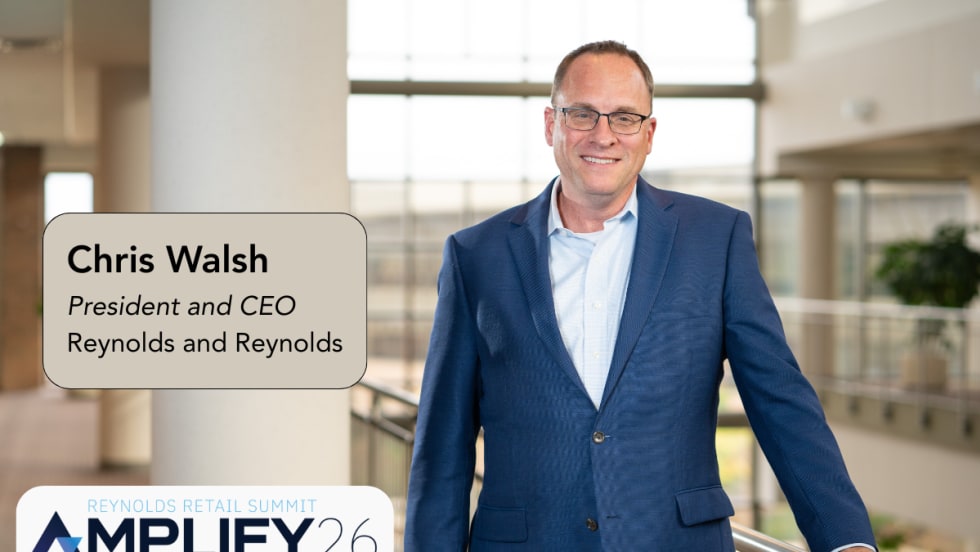
Amplify 2026 Billed as Turning Innovation Into Results
Reynolds and Reynolds says its annual retail summit will connect dealers with practical strategies, peer insight, and technology-driven ideas.
Read More →
Own Your Outcome: F&I in the Digital Customer Journey
Finance has historically been the last step in the car-buying process, but it doesn’t have to be. The customer’s journey starts long before they arrive at the dealership, and so should F&I’s involvement.
Read More →
Tariffs Could Raise Insurance Premiums
As U.S. import tariffs affect repair costs, consumers might find it more affordable to replace a damaged vehicle, according to recent Insurify tariff analysis.
Read More →
Smaller Loans, Longer Terms
The youngest generation of car buyers is more likely to finance less expensive vehicles, more than half of generation Z consumers borrowing less than $25,000.
Read More →
New Lifetime Battery F&I Product Meant to Drive Dealer Traffic
EFG Cos. offering is intended to create lifetime auto dealer engagement with customers.
Read More →
The Psychology Behind Menus That Increase Add-On Sales
There is a science to crafting a menu that gives customers confidence in the choices presented, and moving the process outside the F&I office can further boost results.
Read More →
Why Your F&I PVR Is Misleading You
Here’s a handy checklist of the numbers to track in 2026 instead.
Read More →
Auto Consumer Anxiety Presents Opportunity
A survey of U.S. drivers found the majority are concerned about finances and the economy, but those fears make many ready to buy vehicle-protection products.
Read More →