



Steve Cannon: Customer Experience Starts With Workplace Culture
Technology can only take the customer experience so far, Mercedes-Benz’s chief executive reminded attendees of the NADA Convention & Expo. He then revealed how a simple survey helped drive positive change for the German automaker.
ORLANDO, FLA — Steve Cannon, president and CEO of Mercedes-Benz USA, laid out a universal plan for dealers to focus on customer service. And it starts by changing the culture, he said last week at the National Automobile Dealers Association Convention & Expo.
“It’s becoming harder and harder to differentiate on product alone,” said Cannon, who believes the stakes are higher for dealers to deliver a good customer experience. With Mercedes-Benz, he noted, it either has to be “the best or nothing.”
Cannon noted that prior to the rise of social media, customers could walk away and tell maybe three people about a bad experience. But that number has grown exponentially with the amplified audience from the Internet. “The rules of the game have been changed permanently,” he says. “You need to deliver an exceptional experience every time.”
Cannon cited an adage attributed to consultant and educator Peter Drucker, who said about workplace environment: “Culture eats strategy for breakfast.” And that’s what Cannon said he found among his employees when he began conducting an annual culture survey. The survey was designed to identify changes needed to improve the workplace environment. Since the survey’s implementation, Mercedes-Benz went from No. 49 on FORTUNE magazine’s 2010 best workplaces to No. 12 in 2012.
Part of Cannon’s strategy also extended to the company’s dealer network. The plan called for the deployment of a dealer engagement survey to help dealers determine employee issues within their own organization. The initial findings were brutal, with only 63 percent of employees reporting to be ‘engaged’ in their job, 28 percent were ‘not engaged’ or close to apathetic, and 9 percent were flat out ‘disengaged.’
Additionally, Mercedes-Benz found that the most engaged dealerships were the most profitable. The high return on investment proved to Cannon that culture really matters. “It affects the bottom line,” he says.
One surprising finding that came out of the surveys was that 70 percent of dealership employees had never driven a Mercedes-Benz. So the carmaker invested in its Customer One initiative and deployed a fleet of 700 vehicles solely for the purpose of giving dealership employee a chance to test drive the vehicles. Cannon referred to the plan as a “leap of faith you make when people start mattering more than process.”
Cannon encouraged dealers to “do some soul searching” as well, and to seek out feedback from employees to identify their engagement level. For the sake of a successful customer relations strategy, he added, those employees who are disengaged to the point of no return need to be weeded out.
“Identify the obstacles that stand in the way of success, and remove those obstacles,” Cannon says.
More F&I

AI: Facilitator, Not Fixer, in F&I
The dealerships that thrive in the years ahead will be those that embrace technology while continuing to invest in the people who make customer interactions count.
Read More →
Modern Technology Objection Handling
In this video, Trent White shares how to confidently handle technology-based objections by helping customers understand the value of protection, even with modern vehicle technology.
Read More →
Consistency at Scale: Driving F&I Performance
With 75 rooftops across the Sunshine State, Morgan Auto Group has proven to Floridians that it knows a thing or two about driving performance in a competitive market. But it didn’t start at the top.
Read More →
Gitty Up on GAP
The foundational finance-and-insurance product hasn’t kept up with the latest conditions for auto dealers. Is the time ripe?
Read More →
How AI-Powered Coaching Is Transforming F&I Performance
See how AI-powered coaching can turn F&I customer conversations into actionable insights that support compliance, performance and profitability
Read More →
Sell Value, Build Trust
In this video, Trent White explains why selling on value, not fear, builds lasting customer trust, reduces cancellations, and drives long-term success.
Read More →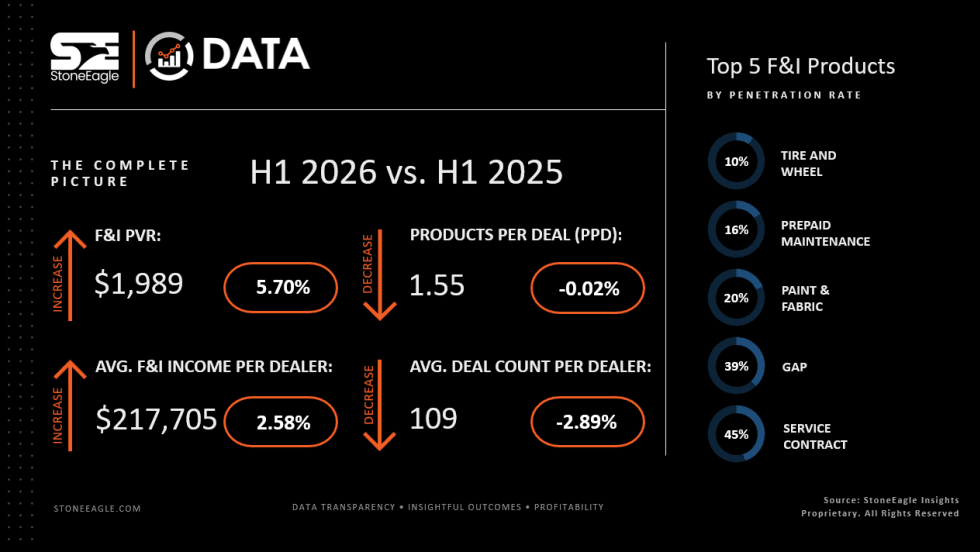
F&I Sales Give Dealers First-Half Lift
Product business shored up total profits to avoid an overall revenue tanking as product penetrations held steady, StoneEagle reported.
Read More →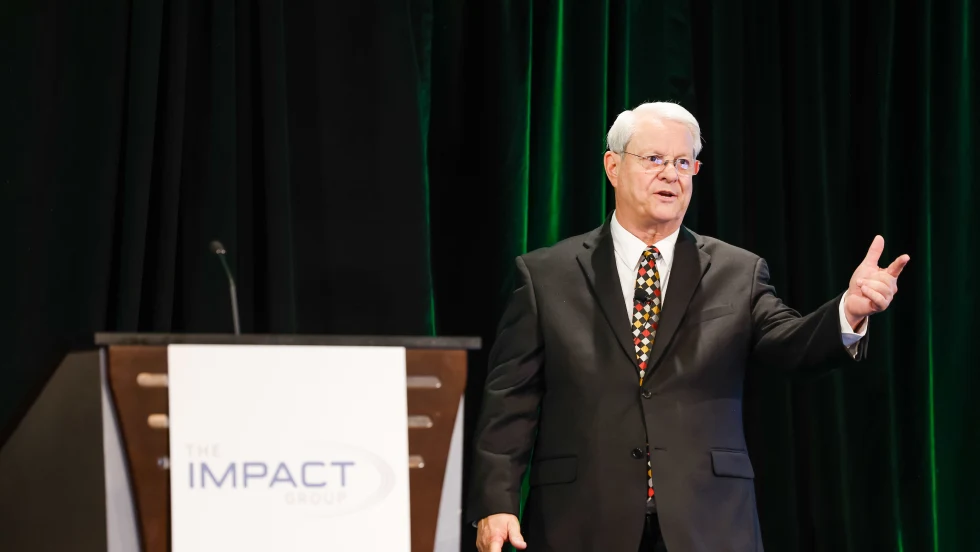
Targeted Training Drives Results
Today’s technology, instead of threatening F&I managers, can actually make them better, according to an industry veteran who’s watched market setbacks roil the unprepared.
Read More →
Double the Change, Double the Chance
When an F&I manager gets a customer refusal, it’s a wise move to tweak more than one thing in the product offering.
Read More →
Just Do It
F&I managers need training, but instead of resisting application or expecting perfection, they should improve by simply acting on what they learn.
Read More →