



Survey: Economy Impacting Americans' Daily Financial Decisions
While Americans say they understand financial basics and monitoring budgets, they may not be doing enough to save or protect their financial future, according to a survey of America's “financial IQ” by Capital One Financial Corporation.
MCLEAN, Va. — While Americans say they understand
financial basics and monitoring budgets, they may not be doing enough to save
or protect their financial future, according to a survey of America’s
“financial IQ” by Capital One Financial Corporation.
According to the survey, nearly 73 percent of those surveyed said that
current economic conditions have caused them to change their daily spending
habits.
Among some cost-saving strategies, 68 percent of those consumers reported
that they are eating out less often, 62 percent are cutting back on
entertainment expenses (spending on movies, concerts and books), and more than 54
percent said they are cancelling or postponing vacation plans and clipping
coupons. Sixty-four percent are using budgets to manage expenses and only 26
percent modify their budget when an unexpected expense comes along. Americans
are also regularly checking account balances for errors and recent activity
with 32 percent of those surveyed checking weekly.
The economy is also impacting personal savings. Forty-seven percent of those
surveyed said they are putting less money into savings and the same percent
report that current economic conditions have caused them to dip into their
savings to cover day-to-day expenses. While 33 percent of those surveyed said
they save regularly every month, only 12 percent report that they are saving
the recommended 10 to 15 percent of their income for the future, and another 12
percent said they are not saving anything at all. Traditional savings accounts
top the most popular financial saving instrument with half of Americans using
one. Unfortunately, 32 percent reported that they do not know the interest rate
on their savings account.
According to the survey, the 59 percent Americans consider themselves to be
highly knowledgeable or very knowledgeable when it comes to personal finance, a
slight decrease from 64 percent in 2007. Nearly 63 percent of those surveyed
say they are extremely comfortable or very comfortable managing short-term
finances but only 54 percent feel comfortable managing long-term finances.
More F&I

Integrating Nontraditional F&I Products
The niche presents a strategic advantage for auto dealerships as they move to adapt to fast-changing consumer expectations in today’s market.
Read More →
Trust Is Personal
Technology, no matter how efficient, can’t replace what the human F&I manager can do, which is to bridge the divide between cyberspace and the in-store experience.
Read More →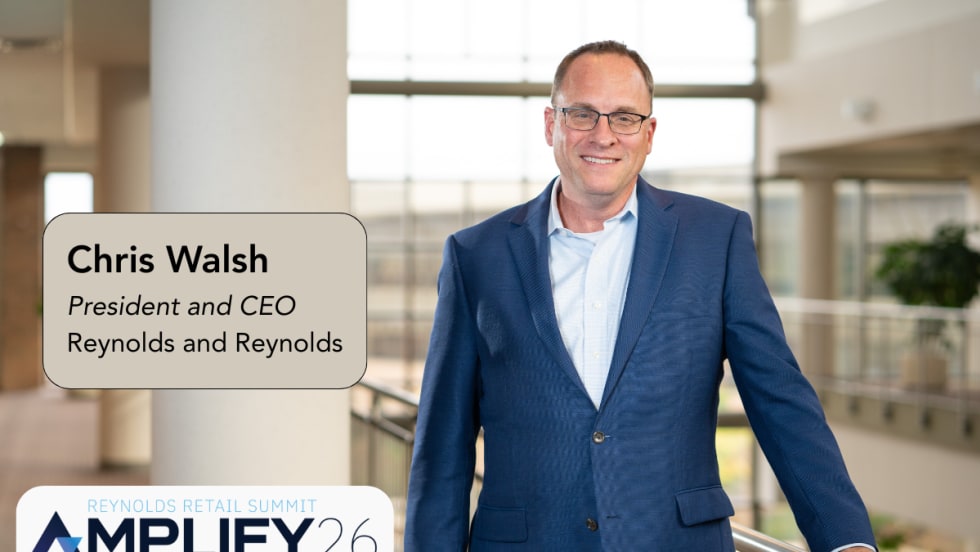
Amplify 2026 Billed as Turning Innovation Into Results
Reynolds and Reynolds says its annual retail summit will connect dealers with practical strategies, peer insight, and technology-driven ideas.
Read More →
Own Your Outcome: F&I in the Digital Customer Journey
Finance has historically been the last step in the car-buying process, but it doesn’t have to be. The customer’s journey starts long before they arrive at the dealership, and so should F&I’s involvement.
Read More →
Tariffs Could Raise Insurance Premiums
As U.S. import tariffs affect repair costs, consumers might find it more affordable to replace a damaged vehicle, according to recent Insurify tariff analysis.
Read More →
Smaller Loans, Longer Terms
The youngest generation of car buyers is more likely to finance less expensive vehicles, more than half of generation Z consumers borrowing less than $25,000.
Read More →
New Lifetime Battery F&I Product Meant to Drive Dealer Traffic
EFG Cos. offering is intended to create lifetime auto dealer engagement with customers.
Read More →
The Psychology Behind Menus That Increase Add-On Sales
There is a science to crafting a menu that gives customers confidence in the choices presented, and moving the process outside the F&I office can further boost results.
Read More →
Why Your F&I PVR Is Misleading You
Here’s a handy checklist of the numbers to track in 2026 instead.
Read More →
Auto Consumer Anxiety Presents Opportunity
A survey of U.S. drivers found the majority are concerned about finances and the economy, but those fears make many ready to buy vehicle-protection products.
Read More →