



Don't Get Left Behind Without a Menu
A rapidly shrinking number of dealers have yet to embrace menu selling. Electronic menus have secured a place in the F&I office due to their speed, accuracy and contribution to compliance.

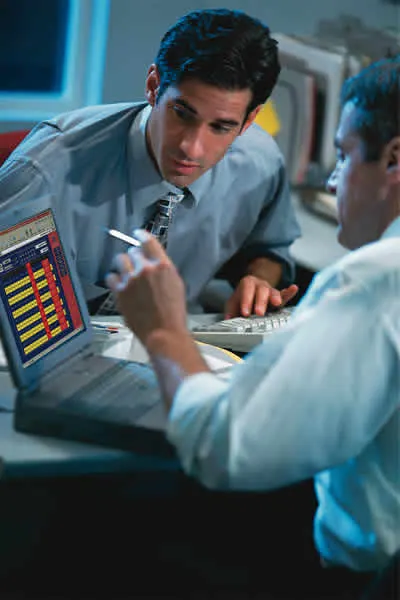
As the popularity of menu selling has increased in the last few years, the menu has evolved to accommodate the demands of dealers and their customers. And it isn’t just menu selling that is growing sales and compliance. It’s electronic menu selling that has made the consumer more comfortable with the purchase and made for a more profitable and more compliant F&I office. The speed, accuracy and professional presentation of electronic menu selling make it an attractive addition to both the F&I office and the customer’s sales experience.
Why Use a Menu?
By now, menu selling has been proven to boost F&I sales in thousands of dealerships across the country. The presentation of products increases product penetration, thus increasing profit margins. And there are a lot more products being sold than there were, say, 20 years ago.
As more products have become available for consumers, it has become a greater task for the F&I manager to present them. Using a menu saves time and organizes the presentation, making the process run smoothly for the F&I manager as well as the customer.
“Today, we can stack a lot of products into F&I,” says Dave Worrall, managing director of resource training at Resource Automotive, a division of Aon Warranty Group. “The time consideration is a big difference. This saves time.” The menu is designed to speed up the delivery process because the F&I manager is able to quickly and clearly present the finance and product options to customers in an intelligent format.
“It’s less debilitating to the customer and the finance manager,” says Eddie Brooks, general manager of DealerTrack. Brooks also notes that the presentation improves CSI.
Menus create consistency from one customer to the next. Sometimes finance managers have a preconceived notion of what products a customer may or may not be interested in. The resulting hesitation might prevent the finance manager from mentioning all of the products. But a menu mentions them for you. It ensures that every customer is informed of all of the available products at each sale.
But menus are only as strong as the person presenting them.
Ron Martin, president of The Vision of F&I, says that many times, F&I managers use a menu as the entire presentation without offering features or benefits. He believes that customers who don’t get a complete presentation tend to opt for the lowest payment, regardless of the benefits they may be losing. [PAGEBREAK]
Electronic Menus Save Time
“Speed, accuracy and compliance.” That’s the response from most finance managers when asked what the advantages are to menu selling. If that’s any indication, then it only makes sense that electronic menus make the process even faster and more accurate while maintaining compliance.
With paper menus, the biggest complaint is having to rework the deal every time. If a customer says he wants to put $2,000 down rather than $1,000, then the finance manager has to go back and make another menu, which can take up to 15 minutes. Eventually, it can cause the process to be sloppy. It can become so labor intensive that F&I managers simply forego the menu, even if it’s a better way of doing business.
“You simply don’t have to re-invent the wheel every time to write out a menu,” Mike Absher, president of DealerWare, says of electronic menus. “That’s where the speed comes from, particularly in terms of being able to push and pull information from your dealer management system.”
With electronic menus, it’s usually as simple as a click of a button to change a payment amount or lease option. It becomes a full, interactive menu that can be tweaked and adjusted. Ultimately, this lends some credibility to the system in the eyes of the customers.
“Most dealerships that use a handwritten menu have a generic menu that they’ve run through the copy machine a thousand times,” DealerTrack’s Brooks says. “If the person is too old for credit life insurance or disability, they’ll just cross it out.”
And all that crossing out can make the menu look more like a doodle pad. But an electronic menu offers a concise, neatly printed outline of what has been negotiated.
“In general, it’s easier to read; it’s more legible,” says Dick Costello, national F&I executive at Universal Underwriters Group. He adds that a menu makes the presentation more professional and easier to control for the finance manager.
The finance manager can offer all of the products quickly and neatly without sneaking off to the back room, scribbling numbers all over the page or anything else that might make an otherwise trusting customer leery about a deal.
“The process becomes more what the dealer wants,” Costello says. “And that is to sell more products and avoid any compliance issues.” Electronic Menus Support Compliance
In the world of F&I, the 300 Percent Rule is common knowledge to nearly everyone. But Resource Automotive’s Worrall has upped the ante a bit for that standard.
“It’s actually the 400 Percent Rule,” he says. “One hundred percent of the products to 100 percent of the people, 100 percent of the time with 100 percent compliance.”
That last 100 is the most important, and an electronic menu can take some of the burden off the F&I manager — when used correctly. Overall, it’s more accurate, and it serves to keep the finance manager in check to avoid making minor, inadvertent mistakes that could cause the F&I office to be non-compliant. The customer is aware of all the critical terms. The basic tenet of the Truth in Lending Act holds that customers are able to compare the cost of credit, and the menu does that for them.
With an electronic menu, the customer knows what the payment for the car is, the interest rate and the term. He can figure out what he’s actually paying for the car and the incremental cost of any additional products.
“There’s no shell game,” Worrall notes. “Everything is laid out for the customers, so they can truly compare what they’re paying for these products.” By disclosing financial and product options with the customer throughout the selling process, including price and payment options, the menu supports compliance, Brooks says. In addition, the customer can refer to the menu that has what he bought and what he didn’t buy with prices totally displayed.
“Giving customers the option to select products and capturing their signatures enables the dealership to have solid backup should a dispute arise later,” says Jim McDavid, vice president of North America sales for JM&A Group. Not only is there a uniform product presentation, but price disclosure tends to be constant, as well.
For example, if the dealer’s policy is to disclose the base payment, then an electronic menu should be consistent in doing that. The dealer can set certain constraints that tell the menu what it’s going to say, how it’s going to say it and in what order the information will be presented. This method helps prevent a finance manager from using an estimated base payment. And an estimated base payment can simply be a polite way of referring to payment packing. [PAGEBREAK]
Menus Can Increase Penetrations
In many of the same ways that a menu can keep you compliant, it can also increase the number of products sold.
It is only natural, for instance, that product penetration is enhanced if every customer is asked about every product.
“It just simply puts the law of averages to work for you,” DealerWare’s Absher says. “Just by virtue of talking about all of the different options, people left to their own will, on average, choose more.”
The menu allows customers to choose what they want, rather than the finance manager picking and choosing for them. Left up to the F&I office to decide, the same pre-qualifying that might cause compliance issues will single out a customer in the presentation. Based on supposition, a finance manager could neglect to offer certain products. If a product isn’t offered to a customer, then they aren’t going to buy it.
“Now, it doesn’t matter,” Worrall says. “We’re going to let the customer make the decision. We’re going to expose them to all of the products all of the time.”
McDavid adds, “Not only does the menu help to increase product sales, but chargebacks and cancellations are reduced. In addition, a menu speeds up the process, thereby improving customer satisfaction. Bottom line: Happy customers buy more.”
Without a menu, the finance manager’s only real resource is time. On a busy day, he might be constricted, only having 20 minutes with a customer. The finance manager could make his pitch, earn $1,000 profit and give up and move on to another customer. But the squeeze on a busy day with an electronic menu isn’t quite as tight. The customer gets a chance to see everything because time allows it.
Brooks suggests taking the following approach with customers: “You can participate or you can not participate — it’s entirely up to you. But you deserve to see what we offer.”
The Future of Menu Selling
According to McDavid, not having a menu today shouldn’t be an option for an F&I office. And he feels that down the road, there will be a move away from paper menus as the electronic process becomes more streamlined and better integrated into the dealer management system.
As the industry moves forward, it’s inevitable that it will be more scrutinized. When that happens, electronic menus will be there to prove that the office is functioning legitimately and fairly.
“Compliance issues are hotter today than they were five or 10 years ago, and I see that trend continuing,” Worrall predicts. “And because that trend continues and because we’re moving to a more transparent business, I think menus are here to stay. They are the future.”
The recently passed Car Buyer’s Bill of Rights in California is an indication of this. The Vision of F&I’s Martin points out that its requirement to disclose specific monthly payments is aimed at preventing payment packing. An electronic menu, through speed, accuracy and compliance, can help the F&I office move forward efficiently, while still making a profit.
“Who doesn’t want to make more money? Who doesn’t want to protect themselves legally? Who doesn’t want the customer to have a better experience?” asks Brooks. “You know what ... it just works.”
More Digital

AI: Facilitator, Not Fixer, in F&I
The dealerships that thrive in the years ahead will be those that embrace technology while continuing to invest in the people who make customer interactions count.
Read More →
Simple But Effective Hacking Surges
Data from the past year at U.S. auto dealerships finds that email and identity phishing are growing threat sources that can dispense with malware by exploiting trust.
Read More →
The Future of Car Dealerships
Artificial intelligence is reshaping the service-drive experience and will help retailers stay competitive.
Read More →
Structure Leads to Optimized Auto Listings
As the average car-buying journey has shifted to a blend of digital and retail, a dealership’s vehicle listings must be optimized to answer shoppers’ questions clearly and accurately.
Read More →
Real Intelligence
AI, though it presents many opportunities for productivity, efficiency and more, isn’t a one-for-one stand-in for people. It can augment human capital but not replace it altogether.
Read More →
Zurich Launches Advisor IQ for F&I Manager Coaching
The new platform uses real transaction data and artificial intelligence-driven insights to help car dealerships improve consistency and performance.
Read More →
F&I in the Digital Age
Digital retailing has not made the F&I manager obsolete. If anything, it has revealed how valuable the role can become when technology is used correctly.
Read More →
Need for Speed: EV Apps Lack Consistency
Fifty-five percent of surveyed EV owners said their mobile applications had a major or moderate impact on their purchasing decisions, but connectivity issues remain a problem.
Read More →
Four Keys to Your Digital Trail Defense
Federal regulators are cracking down on hidden fees. This protective measure could mean the difference between winning and losing a lawsuit or surviving a duel with the Dark Side.
Read More →
Hyundai Hosts Tech Talent Forum
Technology leaders from Hyundai Motor Group will have open discussions at the inaugural HMG Tech Talent Forum on topics ranging from autonomous driving to 'smart' manufacturing.
Read More →