



Leverage Your Factory’s Marketing Tools
Dealers seeking a harmonious online-to-instore experience should start by taking advantage of the advanced digital marketing tools, assets, and services your manufacturers are offering for free.
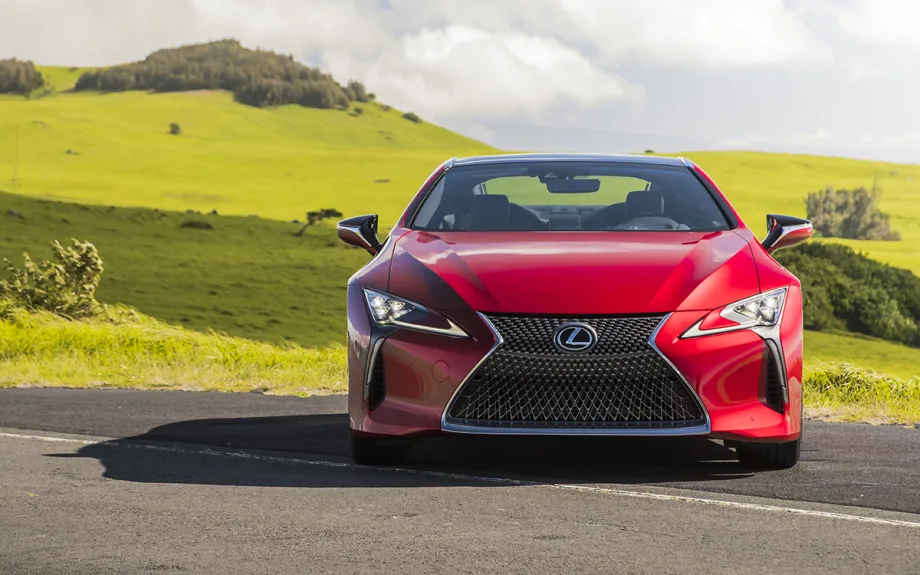
Lexus used virtual reality, augmented reality, and other advanced digital marketing tools to “premarket” the LC 500, helping to exceed initial sales targets by more than 5%.
Photo courtesy Toyota Motor Sales USA Inc.
Just a few years ago, online car shopping followed a fairly simple model: Dealers would list inventory on their websites and share vehicle data and images with third-party listing services so consumers could easily find the car they were looking to buy. This is no doubt efficient for the consumer, but the digital experience and consumer expectations are rapidly changing, and the model of inventory listings and thumbnails is dying out.
Due to the rapid advances in digital marketing across all devices and consumer categories over the last few years, the average in-market customer now expects an end-to-end, immersive, and convenient digital experience. More and more, consumers are using digital channels to research, configure, and compare vehicles and dealers — especially the hard-to-capture young, urban, high-income customer.
The result is that prospective customers walk onto your lot much better informed about your products and pricing than the typical buyer of just a few years ago.
Unfortunately, most dealerships are missing out on the digital buyer’s journey. The need to effectively attract and entice customers via digital channels and deliver an engaging online digital experience to customers has become paramount. Change in the entire car-buying experience is happening now, and it’s a competitive change.
In other words, for dealers who are willing to embrace this new era of digital content marketing, the upsides are significant.
Make the Connection
What consumers are looking for in today’s car shopping market is a coherent end-to-end experience. This is largely being led by automakers, who are providing end-to-end tools for their dealer networks to leverage. The dealers who embrace these tools raise their chances of gaining not only new customers, but customers who are happier with their car-buying experience.
Automakers know the dealer experience of the past is a problem. They are providing modern tools to help advance the sales experience. Many are providing web assets to their dealer networks which mimic manufacturer sites, providing continuity in the web experience to the customer — an important connection that is imperative in this digital world.
Tangibly, Audi has embraced these technologies, where the customer can configure a vehicle online, receive a code to take to the dealer, and have the vehicle they configured brought up right at the dealership in both a configurator and VR experience.
For dealers, this means more symmetrical information a greater chance of upselling dealer-installed, high-margin services and accessories. The advantage of knowing what a consumer wants before or when they arrive in the showroom allows the sales department to better profile their preferences so that the customer can be more easily steered to a sale.
Hit the Retarget
Automakers also can retarget customers with their configured car, effectively reengaging them on the dealer’s behalf.
Lexus has also effectively used digital assets, including VR and AR, with proven results. They effectively “premarketed” the LC 500 before the vehicle was even in production. The result was a 5%-plus increase over targeted sales for the vehicle’s first two months on sale.
Smartphone apps are also providing AR experiences that allow a customer to see their configured car in their driveway or garage. Again, this is a tool to increase leads to local dealers and ultimately convert into sales.
By embracing these technologies, dealers can participate in the customer engagement process and then provide an even deeper engagement at the store, ultimately converting more leads into sales.
As technology advances and digital marketing evolve, consumers will invariably expect a convenient, consistent, tailored experience from end-to-end. Those who are leveraging digital marketing technology are setting themselves up for a competitive advantage now and into the future.
The question is this: Do you want to drive change, or have change happen to you?
Tim McDonough is general manager of automotive at Unity Technologies and 25-year automotive marketing veteran.
Originally posted on Auto Dealer Today
More Digital
Fixed-Ops Automation Can Help Dealerships Stand Out
Technology turns everyday service repairs into lasting customer loyalty and dealer profitability.
Read More →
AI and the Auto Dealer
These are risks you can’t ignore as the technology becomes more and more of a presence in the auto retail environment.
Read More →
Data Drives Success
Dealerships that make decisions based on data rather than gut instinct or experience have a leg up on their competitors, according to a recent survey.
Read More →
AI: Facilitator, Not Fixer, in F&I
The dealerships that thrive in the years ahead will be those that embrace technology while continuing to invest in the people who make customer interactions count.
Read More →
Simple But Effective Hacking Surges
Data from the past year at U.S. auto dealerships finds that email and identity phishing are growing threat sources that can dispense with malware by exploiting trust.
Read More →
The Future of Car Dealerships
Artificial intelligence is reshaping the service-drive experience and will help retailers stay competitive.
Read More →
Structure Leads to Optimized Auto Listings
As the average car-buying journey has shifted to a blend of digital and retail, a dealership’s vehicle listings must be optimized to answer shoppers’ questions clearly and accurately.
Read More →
Real Intelligence
AI, though it presents many opportunities for productivity, efficiency and more, isn’t a one-for-one stand-in for people. It can augment human capital but not replace it altogether.
Read More →
Zurich Launches Advisor IQ for F&I Manager Coaching
The new platform uses real transaction data and artificial intelligence-driven insights to help car dealerships improve consistency and performance.
Read More →
F&I in the Digital Age
Digital retailing has not made the F&I manager obsolete. If anything, it has revealed how valuable the role can become when technology is used correctly.
Read More →