



Hertz and BP Pulse to Build EV Charging Network
Hertz has partnered with BP Pulse, BP oil company’s EV charging arm, to build a network of electric vehicle charging stations across the U.S.

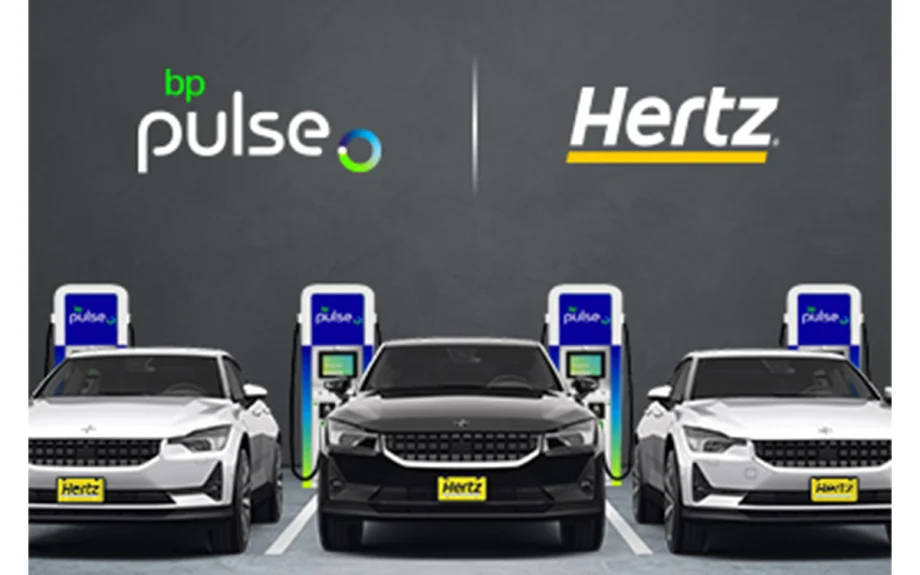
Hertz has partnered with BP Pulse, BP oil company’s EV charging arm, to build a network of electric vehicle charging stations across the U.S.
IMAGE: Hertz
Hertz has partnered with BP Pulse, BP oil company’s EV charging arm, to build a network of electric vehicle charging stations across the U.S.
The new chargers will help the rental car giant have a network of chargers available to power up its purchase up to 340,000 EVs from Tesla, Polestar and General Motors by 2027.
Under the deal, BP Pulse will install the chargers and provide software and services to help Hertz manage its fast-growing fleet of EVs.
While Hertz will use many of the chargers to charge its own fleet, the company will make some available to taxi and ride-hailing drivers and the general public, the companies said. Lack of access to chargers is often cited as a potential roadblock to wider EV adoption by U.S. consumers.
The new deal builds on an existing program where BP Pulse installed chargers at 25 of Hertz’s busiest airport locations. The companies did not specify how many chargers they plan to add.
Hertz has a network of thousands of EVs to rent at about 500 locations in 38 U.S. states. The company has installed its own chargers in these locations. Hertz plans to have EVs make up a quarter of its fleet by 2024 and plans to have about 3,000 chargers in operation at its sites across the U.S by the end of 2023.
Vic Shao, who leads BP Pulse’s fleet business, told CNBC the new deal includes software to help Hertz keep its EV fleet charged and ready to rent. Shao added that BP Pulse’s fleet software also will help Hertz reduce its electricity costs by scheduling vehicles to recharge at lower-cost times of day.
The companies also plan to build chargers for the general public, taking advantage of Hertz’s high-traffic locations throughout the country. The companies expect ride-hailing drivers, particularly those who rent EVs from Hertz, to be prime customers for the chargers.
Originally posted on Auto Dealer Today
More Digital
Fixed-Ops Automation Can Help Dealerships Stand Out
Technology turns everyday service repairs into lasting customer loyalty and dealer profitability.

AI and the Auto Dealer
These are risks you can’t ignore as the technology becomes more and more of a presence in the auto retail environment.

Data Drives Success
Dealerships that make decisions based on data rather than gut instinct or experience have a leg up on their competitors, according to a recent survey.

AI: Facilitator, Not Fixer, in F&I
The dealerships that thrive in the years ahead will be those that embrace technology while continuing to invest in the people who make customer interactions count.
Simple But Effective Hacking Surges
Data from the past year at U.S. auto dealerships finds that email and identity phishing are growing threat sources that can dispense with malware by exploiting trust.
The Future of Car Dealerships
Artificial intelligence is reshaping the service-drive experience and will help retailers stay competitive.

Structure Leads to Optimized Auto Listings
As the average car-buying journey has shifted to a blend of digital and retail, a dealership’s vehicle listings must be optimized to answer shoppers’ questions clearly and accurately.

Real Intelligence
AI, though it presents many opportunities for productivity, efficiency and more, isn’t a one-for-one stand-in for people. It can augment human capital but not replace it altogether.

Zurich Launches Advisor IQ for F&I Manager Coaching
The new platform uses real transaction data and artificial intelligence-driven insights to help car dealerships improve consistency and performance.
F&I in the Digital Age
Digital retailing has not made the F&I manager obsolete. If anything, it has revealed how valuable the role can become when technology is used correctly.